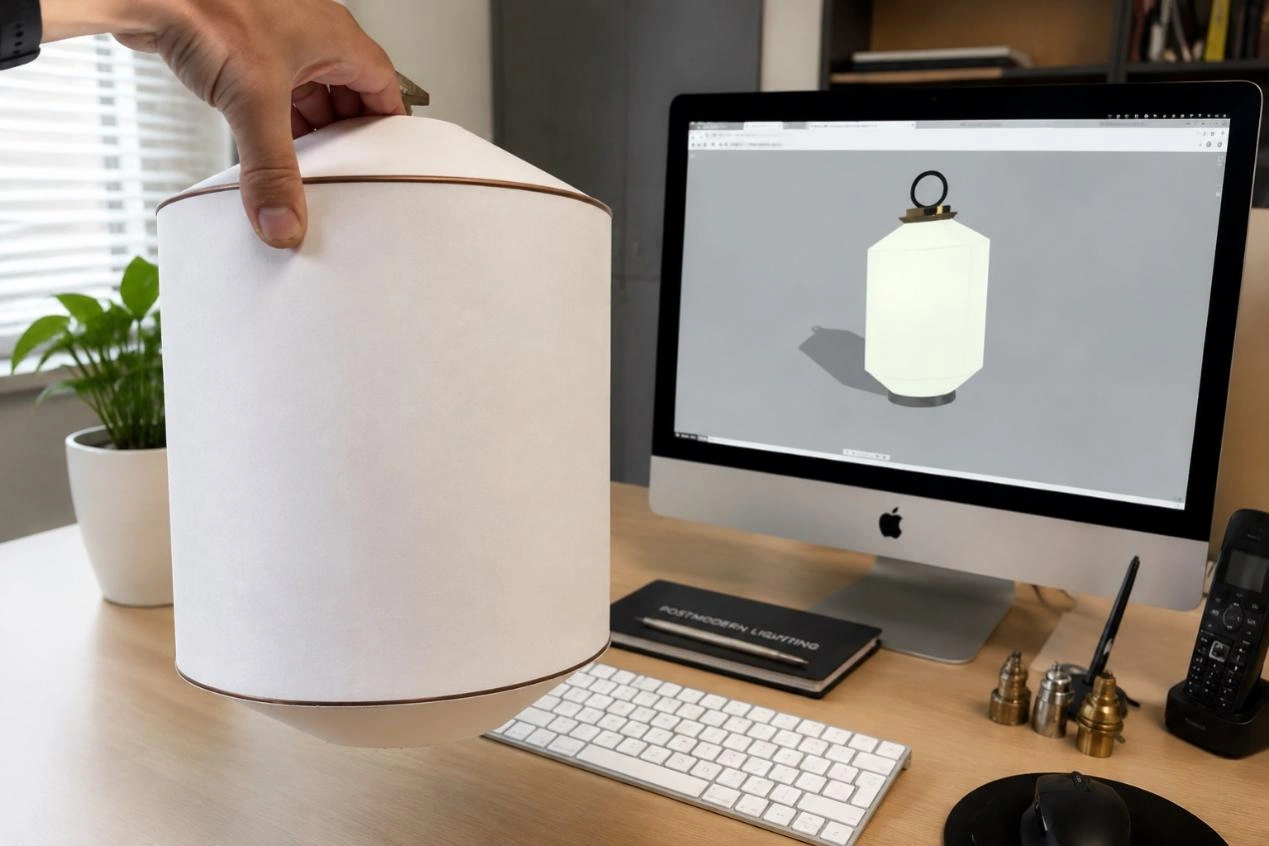
For decorative lighting projects, the key difference between OEM and ODM is where product development starts. OEM usually starts from the client’s existing design, drawings, or design concept, and the manufacturer then completes the structural, electrical, prototyping, and mass-production engineering. ODM starts from the manufacturer’s existing fixture design and product platform, then modifies the size, Finish, electrical configuration, or selected components to suit the project.
This article compares OEM and ODM in terms of development process, engineering input, customization scope, and project risk. It also reviews their practical use in hotel and commercial projects, explains which model fits different project conditions, and identifies the items that hotel and commercial lighting projects should confirm before procurement.
1. What Is the Difference Between OEM and ODM Decorative Lighting?
Both OEM and ODM can be used for custom lighting, but they start from different points. OEM starts from the client’s design, while ODM starts from the manufacturer’s existing product.
1) OEM: Engineering and Production Based on the Client’s Design
For OEM projects, the client, designer, or Lighting Consultant usually provides renderings, CAD files, dimensions, materials, and Finish requirements. The manufacturer then completes the Shop Drawing, engineering development, BOM, prototyping, testing, and mass production.
For example, for a Ø2400 mm hotel lobby chandelier, the designer may already have specified a brass structure and handmade glass. The factory still needs to resolve material thickness, load capacity, suspension points, glass fixing, electrical wiring, modularization, and site installation. Decorative lighting OEM normally requires this engineering work to turn the original design into a buildable product.
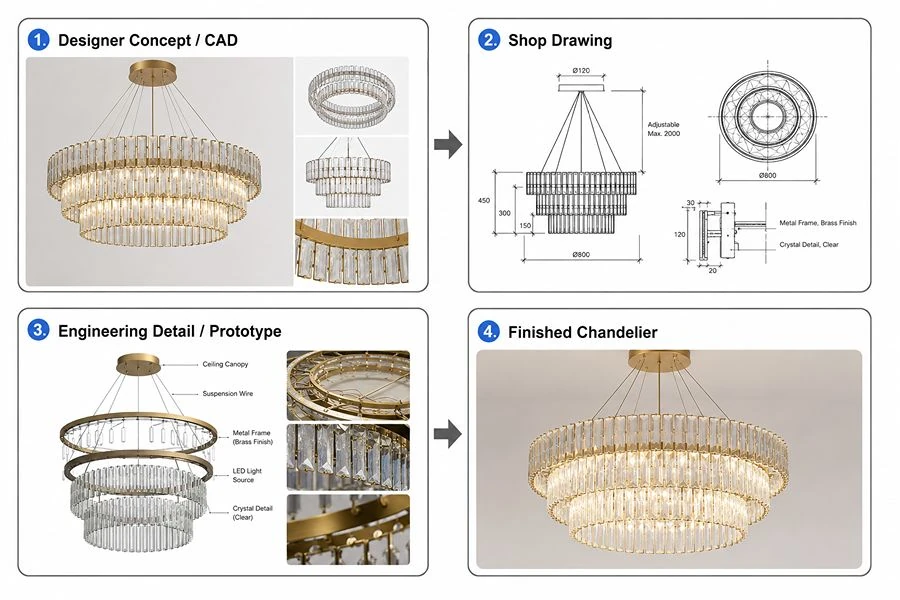
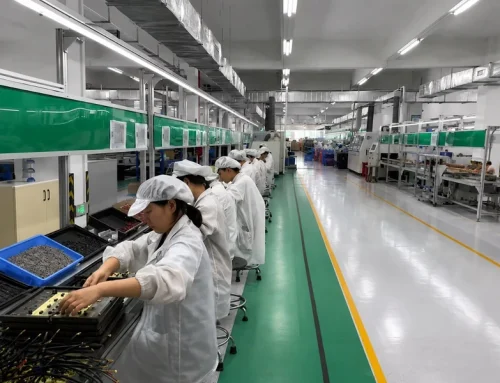
OEM from Design to Engineered Product
2) ODM: Selection and Modification Based on the Manufacturer’s Existing Design
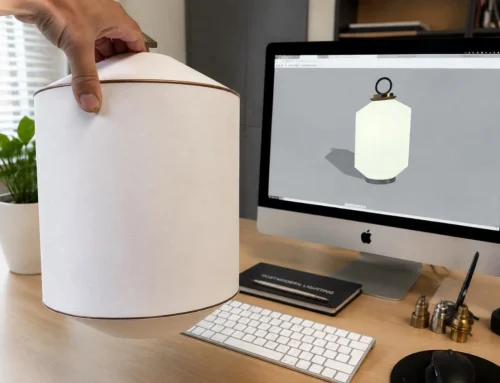
ODM starts from the manufacturer’s existing fixture design and proven structure, then modifies the size, Finish, glass, light source, voltage, or dimming method to suit the project. For example, an existing Ø800 mm chandelier may be changed to Ø1000 mm with Antique Brass, 3000K, and a DALI Driver. If the original main structure, electrical compartment, and connection method still work, the project can continue to use the existing product platform.
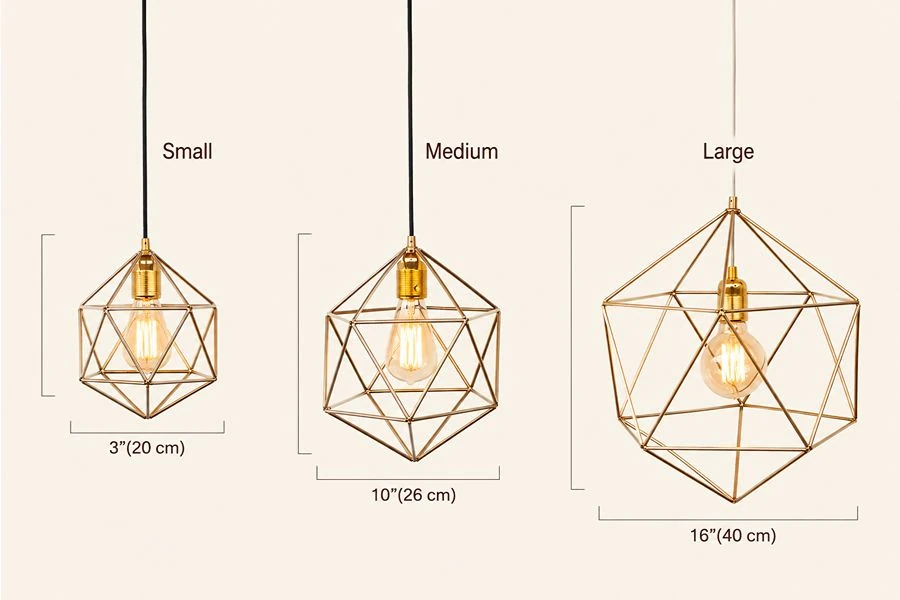
ODM Fixture Modification
3) Main Differences Between OEM and ODM
| Comparison | OEM | ODM |
| Design Basis | Client design | Manufacturer’s existing design |
| Engineering Development | Usually requires more work | Can reuse part of the existing engineering |
| New Molds / Tooling | More likely to be required | Can use existing resources |
| Development Cost | Depends on new development scope | Depends on modification scope |
| Development Lead Time | Usually requires a complete development process | Relatively shorter when modifications are minor |
| Design Differentiation | High | Depends on the extent of modification |
| Typical Projects | Lobby chandeliers, designer fixtures, independent product collections | Hotel guestroom lighting, modifications of existing fixtures, fast-development projects |
2. How Do OEM and ODM Work in Decorative Lighting Projects?
The main difference in the development process is the amount of upfront Engineering work required and how much of the existing product platform can be reused.
1) OEM: From Design Drawings to Mass Production
A typical process is: Design → Engineering → Shop Drawing → Prototype / Finish Sample → Approval → Testing → Production → QC
Renderings mainly define the form and visual intent. Before mass production, the manufacturer still needs to engineer wall thickness, tolerances, load capacity, connection methods, heat dissipation, wiring, modularization, site installation, packaging, and transportation. For complex fixtures, the engineering team must convert these requirements into a structure that can be manufactured and installed while maintaining the original design intent.
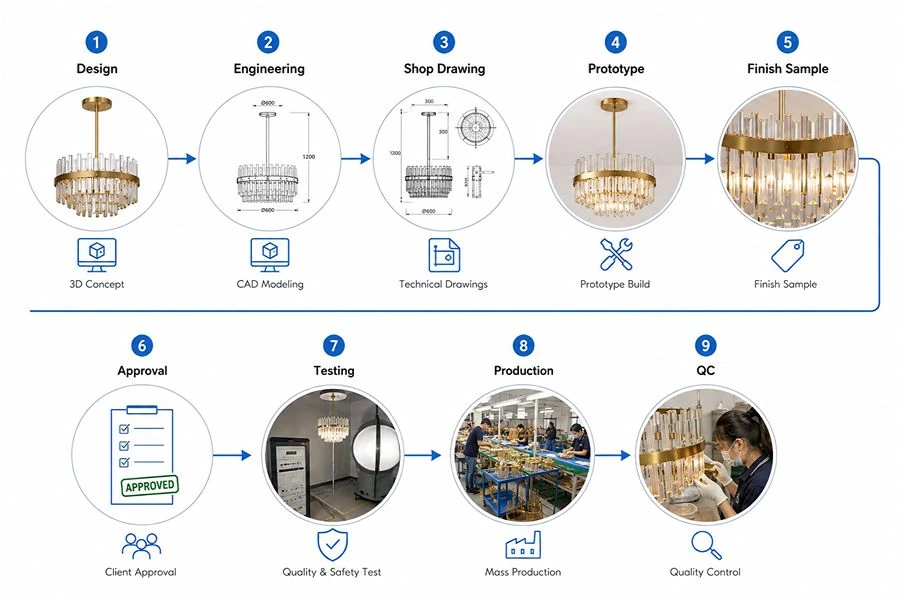
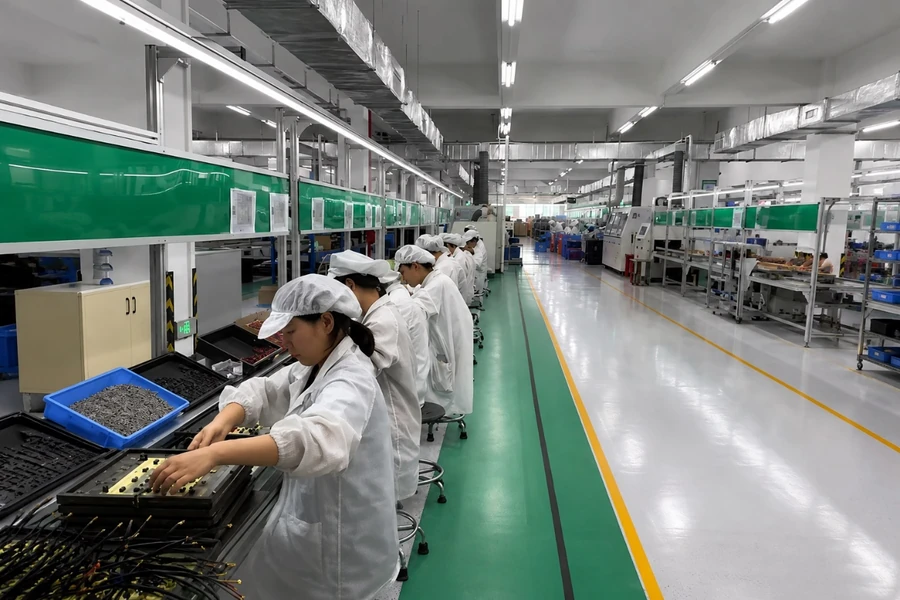
OEM Development Process
2) ODM: From an Existing Fixture to a Project-Specific Version
ODM usually follows: Existing Product → Specification Change → Engineering Check → Sample → Approval → Production
Changing the Finish, CCT, or Logo is usually straightforward. If the project changes the size, glass weight, or electrical system, the manufacturer must recheck whether the original structure can still be used. For example, after enlarging a Ø600 mm chandelier to Ø1800 mm, the original arm thickness, suspension points, and Canopy may no longer be suitable.
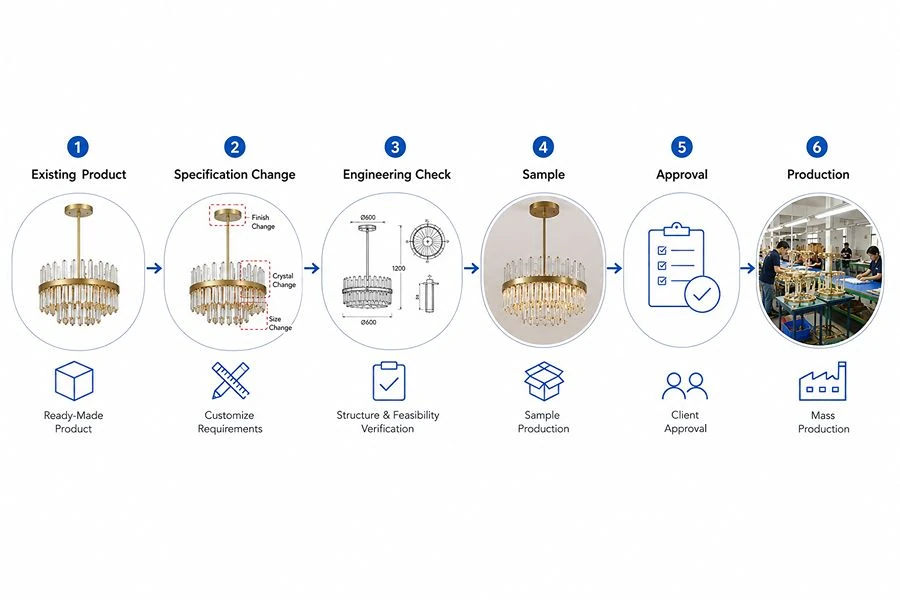
ODM Development Process
3) Many Projects Use Both OEM and ODM
A lobby feature chandelier developed from the designer’s drawings can use OEM, while wall lights and table lamps for 200 guestrooms can use ODM by modifying the Finish and electrical configuration of proven fixture designs.
The same fixture can also combine an original appearance with a proven internal structure. The client defines the appearance, while the manufacturer continues to use established Drivers, lamp holders, connectors, and internal structures, reducing part of the repeated development work.
3. How Do OEM and ODM Differ in Project Investment?
The two models require different levels of investment in upfront engineering, samples, tooling, certification, and production preparation. The actual input varies with the level of customization and project scale, so the fixture unit price alone is not a sufficient comparison.
1) Product Development and Upfront Investment
When OEM starts from the client’s design, it usually requires structural design, engineering development, BOM preparation, samples, and testing. For large and complex decorative fixtures, the actual cost depends on size, structural complexity, materials, tooling, and certification requirements. ODM can usually reuse the manufacturer’s existing product platform, so its upfront development cost is significantly lower than a completely new development. However, changes to the structure, electrical system, or dimensions may still require engineering verification and redesign costs.
2) Prototyping, Mold, and Tooling Investment
For OEM, mold and tooling costs are a core cost item and often the largest one-time expense. The actual cost depends on the number, size, material, and manufacturing method of the molds. Special castings, custom-shaped glass, and non-standard metal structures may require new molds or fixtures. If ODM can continue using existing tooling, it can reduce this cost.
3) MOQ and Order Volume
OEM is constrained by tooling amortization and therefore tends to have a higher MOQ. If an OEM project requires new molds, dedicated fixtures, and substantial Engineering work, a small order must absorb more development cost per unit.
ODM relies on established production capacity and existing product resources, so the MOQ can be very low. It is suitable for small- and medium-volume trial orders and projects that combine multiple product types.
4) Development Lead Time and Speed to Market
OEM must go through engineering development, sampling, approval, testing, and production, including mold fabrication, multiple sample revisions, and certification filing.
If ODM only changes the Finish, CCT, Logo, or selected compatible parts, it can reduce part of the upfront development work. If the size, structure, or electrical system changes, the development lead time will increase accordingly.
5) Testing, Certification, and Compliance Investment
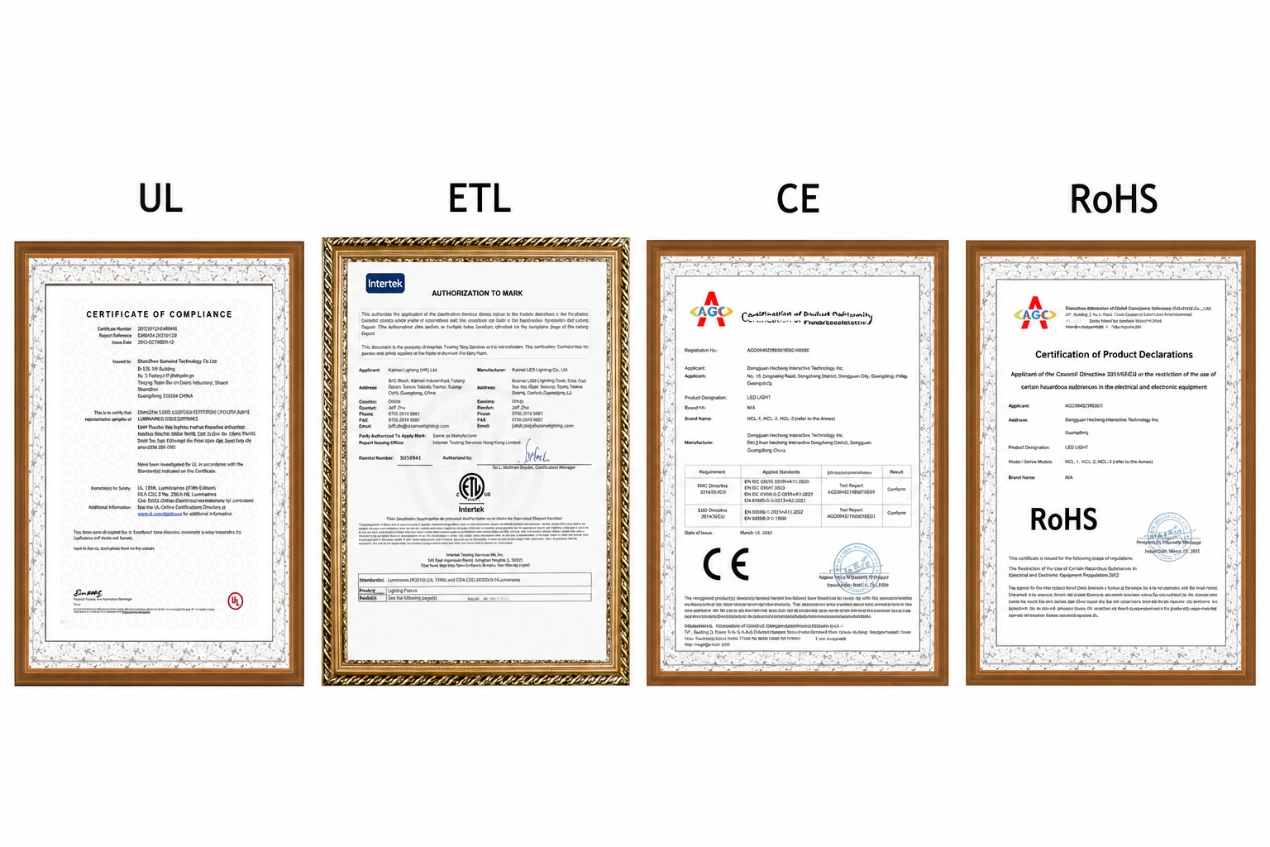
A completely new OEM structure has no existing certification coverage, so the project must bear the full cost of required testing and certification such as UL, ETL, CE, and RoHS, and must also repeat aging, salt-spray, and photometric/electrical testing.
ODM can reuse the factory’s existing valid certification. Minor appearance changes do not require retesting and add no new certification cost; supplementary testing is required only when electrical parameters or core structures change.
4. How Much Can ODM Decorative Lighting Usually Be Modified?
The core value of ODM is lower-cost, limited customization. All changes must stay within the existing tooling, structural, and electrical platforms. Once a change exceeds those boundaries, the project becomes OEM development. The following are common industry modification ranges and boundary conditions.
1) Logo, Nameplate, and Packaging
Logos, nameplates, hang tags, color boxes, outer cartons, and manuals usually do not require changes to the main product structure. However, any sampling, printing plate, packaging MOQ, or other charges should still be confirmed at the quotation stage. This is one of the most common forms of ODM customization.
2) Size, Color, and Surface Finish
Limited adjustments are supported. Typical changes include paint color, plating process, antique treatment, and protective topcoat; minor overall size adjustments can be made as long as they do not affect the tooling structure.
Changing the fixture proportions or adjusting suspension-chain fixing points may require tooling modifications and additional cost, so the work is no longer a pure ODM modification.
3) Light Source, Driver, Voltage, and Dimming Configuration
Within the dimensional limits of the existing electrical compartment and the allowable range of the existing electrical platform, the manufacturer can evaluate compatible light sources or Drivers and adjust voltage and dimming methods for the target market. If key electrical components or rated parameters change, the supplier should confirm whether the final configuration remains within the existing certification scope and carry out supplementary testing or recertification when required.
If the project requires a larger Driver, an enlarged electrical compartment, or a different wiring structure, the manufacturer must complete a new engineering review and confirm whether supplementary testing or certification is required.
4) Glass, Crystal, and Other Decorative Components
Crystal, glass, shades, and fabric accessories can be directly replaced when they use the same dimensions and mounting positions. If the glass size, weight, or mounting interface changes, the manufacturer should recheck the connectors and main structure. For handmade glass, the team should also approve physical samples for color, texture, bubbles, and allowable dimensional variation, then use the approved sample as the mass-production acceptance standard.
5) Which Changes Exceed the Existing Product Platform and Require Redevelopment?
The following changes usually require additional Engineering work, and some projects may move from a simple ODM modification to a more complete redevelopment:
- Change the main fixture structure, profile curvature, number of tiers, or openwork design;
- Adjust the load-bearing structure, mounting base dimensions, or suspension-point locations;
- Enlarge or reduce the electrical compartment, or replace the Driver and wiring with non-compatible specifications;
- Make major changes to the overall size, increase or reduce the number of lamp holders, or change the beam angle;
- Add waterproof, dustproof, or explosion-proof structures and change the product application environment.
5. What Risks Are Most Often Overlooked in OEM and ODM Projects?
Once the development model is selected, project risks often arise because responsibilities and documentation boundaries were not clearly defined at the beginning of the custom project. These issues are usually harder to resolve later.
1) Unclear Intellectual Property, Design Rights, and Tooling Ownership
In OEM projects, the ownership and usage rights for the client’s original design, the engineering structure developed by the manufacturer, 2D/3D drawings, BOM, and jointly developed elements should be defined separately. Paying for tooling does not automatically mean the client owns the tooling. ODM is usually based on the manufacturer’s existing product platform, and without an exclusivity agreement, the manufacturer may continue selling the same or similar products to other clients. The contract should clearly define Design Ownership, Tooling Ownership, Exclusivity, NDA terms, tooling transfer, and subsequent usage rights.
2) Existing Certification May No Longer Apply After Product Modification
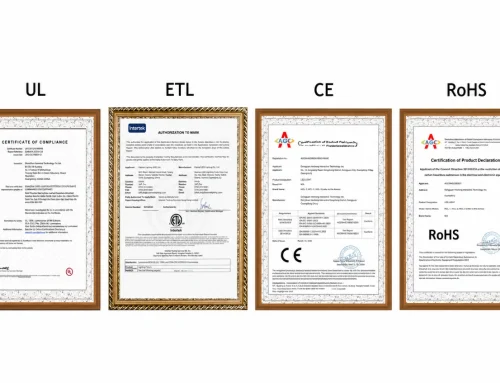
Both new OEM development and partial ODM modification can affect the scope of existing testing or certification. Replacing the Driver, wires, lamp holder, or LED system, or changing the internal structure or installation method, may require reassessment. The buyer should verify the final model, BOM, key components, product structure, and certification/test documents, and include compliance confirmation after configuration changes in the formal Revision process.
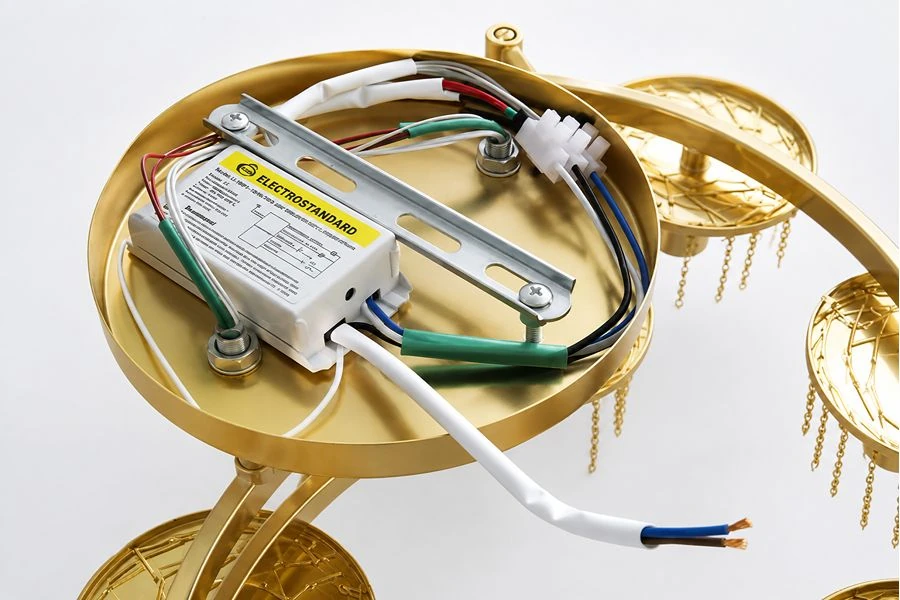
Key Electrical Components and Certification
3) If the Sample and Mass-Production BOM Are Not Locked, the Configuration Can Change
Actual risks include replacement of the Driver, wiring, metal thickness, glass/crystal grade, or other components during mass production, and these changes may not be immediately visible. Before mass production, the project should freeze the Approved Sample + Final Drawing Revision + BOM + Material Specification + Electrical Specification + Finish Sample. Any component substitution should require written approval.
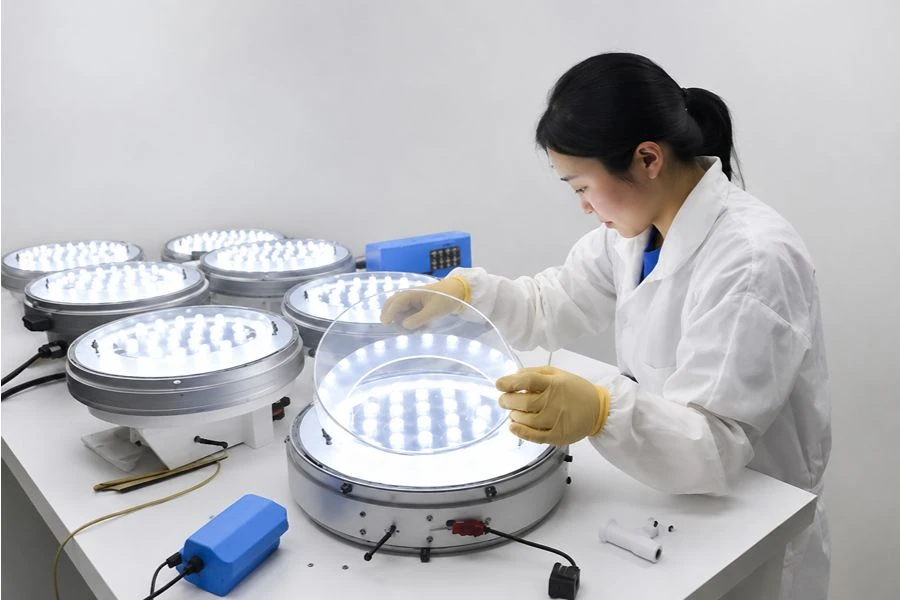
Approved Sample + BOM + Final Drawing
4) Unclear Boundaries for NRE, Tooling, and Design-Change Costs
OEM usually involves Prototype, Mold, Tooling, and Engineering costs. If ODM changes exceed the existing structural or tooling scope, the project may also become a redevelopment. If the quotation only lists the product unit price or a general “development fee,” later changes to dimensions, glass, or structure can easily generate repeated additional charges. The project should define the NRE breakdown, tooling costs, the number of sample revisions included and charges beyond that allowance, and the impact of each Revision on Cost and Lead Time in advance.
5) Insufficient Technical Documentation Can Create Supply-Chain Lock-In When Changing Manufacturers
Even if an OEM client retrieves the tooling, a new supplier may still need to repeat engineering and sampling if complete 2D/3D drawings, BOM, process standards, test data, and approved samples are missing. Under ODM, the client usually cannot directly obtain the manufacturer’s complete base design and tooling. Long-term projects should therefore consider supplier-switching capability in advance and archive the Final Drawing, BOM, Electrical Diagram, Finish Sample, Approved Sample, and key test data.
6) Risks in Spare Parts, Reorders, and Product Iteration
Hotel and commercial projects often have a lifecycle longer than a single order. If the final BOM and drawings are not retained for OEM products, it can be difficult to reproduce the fixture several years later when a Driver, glass component, or special connector is discontinued. With ODM, the manufacturer may discontinue an old model or upgrade the product platform, so the project should confirm whether the original model will remain available. The first order should therefore define the vulnerable spare-parts list, substitution rules, lifecycle of key components, and version-control method for future reorders.
6. What Types of Decorative Lighting Projects Are Better Suited to OEM or ODM?
The choice between OEM and ODM can be based on design maturity, development scope, quantity, and project schedule.
1) Projects with Complete Designs and Clear Specifications Are Better Suited to OEM
Projects with complete renderings, 3D models, dimensional parameters, material standards, and electrical specifications should prioritize OEM. This approach secures exclusive intellectual property, reduces product homogenization, and allows development costs to be amortized over larger purchase volumes for better long-term value. Typical applications include lobby feature lights, designer fixtures, and independent product collections.
2) How Should Projects with Only a Design Concept and a Need for Engineering Development Be Handled?
These projects do not necessarily need to be classified as OEM or ODM immediately. The team can first use a similar existing ODM platform, apply limited customization to suit the requirements, and have the factory complete the engineering development and build a complete technical package. Later volume iterations can then move to dedicated OEM development, substantially reducing trial-and-error risk.
3) Projects Requiring Fast Development and Lower Upfront Investment Are Better Suited to ODM
Projects with tight schedules, limited budgets, small- or medium-volume trial orders, market testing, or standard fit-out packages should prioritize ODM for faster implementation.
7. What Should You Confirm with the Manufacturer Before Choosing OEM or ODM?
Before formal development starts, confirm the design, costs, MOQ, certification, and mass-production documentation. This reduces later Revisions and additional charges.
1) Design, Tooling, and Intellectual Property
For OEM: confirm the full tooling cost, tooling number, and tooling ownership; whether the physical tooling, 3D drawings, BOM, and process documents can be transferred; and whether the contract states that the factory may not use the project tooling for other customer orders.
For ODM: confirm which modifications are free, which changes will trigger tooling modification / NRE, who owns the intellectual property of the original base design, whether a regional exclusive supply agreement can be signed, and the exclusivity conditions such as minimum purchase volume, validity period, and breach terms.
For the NDA: confirm whether it prohibits the factory from showing your designs and samples to third parties and from using them for other project development.
2) Certification, Compliance, and Electrical Configuration
Confirm the certifications required for the target market; for a new OEM structure, confirm the full certification lead time and estimated cost; for ODM, confirm the existing certificate number, whether the proposed modification will invalidate the certificate, and which components must be relisted.
Confirm the list of key components, including Driver, wiring, terminals, and LED light source; whether certificate-listed components are used; and the advance-notification mechanism for component substitutions.
Confirm whether complete test reports are provided, including aging test, salt-spray test, and photometric/electrical parameter reports.
3) Cost, NRE, Sample Revision, and Quotation Boundaries
Break down the quotation into the product unit price and one-time NRE items such as tooling, sampling, testing, and certification, and identify which charges are one-time and which are charged per occurrence.
Confirm whether samples are free, how many sample revisions are included, the pricing basis for each tooling or sample revision beyond the included quantity, and whether NRE can be refunded based on order volume.
Confirm the MOQ threshold, how NRE is allocated when the order is below MOQ, and the unit-price adjustment rules when order quantities increase or decrease.
4) Sample, Mass Production, and Quality-Control Standards
Distinguish handmade prototype samples from mold T1 samples; define the sample-sealing process and use the signed approved sample as the mass-production acceptance standard.
Define the AQL acceptance level and factory test items, including powered aging duration, salt spray, dimensions, surface Finish, and electrical safety.
Define the pre-production sample approval process. Mass production must not start without pre-production sample approval.
5) Lead Time, Project Milestones, and Deliverables
Define the complete project cycle – NRE development, sampling, approval, production, inspection, and shipment – with timing for each milestone, rather than quoting only the production lead time.
Define the deliverable document list, including 2D/3D drawings, BOM, installation instructions, certification reports, and labeling and packaging files.
6) Spare Parts, After-Sales Support, and Long-Term Supply
Confirm the spare-parts ratio supplied with the project and the pricing method for purchasing spare parts separately later.
Confirm the minimum number of years the model will remain available and whether, if the factory discontinues the model in the future, the client can obtain all technical documentation for reproduction by another supplier.
Define the warranty scope, including whether replacement parts are covered and which party bears cross-border logistics costs.
8. Conclusion
The main difference between OEM and ODM is the development starting point and the amount of engineering work that must be completed again. Before selecting a model, confirm the maturity of the design, whether the existing product platform can be reused, which structural and electrical configurations need modification, and how tooling, samples, certification, and technical documentation will be handled.
Postmodern Lighting can provide OEM and ODM development support for hotels, commercial spaces, and custom lighting projects, from design development and sample development through mass production and quality control. The appropriate model can be determined based on the project drawings, product specifications, quantity, and scope of modification. Contact Postmodern Lighting to discuss your project requirements in more detail.