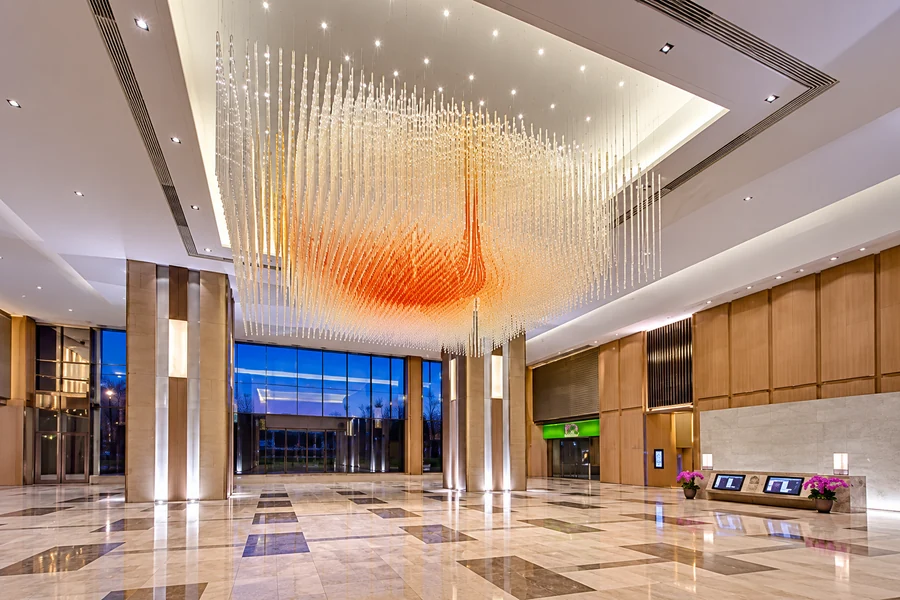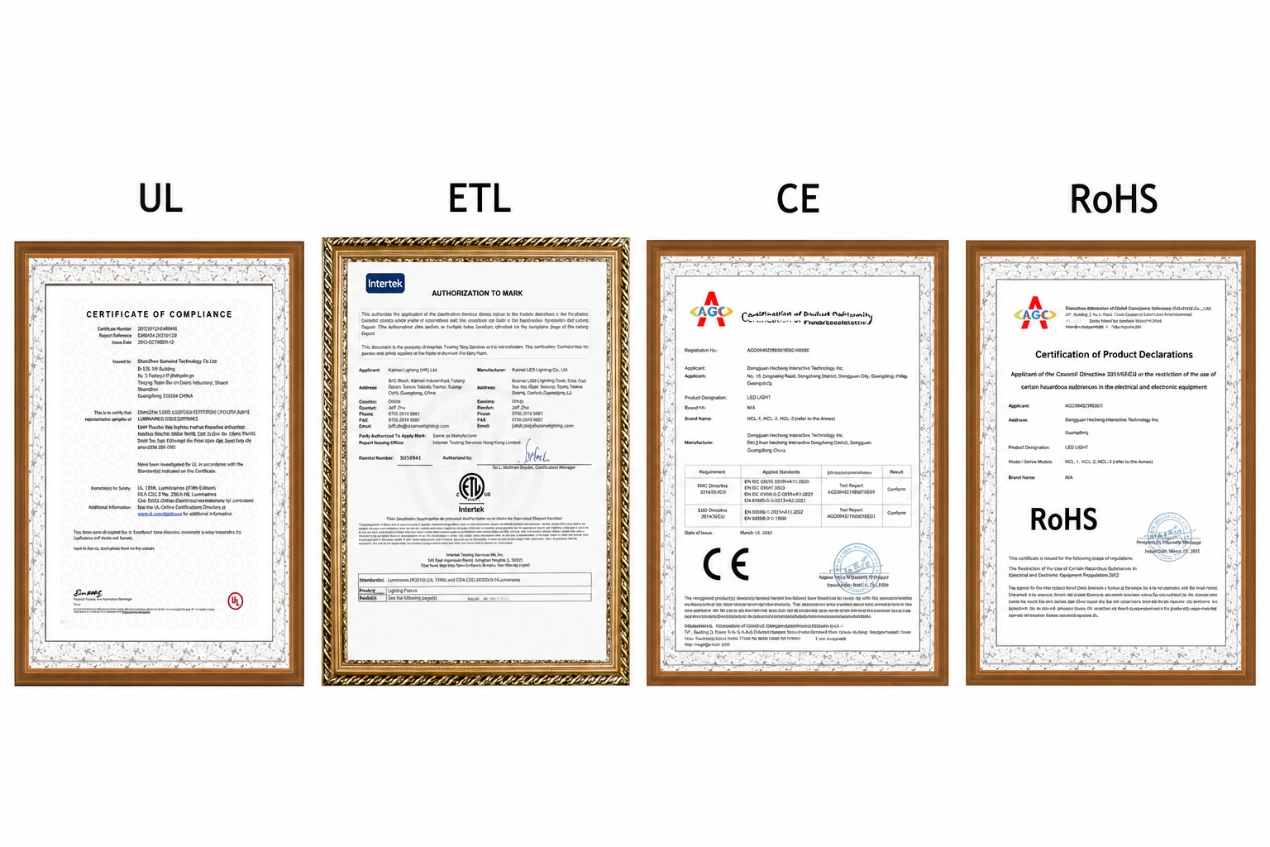
Decorative lighting procurement requires control of both fixture pricing and lead time. Hotel and commercial projects often involve multiple product types, customization, and batch delivery. If dimensions, Finish, or electrical parameters are not defined early, they may cause rework, delays, or even prevent installation on site.
This guide follows the procurement sequence from project requirement confirmation and specification development to supplier screening, RFQ and quotation, and receiving inspection. It explains the technical documents, quality checkpoints, and risk controls required at each stage, helping buyers make more accurate decisions and reduce information gaps and delivery risks.
1.What should be confirmed before starting decorative lighting procurement?
Early procurement decisions directly affect the efficiency of RFQ, sampling, and mass production. Before sourcing starts, first define the basic project requirements.
1) Is the project a standard purchase or a custom development?
Standard fixtures (stock models, fixed dimensions, and standard processes) have shorter lead times and lower risk, making them suitable for retail stores and straightforward fit-out projects. Non-standard custom fixtures (special-shaped structures, dedicated finishes, or modified dimensions and parameters) involve tooling, project-specific certification, and custom processes, so standard lead-time and cost assumptions do not apply.
2) Is the scope a single fixture or a complete hotel/commercial lighting package?
For a single fixture, focus on product quality and compliance. A complete commercial or hotel package requires coordination across multiple fixture types, consistent styling, batch color control, unified installation standards, and interchangeable spare parts. If the full package is purchased as unrelated individual items, finish consistency, spare-part compatibility, and after-sales maintenance can become difficult.
2.Step 1: Define Project Requirements and Procurement Specifications
Convert project requirements into clear, executable procurement specifications so all suppliers quote and develop technical solutions against the same basis.
1) Prepare the fixture schedule and define quantity, dimensions, and application area
At project start, convert the design drawings into a procurement schedule.
| Fixture ID | Area | Product | Size | Qty | Finish | Electrical |
| CH-01 | Lobby | Chandelier | Ø2400 × H1800 mm | 1 | Antique Brass | 3000K / DALI |
| WL-01 | Guestroom | Wall Light | W180 × H420 mm | 200 | Brushed Brass | 2700K |
| PL-02 | Restaurant | Pendant | Ø350 mm | 36 | Black + Glass | 3000K |
Hotel projects must also distinguish room types such as Typical Room, Suite, and Accessible Room. Do not simply calculate “2 wall lights per room × number of rooms.”
2) Define material, Finish, and appearance requirements
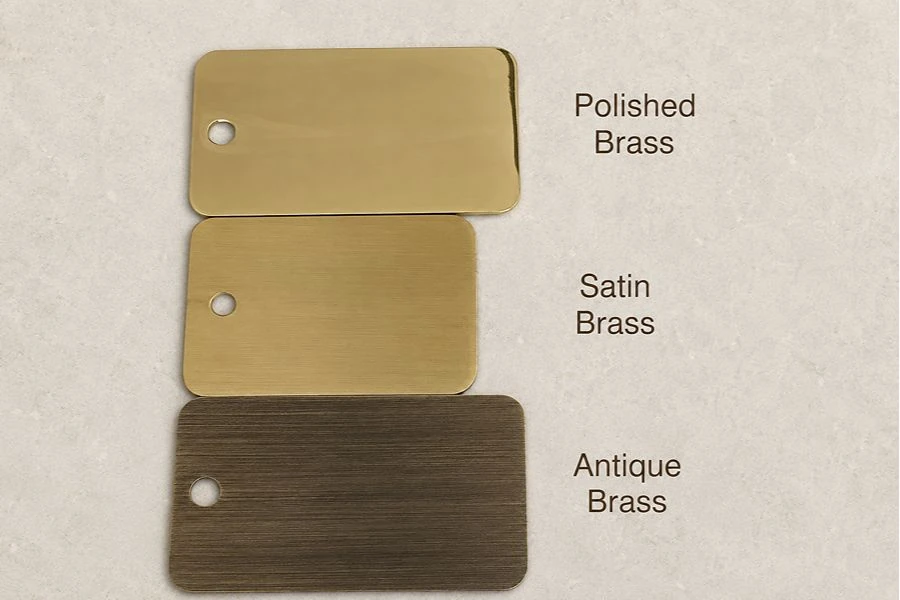
“Brass Finish” may mean Solid Brass, Steel + Brass Plating, or Brass Color Paint. The Specification should preferably separate the requirements as follows:
Base Material: Steel / Brass / Stainless Steel
Finish: Brushed Brass / Antique Brass / Polished Nickel
Decorative Material: Glass / Crystal / Marble / Fabric
Material / Finish Comparison
3) Define the light source, electrical configuration, and control method
At minimum, define Voltage, Wattage, CCT, CRI, LED/Socket, Driver, and Dimming. If a hotel project connects to DALI, 0–10V, or another control system, state this requirement at the RFQ stage.
4) Confirm installation conditions, target market, and certification requirements
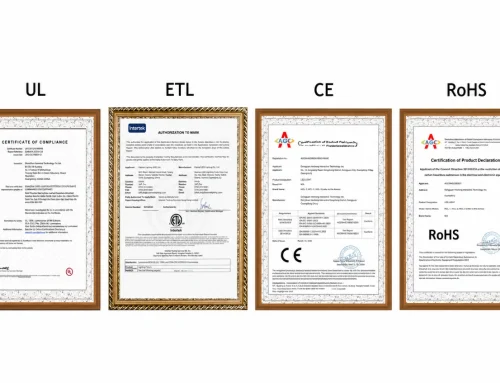
Compliance requirements differ between markets such as the United States and Europe. In North America, for example, UL 1598 is a common Luminaire standard, and LED equipment may also involve UL 8750. UL also distinguishes complete luminaire certification from Recognized Components.
3.Step 2: Find and Screen Suitable Decorative Lighting Suppliers
Once the specifications are clear, identify suppliers that can meet the project requirements. Evaluate actual manufacturing capability rather than relying only on catalogs and quotations.
1) Match the supplier to product and project complexity
For simple standardized fixtures, an assembly-focused factory can offer better cost efficiency. For large special-shaped chandeliers, whole-property customization, or high-compliance projects, use an original manufacturer with in-house metalworking, plating, and assembly capabilities.
2) How can you verify that a supplier has real manufacturing and engineering capability?
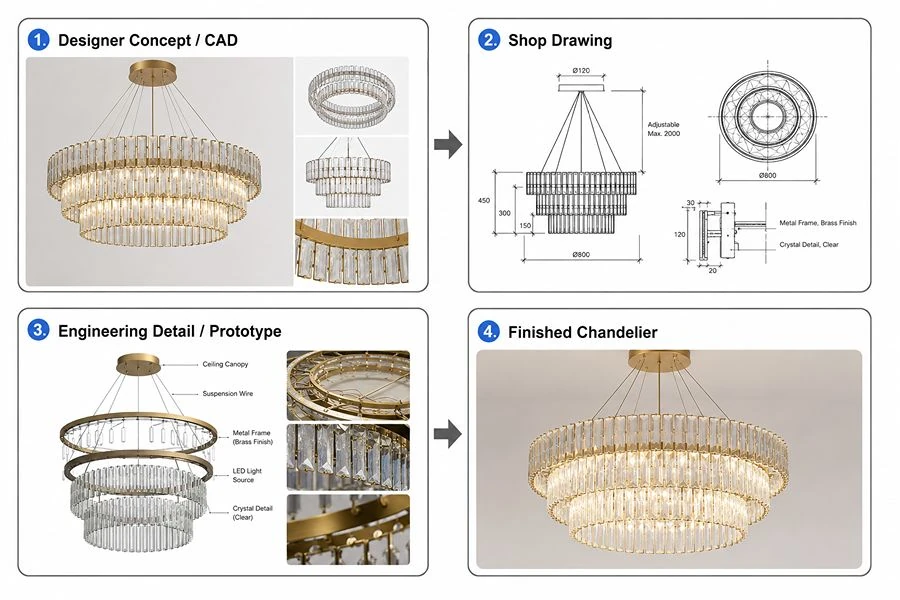
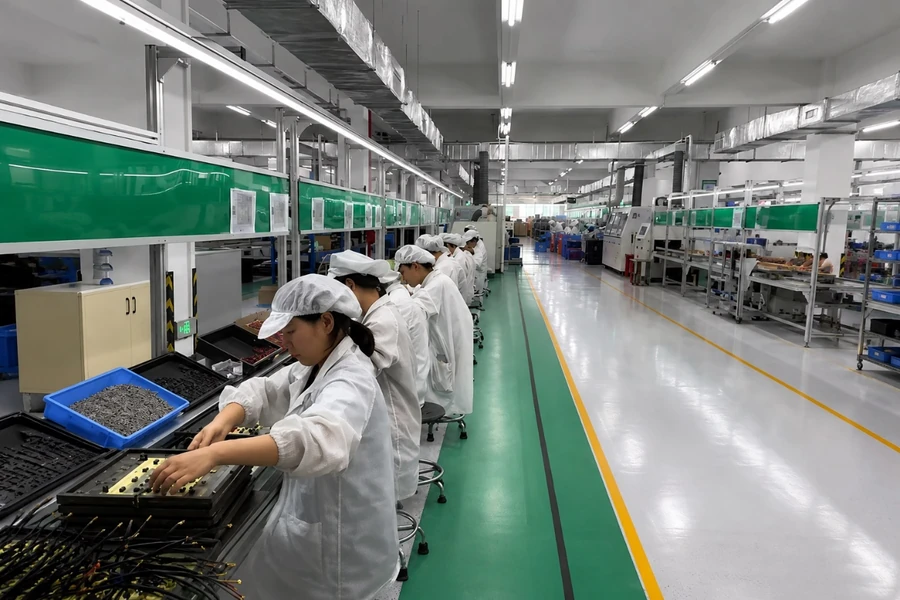
Use four checks: first, the supplier can provide complete workshop photos and evidence that core processes are performed in-house; second, it can provide completed projects and acceptance reports for similar products in the same market; third, it can provide third-party material, salt-spray, and electrical test reports; fourth, it has independent shop-drawing development and structural optimization capability to resolve site installation interface issues.
Lighting Factory Production
3) What warning signs should you watch for during initial supplier screening?
Watch for quotations far below suppliers offering the same specification; final pricing issued without reviewing the full specification; no similar overseas project references; inability to provide certification documents matching the actual model; reluctance to disclose material and electrical configurations; inability to explain who performs key processes; refusal to provide production records or third-party inspection; or requests to mass-produce complex custom products without Shop Drawing and sample approval.
4.Step 3: RFQ, Quotation, and Supplier Selection
A standardized RFQ allows suppliers to quote under the same conditions and makes quotations genuinely comparable.
1) What information should an effective decorative lighting RFQ include?
The RFQ should include: Fixture ID, Drawing/Reference, Dimensions, Material, Finish, Glass/Crystal, Electrical Specification, Quantity, Certification, Packaging, Destination, and Required Delivery Date.
For custom projects, also identify which dimensions cannot be changed and which areas allow supplier Value Engineering.
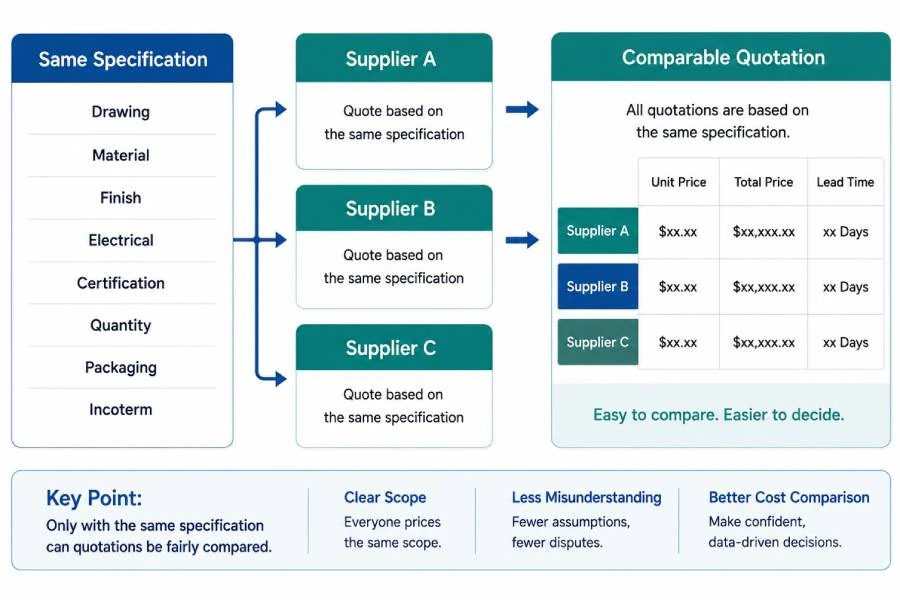
Standardized Quotation Process
2) How can different suppliers quote against the same specification?
Align all variables: material, process parameters, light-source and driver brands, certification standards, packaging and logistics requirements, and warranty terms. Require every supplier to quote against the same revision of the technical documents.
3) Besides unit price, what should be reviewed when comparing quotations?
Check hidden costs, including tooling, certification, third-party inspection, reinforced export packaging, spare parts, remote after-sales support, and return or replacement freight. Some quotations cover only the bare fixture and defer all other costs, which can push the final total above a normal quotation.
4) How can missing specifications and hidden costs in low quotations be identified?
Focus on three areas: what the supplier has not stated, which vague terms it uses, and which costs are marked Excluded.
Pay particular attention to terms such as “Standard Driver,” “Brass Finish,” “Crystal,” “Export Packing,” and “Certification Available.” These phrases appear informative but may still omit the brand, base material, grade, packaging structure, or certification scope.
5) When can the supplier be selected?
Proceed to supplier sampling only after quotation specifications are fully aligned, technical terms are clear, factory capacity matches the required lead time, previous projects have passed acceptance, and complete compliance documentation is available.
5.Step 4: Sampling and Sample Approval
Do not move custom fixtures directly into mass production. Use samples to verify the design and process first, so issues can be resolved as far as possible before production.
1) What should be checked on the sample?
Appearance: no scratches, bubbles, or color variation; uniform plating/coating; smooth welding and grinding. Structure: accurate dimensions, adequate load capacity, and smooth assembly/disassembly. Electrical: correct parameters, no visible flicker, proper dimming, and complete certification. Performance: conduct salt-spray and aging tests as required; high-end samples may require aging verification.
2) How should sample deviations be handled?
For minor adjustable deviations, issue a written corrective-action plan and verify the correction with a second sample. For major structural or process deviations, require the factory to re-optimize the product before proceeding to avoid batch failures. Record all corrective actions in writing; do not rely on verbal commitments.
3) How should a Golden Sample be established?
After all sample corrections pass, the buyer and supplier should sign and retain the physical approved sample and issue a Sample Approval document. Record all standards for appearance, workmanship, parameters, and tolerances, and state that mass production is acceptable when it matches the approved sample. This becomes the formal basis for production inspection and after-sales claims.
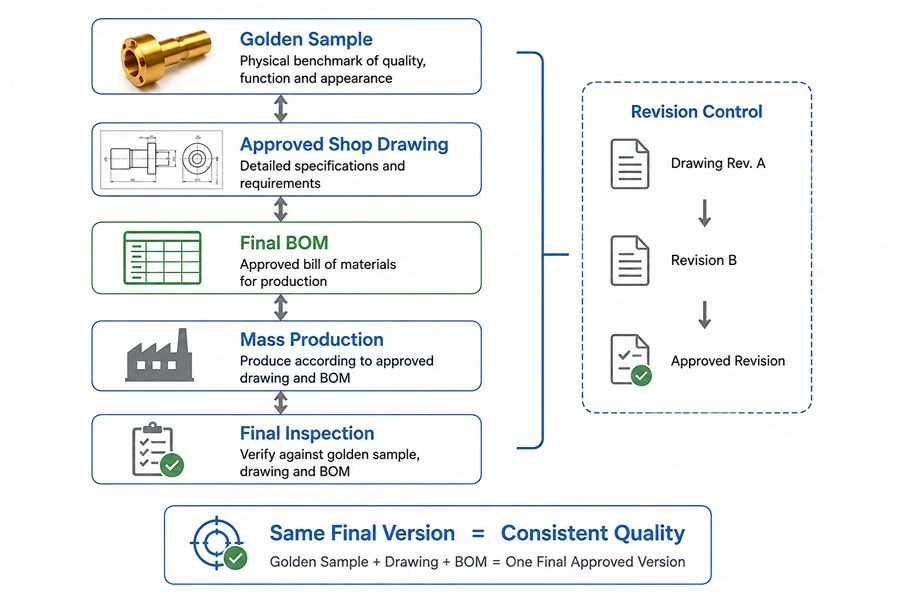
Golden Sample / Drawing / BOM Relationship
6.Step 5: Place the Order and Lock the Mass-Production Standard
The key when converting procurement requirements into mass-production criteria is to ensure that the factory continues to manufacture against the approved revision.
1) What documents must be finally confirmed before placing the order?
Verify the final detailed drawings, complete BOM (including brands and models for light sources, drivers, hardware, and auxiliary materials), surface-process parameters, electrical parameters, certification documents, and approved-sample criteria. Both parties should stamp or formally approve all documents.
2) What technical and commercial conditions should the PO define?
In addition to model, quantity, unit price, and payment terms, the PO or its attachments should define the Revision Number, acceptance criteria, Lead Time start point, packaging requirements, certification requirements, spare parts, Incoterm, and Deviation handling method.
For a stated “30 Days Lead Time,” specify whether the 30 days start from Deposit, Drawing Approval, or Sample Approval.
3) How should design changes be managed after sample approval?
After sample approval, do not modify the product directly through chat messages. Every change should be issued as a formal Change Order / Revision stating: what changes → why it changes → cost impact → tooling impact → certification impact → lead-time impact.
4) What conditions must be met before mass production starts?
Mass production can start after the drawings and BOM are frozen, the Golden Sample is approved, all PO terms are confirmed, and the factory has completed first-article trial production and verification.
7.Step 6: Quality and Lead-Time Control During Production
Once mass production starts, move quality control upstream from final inspection into the manufacturing process. This is especially important for custom fixtures, where deviations must be identified and corrected at critical operations.
1) Do not rely only on final inspection
Many defects are no longer economical to correct by Final Inspection. For example, an incorrectly sized brass part can be remade during machining. If discovered after plating, the part must be stripped, reground, and replated. If a body hole-position error is found only after the glass is installed, rework cost increases further.
For custom fixtures, use: Incoming Inspection → First Article → In-process Inspection → Final Inspection. The manufacturer should establish inspection points at Incoming, after machining, after Finish, after Assembly, and at Pre-shipment.
2) What does first-article, in-process, and final inspection each control?
First Article confirms whether the production method is correct. In-process QC prevents an error from being repeated across the batch. Final Inspection confirms that the finished product and packaging comply with the order.
3) Which production stages carry the highest risk?
Decorative lighting requires particular attention to:
Metal structure complete → before Finish: dimensions, welding, deformation;
Finish complete → before Assembly: color, scratches, color variation;
Electrical Assembly: Driver, wiring, grounding, and function;
Glass/Crystal Assembly: quantity, position, damage, and fixing;
Packing: accessories, labels, protection, and crating.
For products requiring North American certification, electrical inspection must go beyond a simple power-on check. UL-related information lists production-line safety checks such as dielectric withstand, grounding continuity, polarity, and strain relief.
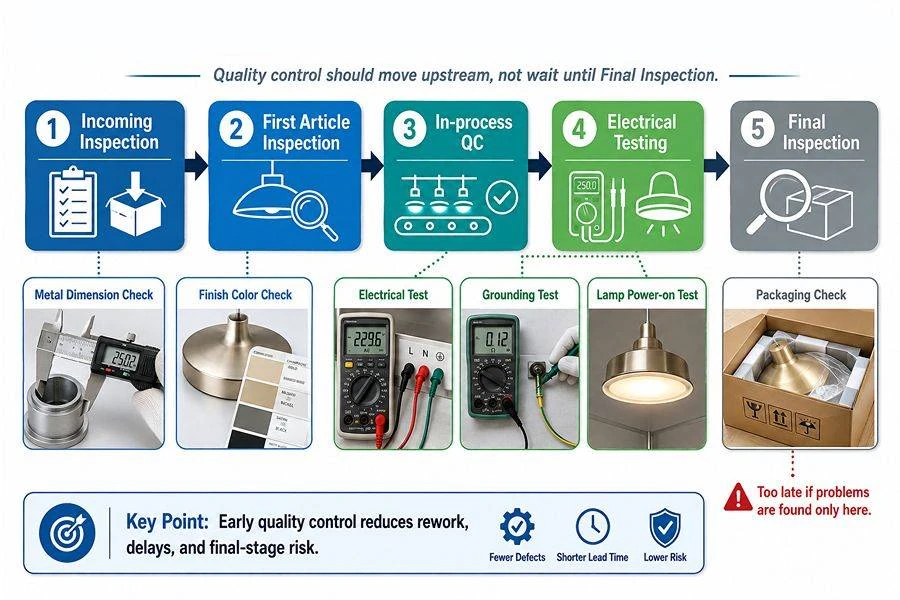
Decorative Lighting QC Checkpoints
4) How should production progress be tracked to identify delays early?
Track the milestones that actually control progress: Material Ready → Metalwork → Finish → Electrical → Assembly → QC → Packing. A report may show 70% completion, but if special glass has not arrived, the delivery risk may already be high. Buyers should focus on whether each Critical Component is completed on time.
5) When a quality deviation occurs, how do you decide whether to rework, remake, or accept it?
Ask three questions: Does it affect safety/certification? Does it affect function/installation? Does it exceed the approved appearance standard?
As a rule, safety, electrical, and installation issues should not be accepted through a commercial concession instead of corrective action. Minor appearance deviations that do not affect the project result may be accepted through Deviation Approval, but the decision must be documented in writing.
8.Step 7: Packaging, Final Inspection, and Shipment
After production, the products still require final confirmation before entering the transport stage. For decorative lighting, packaging and pre-shipment checks are also essential parts of delivery quality.
1) How should large chandeliers, glass, and crystal be packed?
Use a consistent module and package numbering system, for example: CH-01 / Module A / Crate 1 of 6. Glass, crystal, screws, suspension cables, and installation accessories should also correspond to the Fixture ID.
2) What should final inspection cover?
Final Inspection should cover: Quantity/SKU → Appearance/Dimensions → Finish → Electrical Function → Accessories → Labels → Packaging → Documents. Pre-shipment Inspection includes verification of order quantity, model, packaging, labels, and document completeness.
3) What documents should be prepared before shipment?
Depending on the order and market, documents generally include the Commercial Invoice, Packing List, shipping documents, project-required test/certification records, installation instructions, label files, and inspection records. For custom projects, retain the final Revision so the actual production version can still be identified when replenishment is required six months later.
4) How do EXW, FOB, and CIF affect responsibility?
EXW: the buyer bears logistics, customs clearance, and transport risks, making it suitable for buyers with a mature supply chain. FOB: the factory handles export customs clearance, while the buyer bears ocean-freight risk. CIF: the seller arranges ocean freight and insurance, with clear allocation of damage-on-arrival and cargo-hold risks; it is the most secure term for engineering projects.
9.Step 8: International Transport, Receiving Inspection, and Project Delivery
Procurement management does not end when the goods ship. International transport and site delivery still require receiving inspection and exception handling to ensure the products can proceed smoothly to installation.
1) How should you choose between ocean freight, air freight, and international courier?
Small samples and urgent spare parts are generally suitable for international courier. Air freight can be considered for small-to-medium batches, high-value goods, or schedule-critical shipments. Large hotel lighting orders and large chandeliers are generally better suited to ocean freight. For large decorative fixtures, do not compare freight only by kg. Some fixtures are relatively light but very bulky, so final freight cost is driven more by packed CBM.
2) What should be checked after delivery?
First verify: number of packages → outer-package condition → Fixture ID → quantity → glass/crystal → installation accessories → obvious transit damage. If a package is dented, punctured, or wet, photograph it before unpacking and retain the shipping documents for later liability assessment and claims.
3) What should be done if items arrive damaged, missing, or incorrect?
Records should trace the issue to: PO → Fixture ID → Carton/Crate No. → Part No. → Quantity
Simply telling the factory that “the Lobby Chandelier is missing three pieces of glass” is inefficient. Providing “CH-01 / Glass G07 / Qty 3” allows the replacement process to start directly.
4) What should be retained after project completion?
At minimum, retain the final drawings, BOM, electrical configuration, Finish Sample, installation instructions, and spare-parts list. For special glass, crystal, Drivers, and custom connectors, it is preferable to record the Part Number.
10. Conclusion: How Can You Build a More Reliable Decorative Lighting Procurement Process?
Decorative lighting procurement should resolve each issue at the stage where correction costs the least: finalize the Specification before quotation, resolve design and sample issues before mass production, control consistency during production, close packaging and document issues before shipment, and confirm site conditions before installation. For complex hotel and commercial projects, maintain three controlled references throughout the order: a unified Fixture ID, controlled Drawing/BOM Revision, and a clear Approval Record.
If you are sourcing decorative lighting for a hotel, resort, or commercial project, Postmodern Lighting can support fixture selection, custom development, sampling, and mass production based on your Lighting Schedule, drawings, renderings, or sample requirements. Send us your project information, and we can help evaluate the specifications, customization feasibility, and production plan, and provide a project quotation.