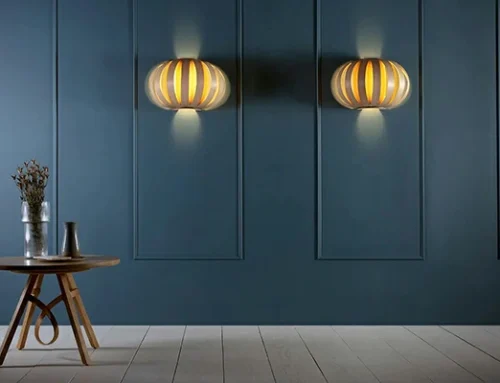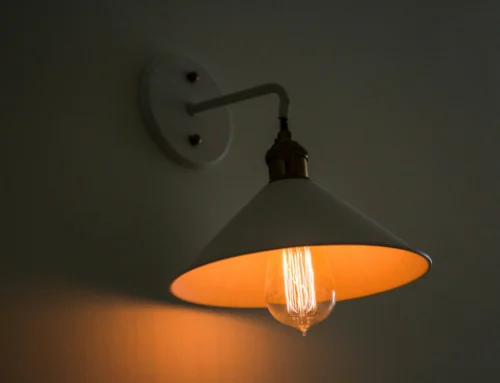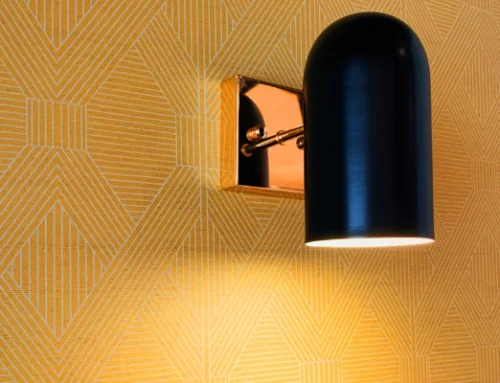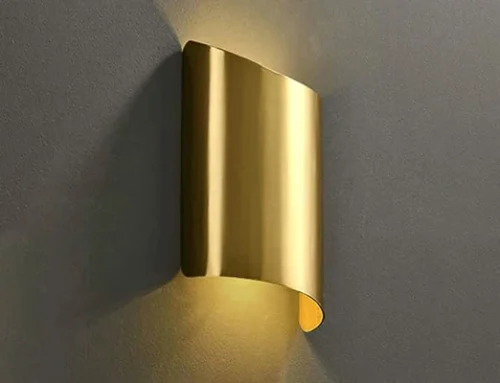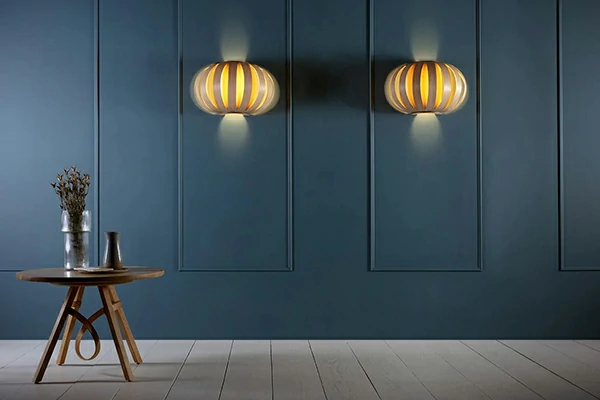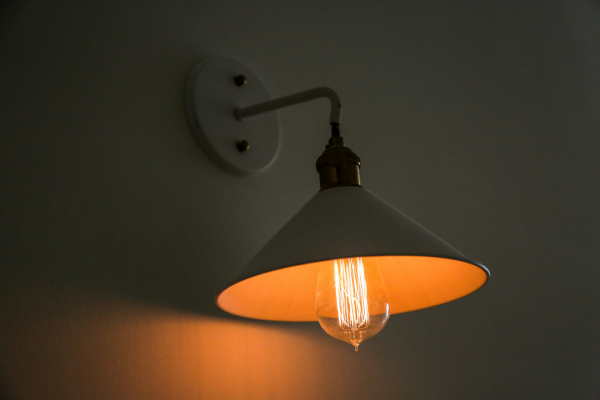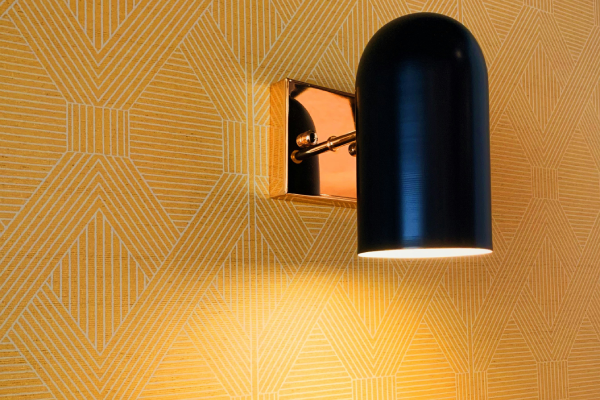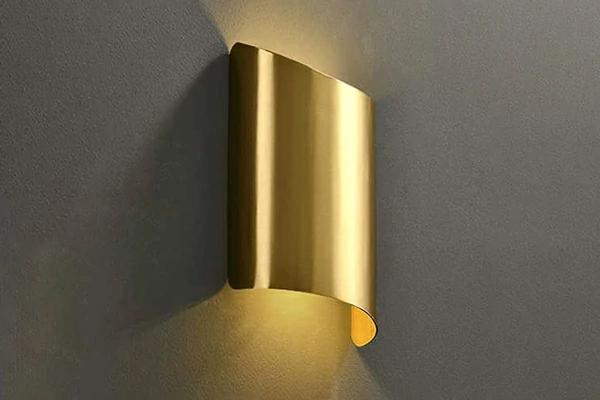
A wall sconce does not take up floor or table top space and is attached to the wall. They are more frequently employed for lighting up at the bedside, lighting up a corridor, lighting up the mirror, wall decoration, and outdoor entrance.
Based on practical experience in designing hotels, apartments, restaurants, and commercial establishments, this article describes all the basic types of wall-mounted sconces with regard to their materials, uses, and distribution of light, as well as the lighting requirements that have to be checked during project selection.
1.What Is a Wall Sconce?
Wall sconces are permanently mounted light fixtures that get fixed onto the wall or even junction boxes. They can provide either upward, downward, diffuse, directional, or decorative lighting.
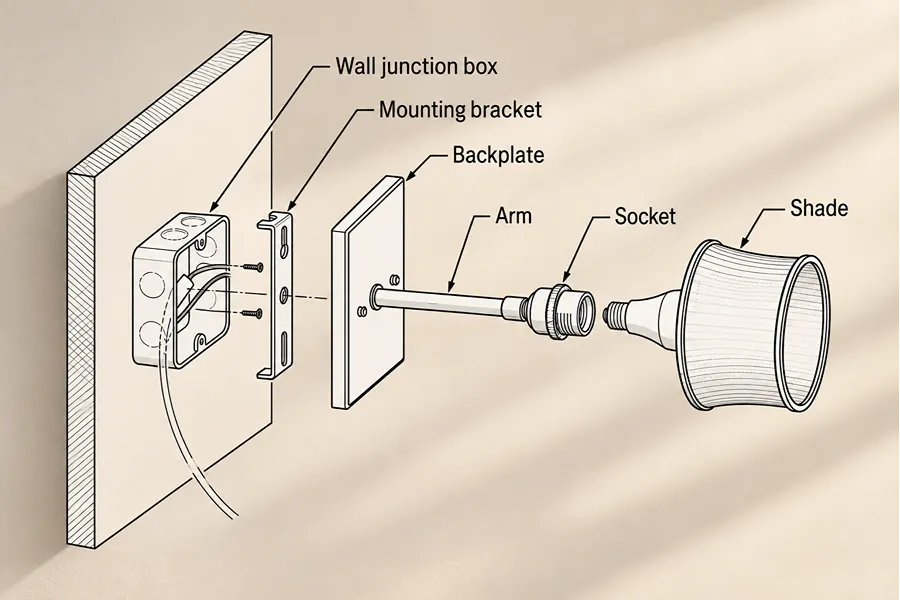
The typical wall sconce consists of:
- Backplate: Mounted against the wall and covers the mounting structure, junction box, wall opening etc.
- Mounting Bracket / Plate: This attaches to the junction box or wall.
- Arm / Frame: Connects the backplate to the light head. Some designs allow the angle or projection to be adjusted.
- Shade / Diffuser: Source shielding, light diffusion and light distribution.
Light Source: Replaceable bulbs E12 / E14 / E26 / E27, or built in LED. - Driver: Powers an integrated LED wall sconce and may be installed inside the fixture body or backplate.
- Switch / Dimmer: Sometimes bedside and reading wall sconces have an independent switch or dimming control.
2.What Are the Main Types of Wall Sconces?
There are mainly three types of wall sconces: according to the main direction of the light, the structure of the fixture and the use. Common types include:
1) Up-Light Wall Sconce
The up-light wall sconce illuminates the wall or ceiling above it by indirect light that bounces off the wall or ceiling above it. The wall sconces come with a bowl, half-shade, or upward open fixture body in order to reduce the direct light coming from the source.
Wall Sconce Structure
2) Down-Light Wall Sconce
A down-light wall sconce casts a lot of its light down to light the wall, floor or a local area below the fixture. A tight beam angle focuses the light cone on the wall and a wider beam angle will spread light out on the wall and the coverage will be wider on the floor.
3) Up & Down Wall Sconce
Up and down wall sconce will cast a light beam up and a light beam down. Most of the fixtures employ integrated LED + lens / reflector optics and are ideal for feature walls, facades, restaurant environments and hotel corridors.
4) Swing Arm Wall Sconce
A swing arm wall sconce is a type of sconce featuring a rotating or extending arm to alter the position of the light head and guide it away from the wall to the light use area. It is generally used in bedsides, reading room and guestrooms of hotels. It retracts for small spaces, extends for light overhead the reading area.
5) Reading Wall Sconce
A reading wall sconce offers directional reading light at bedsides and reading areas. Uses an adjustable head, pivot or flexible arm for directing the light. This type of lighting provides a more concentrated light and may even have an inbuilt switch to control the reading light from the bed/adjacent seating position.
6) Picture / Artwork Wall Light
A picture / artwork wall light illuminates paintings, photographs, artwork and decorative panels. It usually features a narrow, flat body which focuses light in a downward or diagonal direction towards the wall.
7) Decorative Wall Sconce
Decorative Wall Sconces are those in which the fixture and the wall form a more apparent relationship. Various materials, including brass, glass, crystal, alabaster and fabric, can create various decorative effects. They are often found in hotel lobbies, guest rooms, restaurants, receptions, and feature walls, and may be used for ambient lighting as well as decorative purposes.
3.Common Wall Sconce Materials and Shade Structures
Some of the most typical materials and shade types used with wall sconces are:
1) Brass, Steel and Aluminum
Brass offers a unique shiny and metallic look and can be polished, brushed, antique, and other finished. It is often employed for trims, frames and arms of wall sconces, or for backplates of decorative sconces.
Steel is strong and has proven manufacturing techniques. It is frequently used to attach plates, backplates, frames and interior fixture structures.
Aluminium is light, easy to cut and has good heat dissipation. The housings of integrated wall sconces with LED lights and light heads are typically made of it, as are wall lights used outdoors.
2) Clear, Frosted, Opal and Textured Glass
Clear glass allows the bulb and internals to be visible and is appropriate for decorative wall sconces, has less source shielding.
Frosted glass diffuses and decreases hot spots on the glass. It can be used in the bedroom, corridor, bathroom and other places where a soft light is required.
Opal glass offers better source shielding and obscures direct visibility of LED point sources. It is typically used for diffused wall sconces.
Textured Glass is a glass that has a pressed, blown or other texture to make the light refract and give the wall more interesting light and shadow play. Used in decorative wall sconces and in hospitality wall sconces.
3) Crystal
The prime applications of crystal are in decorative and luxury wall sconces as pendants, decorative panels or decorative fixture components.
The refraction and sparkle effect of cut crystal is pronounced and is used in hotel lobbies, ballrooms, restaurants, feature walls and other areas where decoration is important. Larger wall sconces need to be tested for backplate, mounting, and load capacity in the wall due to the relatively heavy and fragile nature of crystal. For designs involving multiple crystals or intricate setups, it should also be possible to remove and clean the crystals in the future.
4) Marble, Alabaster and Natural Stone
Marble and other natural stone are patterned, heavier in weight. They are typically used for panels, cover for backplates or decorative parts of fixtures.
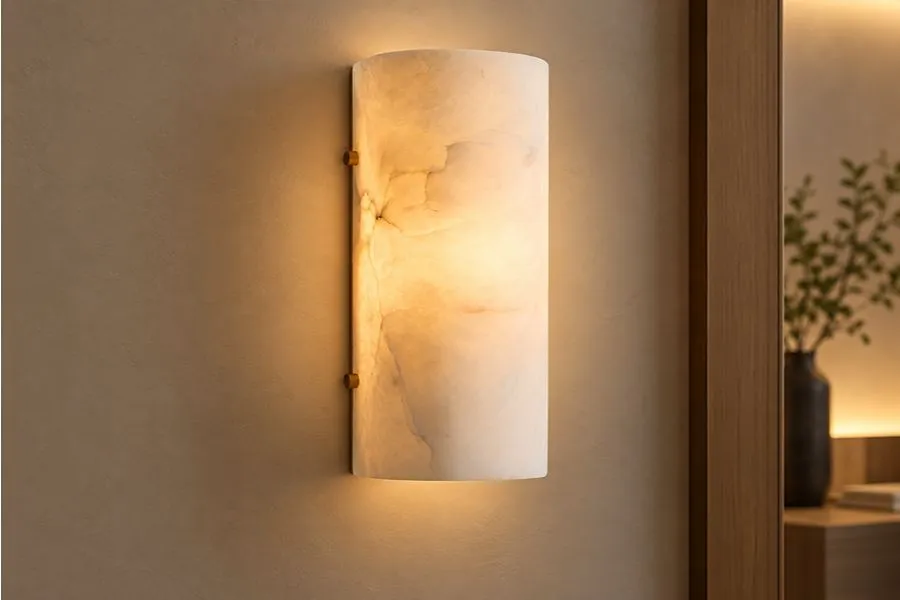
Alabaster has a natural translucency and can be used to diffuse or back-lit into a decorative panel and allow LED light to pass through the stone and create a soft luminous surface. Natural stone is available in various colors, patterns and translucency so the acceptable range of variation should be determined at the material sample stage.
Alabaster
5) Fabric, Acrylic and Other Decorative Materials
Fabric shades are common in hotel guestrooms, bedside applications, and residential wall sconces. They filter the light source and create soft lateral ambient light.
Acrylic is lightweight and can be formed into curved or irregular diffusers. It is commonly used in integrated LED wall sconces.
4.Wall Sconce Applications in Hotels, Apartments and Commercial Projects
Wall sconces will not take up floor or table top space and can be used for bedside lighting, vanity lighting, circulation lighting and decorative wall lighting, among others.
1) Hotel Guestroom Bedside
Wallsconces are frequently used in hotel rooms on both sides of the bed to provide bedside ambient and bedside reading lights. Besides the function of being a convenient source of light for bedside reading, bedside sconces can give soft light to the bedside area and reading wall sconces or swing arm sconces can be installed over the reading area to save the space of the bedside table.
2) Bathroom Vanity and Mirror
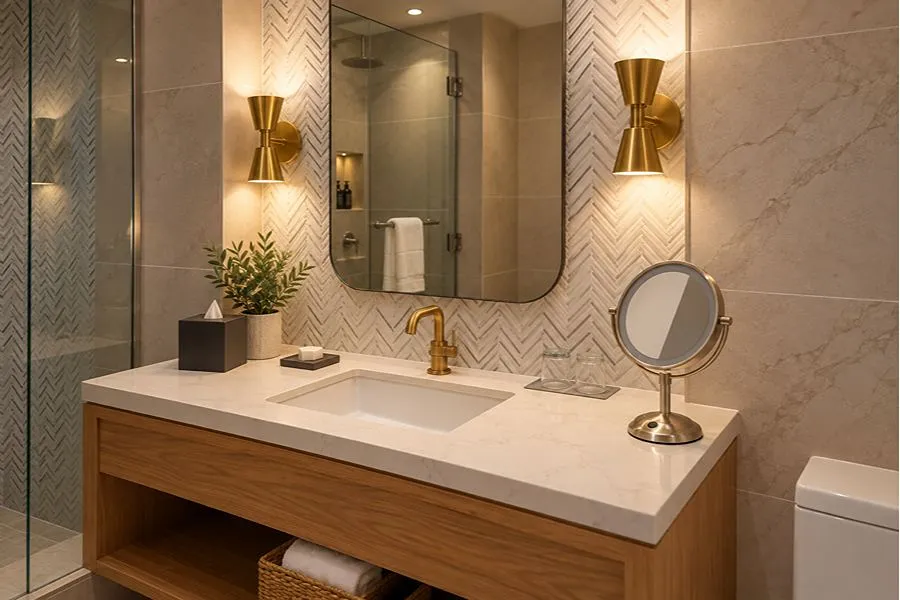
Wall sconces are frequently used in bathrooms to light up the mirror, washing hands, and make up on both sides of or above the mirror. Fixtures are positioned on either side of the mirror that provide light from the left and right, minimizing the shadow that may present under the eyes, nose and chin with just one overhead light. Frosted or opal glass are better for diffusing softer light.
Bathroom Vanity and Mirror
3) Corridor and Staircase
Wall sconces have been installed in corridors and staircases, often installed in a continuous line along the wall to complement the corridor light, and to provide a uniform wall-lighting in the space. Repeating light cones can be achieved by repeated upper and lower luma created by up & down wall sconces, and/or diffused wall sconces are appropriate for corridors and staircases that need to be lit with softer and more uniform luma.
4) Apartment Bedroom and Living Area
Wall sconces are often used to replace or complement table lamps in apartment bedrooms, helping to limit the use of bedside tables and table lamps on both sides of the bed. They tend to be hung near consoles, feature walls, and artwork, as well as next to sofas to offer lighting or decorative illumination in the living space.
5) Restaurant and Booth Seating
Wall sconces typically feature on dining areas, feature walls, and booth seating in restaurants. They light at low level in the booths and don’t need to take up table space. They can be placed in a row in a dining area or feature wall to brighten up the wall and provide a continuous visual layer around the main dining area.
6) Lobby, Reception and Feature Wall
Wall sconces are often matched in lobbies and reception areas with stone walls, wood panels, artwork and decorative panels. Wall sconces created with decorative, crystal or alabaster can be integrated into the wall surface and provide ambient or accent lighting. Arrangements can also be repeated to achieve a continuous visual effect on large wall surfaces.
7) Outdoor Entrance, Balcony and Facade
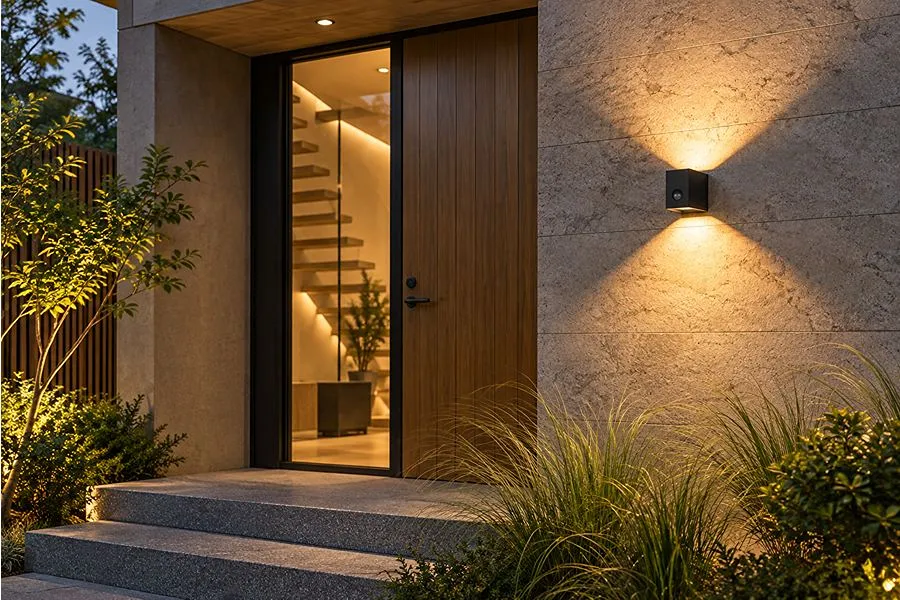
Outdoor wall sconces are generally used at entrance doors, balconies, terraces and building facades for entrance, circulation, architectural wall and lighting. Soft local lighting is better at balconies and terraces; up & down light or diffused light is good for illuminating doorways on entrances, or upper and lower lighting on facades.
Outdoor Entrance
5.What Are the Common Wall Sconce Light Distributions?
The main factors affecting wall sconce light distribution are light direction and shade structure. Typically used lights are up-light, down-light, up & down light, diffused and direct / reading light.
1) Up-Light
Up-light reflects the majority of the light on the upper wall and ceiling, providing indirect ambient light. Walls and ceilings tend to have higher reflected effects when they are light in colour. A tighter beam angle is more concentrated on the wall beam and a wider beam angle is a larger area of the wall beam lit.
2) Down-Light
Down-light makes the light mostly fall below the fixture, to form a downward wall beam and to supplement the local illumination below the sconce. The narrower the beam angle the more concentrated the wall beam will be and the wider the beam angle, the more coverage will be provided.
3) Up & Down Light
Up & down light is a common feature of modern wall sconces in which the light flows in both directions on the wall. Various angles of the beam will give you distinctly different wall-cone widths and spread. The upper and the lower beam angles can be set differently for an asymmetric wall pattern as well.
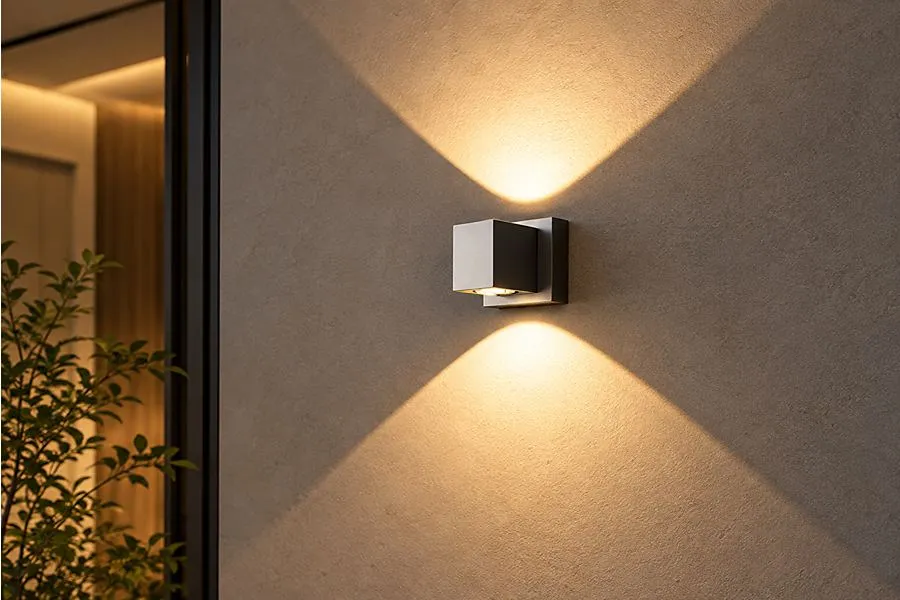
Up & Down Light
4) Diffused Light
Diffused light creates a more diffused look through the use of opal glass, frosted glass, fabric or an acrylic diffuser.
This will diminish the direct light of the LED or bulb and will help make the wall sconce a more even surface of light. It is widely utilized as a bedside lamp, bathroom fixture, corridor lamps or decorative wall lighting.
5) Direct / Reading Light
Direct / reading light is a light that is focused on a specific area by a directional head, reflector or lens.
Common at hotel bedsides, reading areas. Care must be taken in the direction of the beam and the extent of protection from the source to ensure adequate illumination of the reading area, with less direct glare to the user and less spill light onto the adjoining bed.
6.What Parameters Should Be Confirmed When Selecting Wall Sconces for a Project?
Wall sconces are fixed-installation luminaires. Confirm the wall mounting conditions, fixture projection, wiring method, and maintenance access.
1) Fixture Size, Wall Projection and Mounting Height
- Basic dimensions: Overall Height + Width + Fixture Projection.
- Fixture Projection: Measure from the finished wall surface to the outermost point of the fixture. This is especially important in circulation areas such as corridors and staircases.
- Mounting Height: Indicate the fixture mounting height above finished floor level (AFF) and clearly define whether the reference point is the fixture center, backplate center, or another datum.
- Swing Arm Sconce: Also confirm the maximum projection with the arm fully extended.
- Bedside Sconce: Coordinate the mattress, headboard, and normal seated position to determine the relationship between the light head and eye level.
2) Backplate Size, Mounting Structure and Junction Box
- Backplate: Confirm the height / width / diameter and verify that it fully covers the junction box and wall opening.
- Mounting Hole: Confirm hole spacing and the mounting bracket structure.
- Junction Box: Confirm box size and installation compatibility based on the project location and wall rough-in method.
- Installation Orientation: Clearly define horizontal / vertical installation, especially for linear and asymmetric wall sconces.
3) Light Source, Beam Angle and Wall Pattern
- Replaceable Bulb: Confirm socket type, maximum wattage, bulb size, and lumen output.
- Integrated LED: Confirm rated power, lumen output, LED module, and driver.
- Beam Angle: For up / down wall sconces, 15°, 30°, and 45° can be used as common beam-angle references. Select the angle according to the required wall pattern.
4) Switching, Dimming and Bedside Control
- Bedside Reading Sconce: A fixture-mounted switch can allow direct control from the bedside.
- Decorative Wall Sconce: It can connect to a wall switch, dimmer, or room control system.
- Dual-Light Fixtures: Decorative light and reading light can use independent controls.
- Dimming: For integrated LED products, confirm driver compatibility with phase-cut, 0–10V, DALI, or the project-specified control method.
5) IP Rating, Driver Location and Maintenance
- Bathroom: Decide on the IP rating based on the location of the fixture in relation to the water source (basin, shower, bath etc), and any local requirements. Some splash-resistant products have a general product reference of “IP44” but this is not to be interpreted as an alternative to specific requirements in bathroom zones.
- Outdoor: Covered balconies / entrances and fully exposed facades have different water-resistance requirements. Product Ratings: IP44, IP54, and IP65 – depending on the rain exposure.
- Driver Location: Determine if the driver is in the fixture body, backplate, junction box or remote location.
- Maintenance: Check if the LED Module, Driver, Diffuser and other parts can be replaced without the need to remove the fixture body from the front of the fixture.
7.Summary
Wall sconces can be installed at bedsides, bathrooms, corridors, stairway, restaurants, lobbies, feature walls and outdoor spaces. Up-light, down-light, up & down, reading, picture light, diffused and decorative sconces may be used in projects depending on the application.
If one is considering or specifying wall sconces for any hotel, apartment, restaurant, or other commercial installation, the interior plan, wall elevation, fixture schedule, and lighting specification can be mailed to Postmodern Lighting. The size, materials, light distribution, mounting, and electrical layout of fixtures can all be verified according to the requirements of the project and location of the installation.