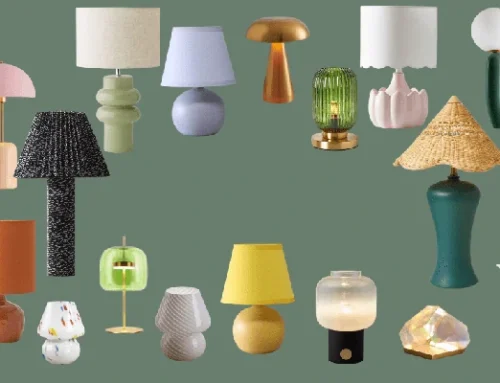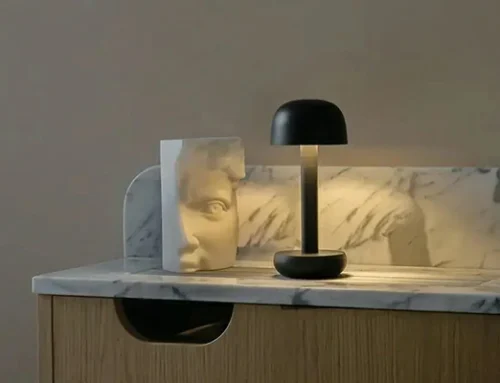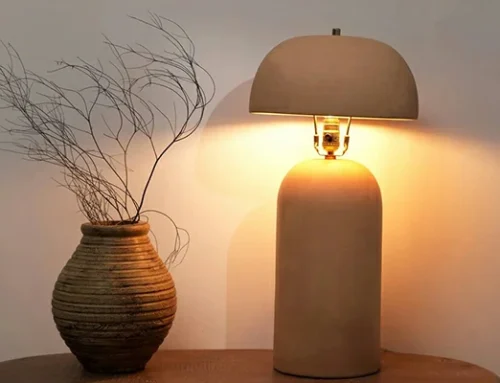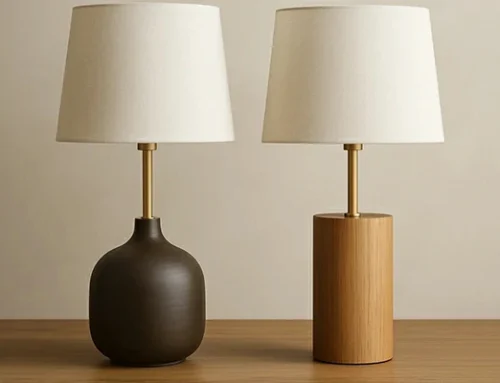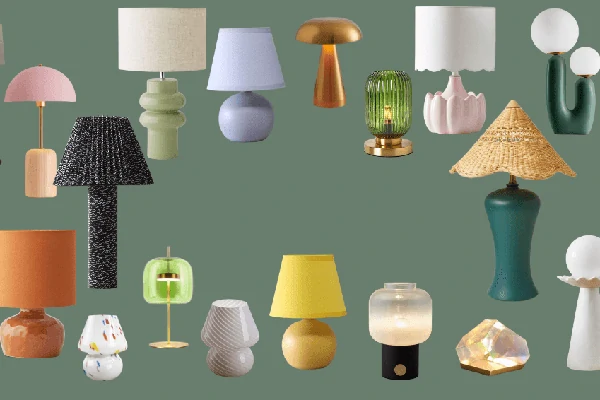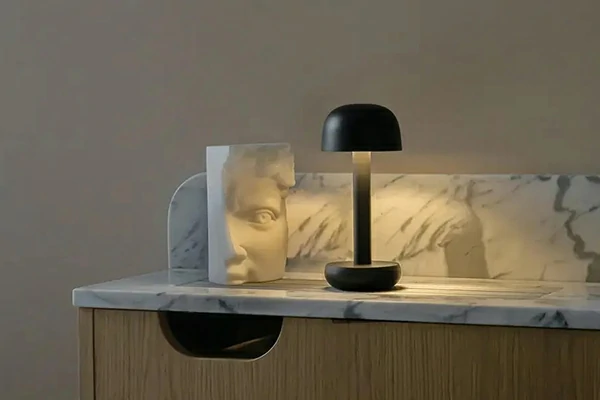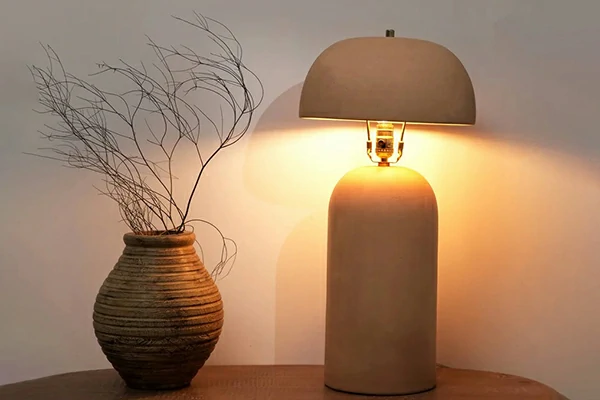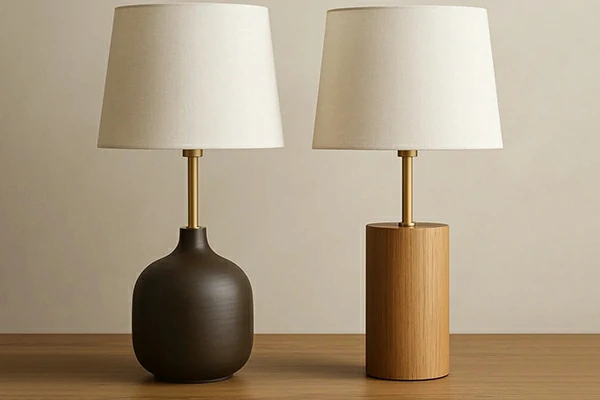
Table lamps are usually mounted on furniture like a bedside table, desk, console, side table or restaurant table. They offer a range of bedside lighting options, reading and task lighting, ambient lighting that can be focused on a specific area, and decorative lighting.
In this guide, Postmodern Lighting is going to describe the common types of table lamps and their materials, the places where table lamps are used, kinds of table lamp shades, effects of lights, dimensions and size, materials of lights, parameters to be considered during the engineering projects and how to charge and maintain table lamps.
1. What Is a Table Lamp?
A table lamp is a standalone lamp fixture mounted on furniture surfaces like bedside tables, desks, side tables and consoles, and typically fitted with a base of its own. A typical table lamp mainly consists of the following components:
- Base: Supports the lamp body and determines the tabletop footprint.
- Stem / Body: Connects the base to the lamp head and serves as the main decorative structure.
- Shade / Diffuser: Controls light diffusion, shielding, and light-source visibility.
- Light Source: Common options include an E26 / E27 replaceable bulb or integrated LED.
- Switch / Dimmer: May be located on the base, stem, lamp holder, or power cord.
- Power Cord & Plug: Supplies power to a corded table lamp.
- USB / USB-C: A common charging feature on hotel bedside lamps.
- Battery: Supplies power to a portable / cordless table lamp.
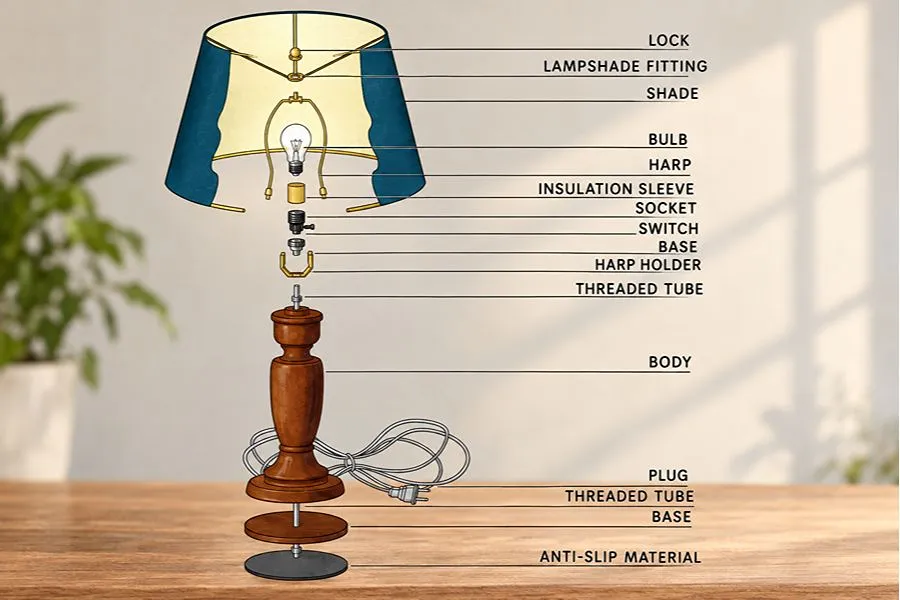
Table Lamp Construction
2. What Are the Main Types of Table Lamps?
Table lamps can be divided according to their functions, fixture structures and their power supplies into bedside, desk / task, accent, buffet, portable / cordless and adjustable types. There are many types of common occurrences, as described below:
1) Bedside Table Lamp
Bedside table lamp is typically found in a guestroom or bedroom in a hotel or motel, for ambient light at the bedside and localized light to read by. It is usually made of a base, a lamp body and a shade, and may be provided with a fabric shade or an opal glass to give a softer light. A bedside lamp with a switch, dimmer, USB-A or USB-C may also be built into the base of the bedside lamp to allow for bedside lighting, bedside lighting control, and charging of devices.
2) Desk / Task Lamp
Desk / task lamp is primarily for reading, writing and office activities, with more focus on task guidance to the desk work area. These generally include a directional light head, pivot joint, swivel head and adjustable arm. These make it possible to move the head and the direction and focus of the light; they enable the user to focus the light on books, documents or the work area on the desktop.
3) Accent Table Lamp
The accent table lamp has the main function of local illumination and mostly consists of ceramic, glass, crystal, alabaster, marble, or decorative metal body. This type of lamp is usually located on side tables and consoles, in lobby lounges and guestrooms, where the body material together with the shade and low illumination provides a decorative effect.
4) Buffet Lamp
The buffet lamp is characterized by a tall and thin body and a thin base, which allows it to be installed on consoles, sideboards, and buffet cabinets. One possible design includes two lamps located on both sides of a mirror or some other artwork or decoration.
5) Portable / Cordless Table Lamp
Portable / cordless table lamp is a battery powered table lamp without a fixed cord. It’s frequently installed on restaurant tables, bar counters, terraces, outdoor eating spaces, hospitality lounges, and more. These lamps are also small, with a small base, and compact body for positioning on dining tables or bar counters. Some models have several dimming options and can be powered via USB, a charging base or a multi-charging tray.
6) Adjustable Table Lamp
A table lamp with an adjustable arm, pivot joint, swivel lamp head or other moveable feature to alter the lamp head position and direction. The height, angle and reach of the light-head can all be adjusted to suit the application. These lamps are frequently found on desks, in reading rooms and hotel work spaces. Some table lamps are also decorative, and they have adjustable structures for flexibility.
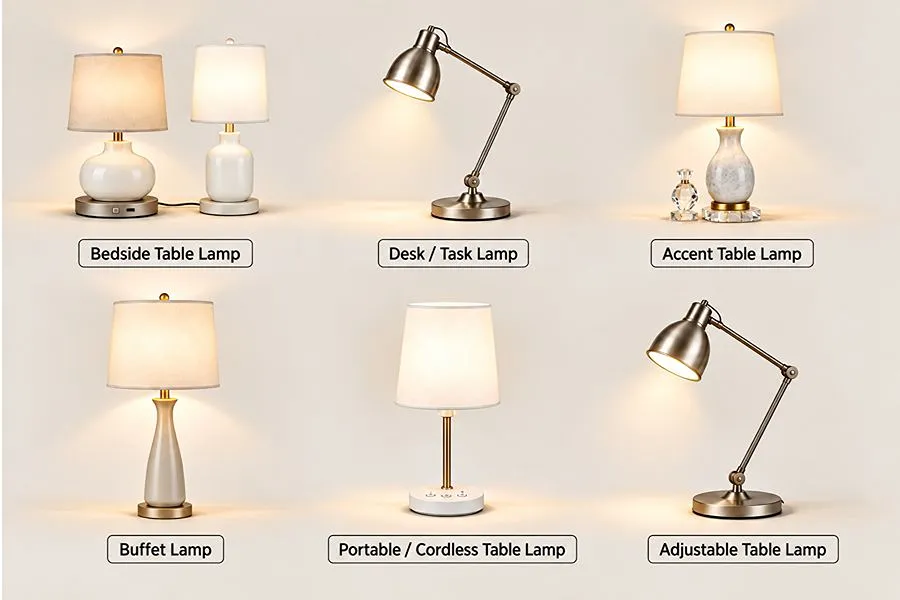
Table Lamp Type Comparison
3. What Materials Are Commonly Used for Table Lamps?
The materials used in making table lamps have an impact on the weight, stability, light transmission and production process. Brass, steel, aluminum, glass, crystal, marble, alabaster, ceramic, wood and resin are all common materials. The base, body, stem or decorative elements are usually made of different materials.
1) Brass, Steel, and Aluminum
Typically, the base, stem, adjustable arm and internal supports are made of steel. Internal steel plate or cast iron can be added to provide base weight to bedside or side-table lamps, while maintaining a small base.
Brass is often used to create a decorative body and stems, as well as for decorative trim, and can be polished, brushed, antique, and more.
Aluminum is light weight, and has good machinability and heat dissipation properties. It is widely employed in integrated LED light heads, task lamps and certain shades.
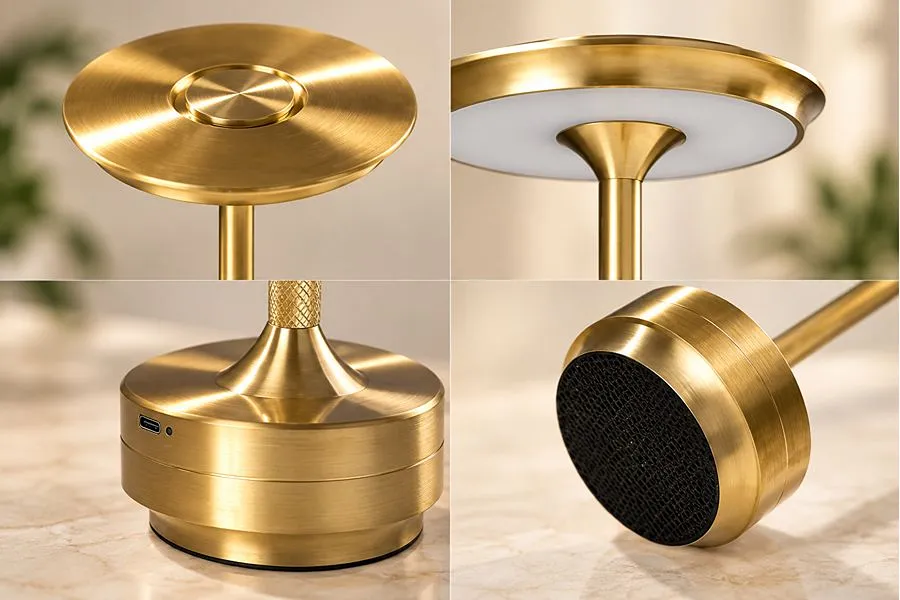
brass-metal
2) Glass and Crystal
Clear Glass provides transparency of the bulb and internal structure; Frosted / Opal Glass diffuses the light and limits the amount of direct light see-throughs; Textured Glass provides light and shadow play in different ways through its surface texture.
Cut surface forms refractive effects and is the primary use of crystal in table lamps.
Comparable materials to crystal and thick decorative glass are acrylic and metal and are less heavy and fragile. The stability of the base and the impact risk need to be taken into account when installing base in lobbies, consoles, etc.
3) Marble, Alabaster, and Natural Stone
The density of marble and granite is relatively high, and can be used for decorative bases to add base weight.
Alabaster is natural veined and translucent; it can be used for bases, bodies, or illuminated decorative parts.
Natural stone will have a natural texture, color and translucency. The allowable variation in color and texture should therefore be determined by production.
4) Ceramic
Ceramic has a wide range of applications for table lamps, many of which are decorative, and can be manufactured with matte, glossy, crackle, reactive-glaze and other surface finishes. Natural colour and textural variations can be produced using the use of reactive glazes and approved samples may set the acceptable variation range.
5) Wood, Resin, and Acrylic
The bases, stems, and decorative bodies are usually composed of wood, and have the original grain.
Resin can be used to make complex shapes and can also replicate the stone, wood, and other surface effects.
Acrylic is light, moldable and light transmitting. It can be applied to the transparent or translucent parts of modern table lamps and integrated LED products.
4. Table Lamp Applications in Hotels, Apartments, and Commercial Spaces
The applications of table lams are quite varied, depending primarily on the layout of the furniture, on the functional needs and on the position of the tabletop. The most common applications in hotels, apartments and restaurants as well as commercial buildings are:
1) Hotel Guestroom Bedside
In the hotel room, lamps are typically installed on both sides of the bed on a nightstand to offer general lighting around the bed as well as a reading light. A fabric shade or opal glass can be used for bedside table lamps to dim the bedroom lighting. Bedside control and charging projects can also be powered by models that feature integrated switches, dimmers, USB-A or USB-C.
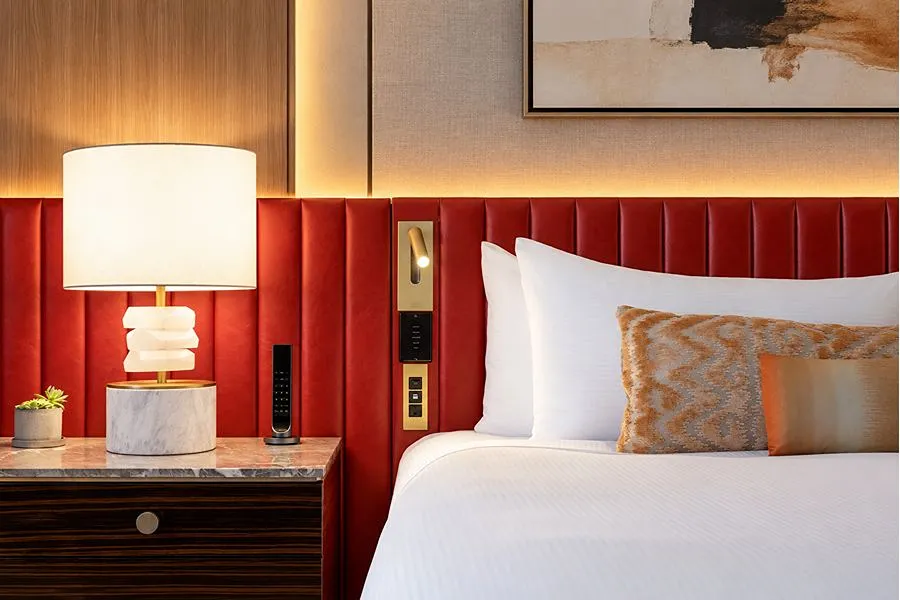
Hotel Guestroom Application
2) Hotel Desk and Work Area
Desk / task lamps are often utilized in desk areas at hotel desks and work spaces for localized reading / writing / laptop lighting. The use of a directional light head, adjustable arm or swivel head can focus light on the desktop work surface and minimize spill in the surrounding rest surface.
3) Apartment Bedroom and Living Area
Table lamps are used for night lighting in apartment bedrooms frequently with side tables. They are primarily used in living spaces on side tables next to sofas, consoles and cabinets. A small side table is suitable for small base lamps and longer consoles can be used for taller accent lamps or mirrored table lamps to maintain a scaled lamp to the furniture proportions.
4) Restaurant Table and Booth Seating
Table lamps are primarily used in restaurants for low-level localized lighting around dining tables, over booth seating and in bars. Unlike fixed table lamps with cords or plugs, these are not limited to the location of a fixed outlet or power cord and can be rearranged to various two person, four person or combined table configurations. Small decorative table lamps can also be combined with pendants and wall sconces and other lighting fixtures to provide layered lighting at various levels in fixed booth seating.
5) Hotel Lobby, Lounge, and Reception
Table lamps are often used to coordinate with side tables, consoles, reception furniture, seating groups in hotel lobby areas, lounge areas and reception areas. Table lamps can serve to provide additional light in the vicinity of sofas or lounge chairs. Decorative Table Lamps in Ceramic, Glass, Stone and other materials can be used for Reception or Lobby Consols. Two same table lamps can be placed symmetrically on longer consoles with a mirror, artwork or wall decoration to create a complete composition.
6) Portable Table Lamp Applications in Restaurants and Hospitality Areas
Portable / cordless table lamps are found in various hospitality spaces, such as hotel terraces, outdoor dining spaces, pool areas, rooftop bars, etc., where there is no convenience of fixed power cords.Lamps will not require the use of a tabletop power cord and can be placed directly on a dining table, outdoor table or side table, a bar counter or patio table. They can also be quickly moved around to suit the seat arrangement, event setup, or for indoor/outdoor tables.
5. Table Lamp Shade Types and Lighting Effects
The direction, diffusion and visibility of the light source are directly influenced by shade material and shade shape. The shade type should then be compatible with the lamp use to which it is to be applied.
1) Fabric Shade
Soft ambient light is often found on bedside, hotel guestroom, lobby lounge and residential table lamps and these lamps are usually fitted with fabric shades. These are made from a variety of fabrics such as linen, cotton, polyester and blends. Fabric filters and diffuses light. Fabrics with low transmission or a darker color tend to create a more even soft light; light-colored or high transmission fabrics create a brighter soft light, with more light passing through the lateral openings.
2) Opal and Frosted Glass Shade
Bedside, ambient and integrated LED table lamps are often clad in opal and frosted glass shades to keep the bulb or LED point source out of view. Opal glass will offer greater diffusion and shielding in order to produce a more uniform soft light. Frosted glass can also transmit some light and diffuse intense light sources to create a softer look and to minimize hot spots and shadows.
3) Clear and Textured Glass Shade
Clear or textured glass is used for accent, decorative, and lobby table lamps, where the purpose is to show the light source or the glass texture or the decor. The original brightness and the original direction of the light source are retained, and the bulb and the inner structure can be seen through the clear glass. Light is scattered through the textured glass that is carved with patterns, giving additional effects of light and shadow to other surfaces.
4) Metal Shade
Desk / task lamps, reading lamps, and adjustable table lamps are often fitted with metal shades to help direct light at the work area. Metal has high opacity and much of the light passes out through the shade opening, resulting in more light directed down or outwards and less light as spill in other directions.
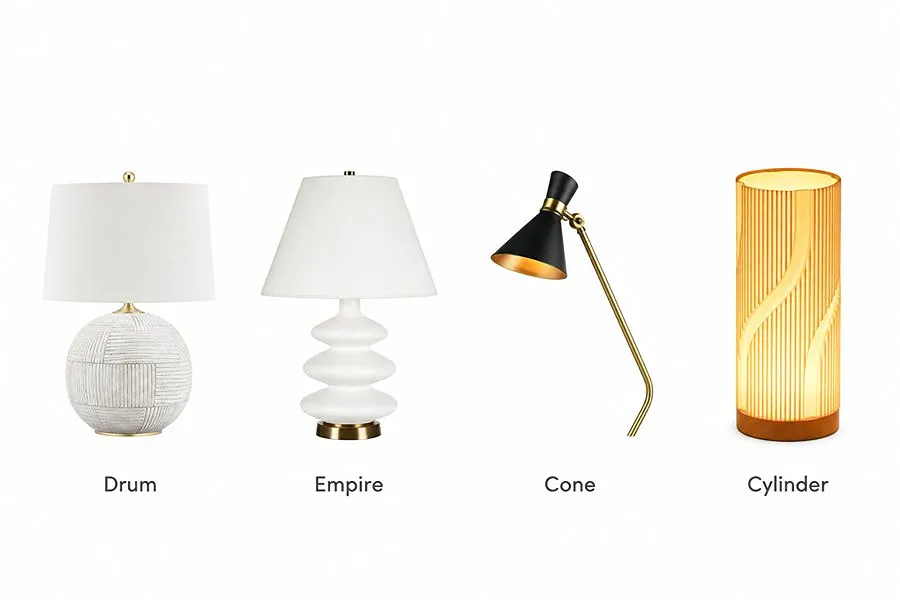
5) Drum, Empire, Cone, Cylinder, and Other Shade Forms
The effect of shade shape on the direction of light, diffusion and protection from the light source.
A drum shade is a shade with similar sized openings at the top and bottom and is normally used on bedside, side table and decorative table lamps, with normally well balanced light output upwards and downwards from the opening.
An empire shade will be narrower at the top, and wider at the bottom. The larger lower opening is typical of bedside and traditional decorative table lamps and offers a wide downlight spread.
The cone shade will allow the majority of light to pass through the bottom opening. Often used to focus more light onto the desk on desk lamps, task table lamps, and reading lamps.
A cylinder shade is a shade with the same diameter top to bottom and relatively deep. It is widely used on modern decorative table lamps, where it is desirable to gain some lateral shielding, but not to lose the upward and downward light output.
Shade Forms
6. What Key Parameters Should Be Confirmed When Selecting a Table Lamp?
Table lamps are placed on top of furniture, such as a bedside table, desk, dining table, and console. The selection of the lamp should be based on the size of the lamp, the size of the table surface, the light source, the mechanism, the charging and power source.
1) Fixture Size, Tabletop Footprint, and Furniture Proportion
- Basic dimensions: Overall Height + Maximum Width + Base Size + Shade Size.
- Bedside Table Lamp: An overall height of approximately 450–650 mm is a common selection reference. Check the proportions and bulb visibility together with the nightstand height, mattress height, and shade bottom height.
- Decorative Table Lamp: It is generally 400 – 750mm tall.
- Base Diameter & Shade Width – Restaurant / Side Table – Don’t take up too much space on the tabletop.
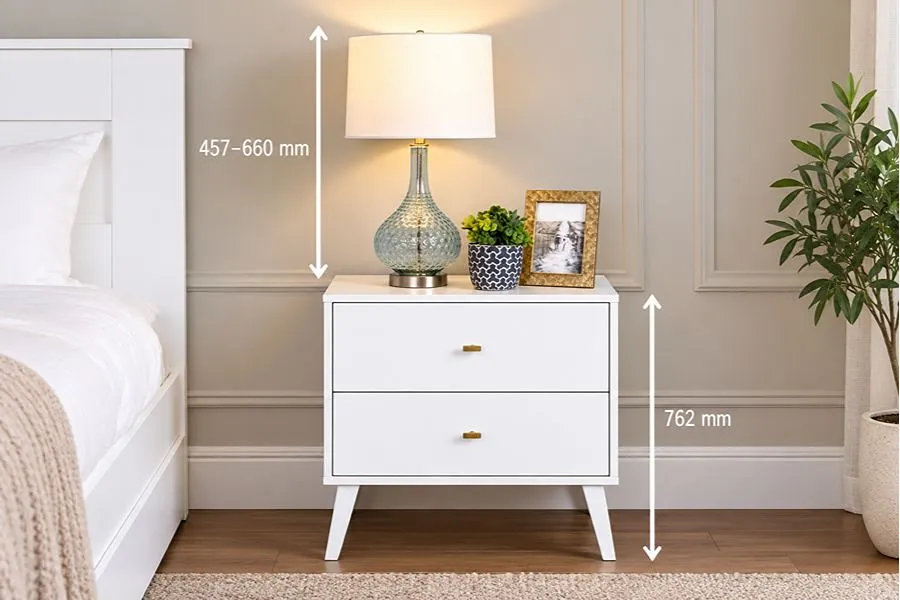
Table Lamp Dimensions
2) Light Source and Light Output
- Replaceable Bulb: Sockets (E26 / E27) are common. Verify maximum wattage, bulb type and lumens.
- Integrated LED: Check rated power, lumen output, LED module and driver. Check the beam angle also for desk lamps.
- Bedside / Ambient: Shade Diffusion, visibilities with bulb.
- Desk / Task Lamp – Reading and writing work surfaces – 300–500 lx may be considered as a guideline.
3) CCT and CRI
- The typical range is from 2700–3000K for the Guestroom / Bedroom / Restaurant / Lounge.
- The reference can be made to Desk / Work Area from 3000 – 3500K.
- CRI ≥90 can be emphasized in some cases where accurate colors of interior finishes, foods, and skin tones are important.
- The final color of a light is influenced by fabric shades, colored glass, and diffusers. Samples should thus be tested under the actual light source + final shade combination.
4) Switch Type and Switch Position
Common types include rocker switch / push switch / in-line switch / pull chain / touch switch.
- Bedside Lamp: Install the switch / dimmer in an easy to access position from a seated or lying position.
- Desk Lamp: The switch is typically found on the bottom or top of the lamp.
- In-Line Switch: Do not place behind the nightstand or desk.
- Bedside Lamp with USB: Check if the lamp switch is connected to the USB power.
5) Dimming and Touch Control
The common methods are rotary dimmer, touch dimmer, step dimming and continuous dimming.
Check low-light performance in case of bedside table lamps. For those projects that will operate at a minimum requirement of 10% or 20%, verify for those operating levels for flicker, drop-out and brightness stability.
6) Plug, Voltage, and Cord Length
- S. Market: 120V / 60Hz is common.
- European Market: 220–240V / 50Hz is common.
- Cord length: Measure from the actual routing path: Lamp position to Furniture back edge to outlet.
- Also check plug type, cord color and cable exit direction to avoid the power cord crossing the main tabletop use area.
7) USB / USB-C and Charging Function
For hotel bedside table lamps, confirm USB type, port quantity, output power, and power-supply arrangement.
- USB-A: 5V / 2A (10W) can be used as a reference for a basic charging configuration.
- USB-C: Set outputs as per project requirements (20W, 30W PD).
- Multi-Port: Validate overall output for multiple ports (if multiple ports are used together).
- Always-On USB: If charging must continue after the lamp is switched off, USB power should not be disconnected by the lamp switch.
8) Battery and Charging for Cordless Table Lamps
- Battery: Check battery capacity (mAh / Wh), battery voltage, and battery type.
Confirm runtime at each dimming level (not just at maximum runtime). - Charging: Check charging time, charging interface, and if charging with a single charging base or a multi-charging tray.
- Batch Charging: Check charging positions on each charging tray (e.g. 10 / 12 / 20 lamps per batch).
9) Replaceable Parts and Maintenance
- Replaceable Parts: Confirm which components can be replaced independently, including the bulb, shade, diffuser, LED module, driver, switch, USB module, cord, plug, and battery.
- LED Components: For integrated LED table lamps, confirm the LED module and driver models, rated parameters, and replacement method.
- Charging Components: For cordless table lamps, confirm whether the battery and charging base / tray can be replaced independently.
- Spare Parts: For volume hotel, apartment, and restaurant projects, confirm the spare part name, part number, and compatible lamp model.
7. Summary
Table lamps are not just for lighting the table or bed; there are various kinds that correspond to various space needs.Bedside table lamps are mainly intended for usage in a hotel room or bedroom, desk/table lamps are mainly intended for reading and working, accent/buffet lamps are mainly intended for decor, while portable/cordless table lamps are best for use in restaurants and bars.
Postmodern Lighting provides table lamps for both standard and custom designs for hotel, apartment, restaurant and commercial projects, based on furniture drawings, fixture specifications and electrical requirements. In the initial stage we are ready to help to check the dimensions, shading, light source, switch, USB/USB-C connectivity, cable routing, battery life and replaceability of components. Contact us.