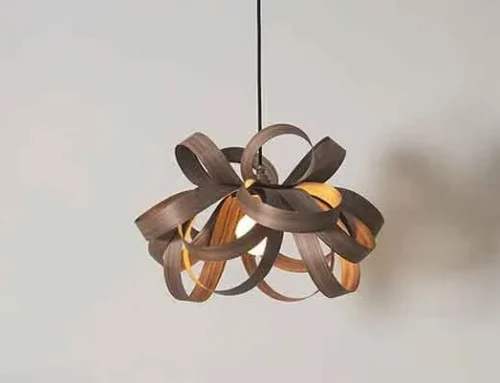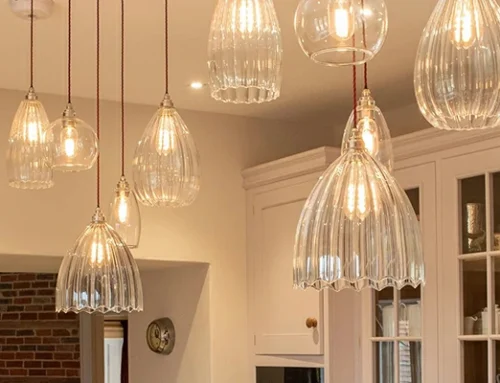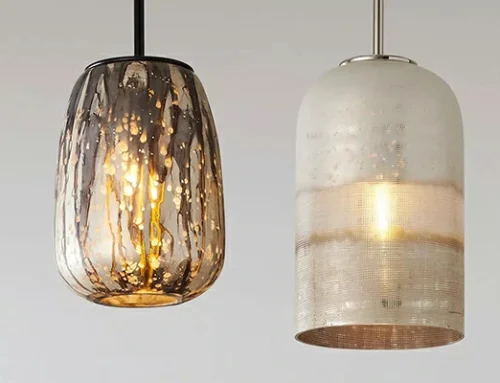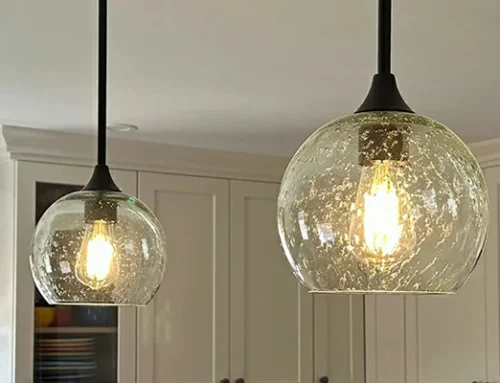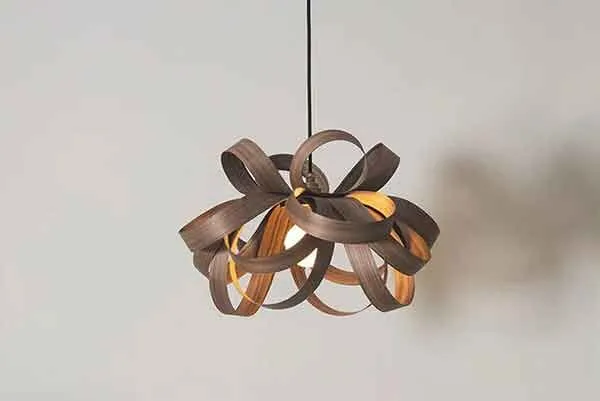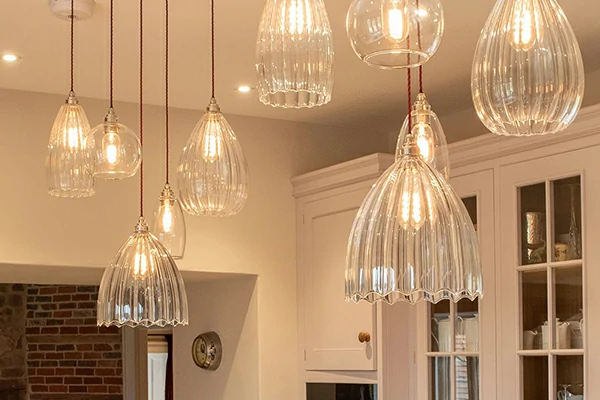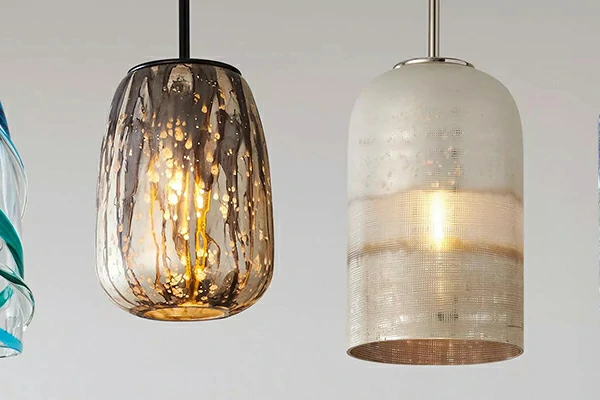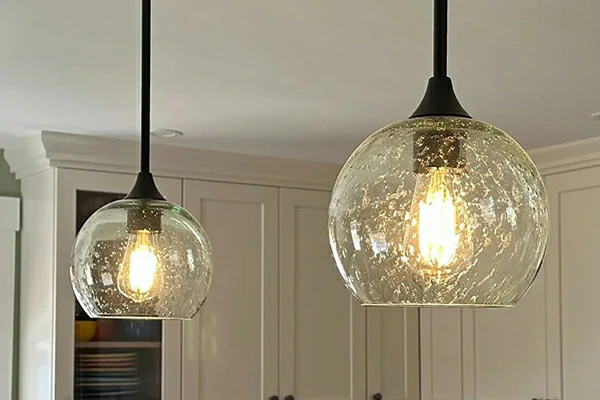
Pendant lights hang down from the ceiling by a cord, cable, chain or rod. They can be installed in a linear setup, multi-light setup, or clustered set-up. When mounted over a dining table, kitchen island, bar counter or seating area, the fixture’s lighting level can be set in direct proportion to the furniture below.
This Postmodern Lighting guide includes the most popular types, materials and typical usage of pendant lights, as well as fixture size, drop height, arrangement, suspension and ceiling installation requirements that should be verified when selecting a light fixture for a project.
1.What Is a Pendant Light?
A pendant light is a light fixture supported at the bottom of the ceiling with a cord, cable, chain, rod or other suspension.
The typical pendant light consists of the following parts:
- Canopy: Attached to ceiling surface for hiding wires and mounting points.
- Mounting Bracket / Plate: Attaches the fixture to the ceiling or in-built support structure.
- Suspension: Cord, steel cable, chain and rod are common choices for suspension. The suspension is the way the fixture is suspended and the drop height.
- Lamp Body / Frame: Comprising the major structure of the fixture, it is the part that secures the shade or light source.
- Shade / Diffuser: Used to regulate the spread of light, to protect the light source and to add to the decorative effect.
- Replaceable bulbs (E26/E27 or E12/E14) and integrated LED.
- Driver: Supplies power to the LED in an integrated pendant and can be in the canopy, lamp body or a designated area.
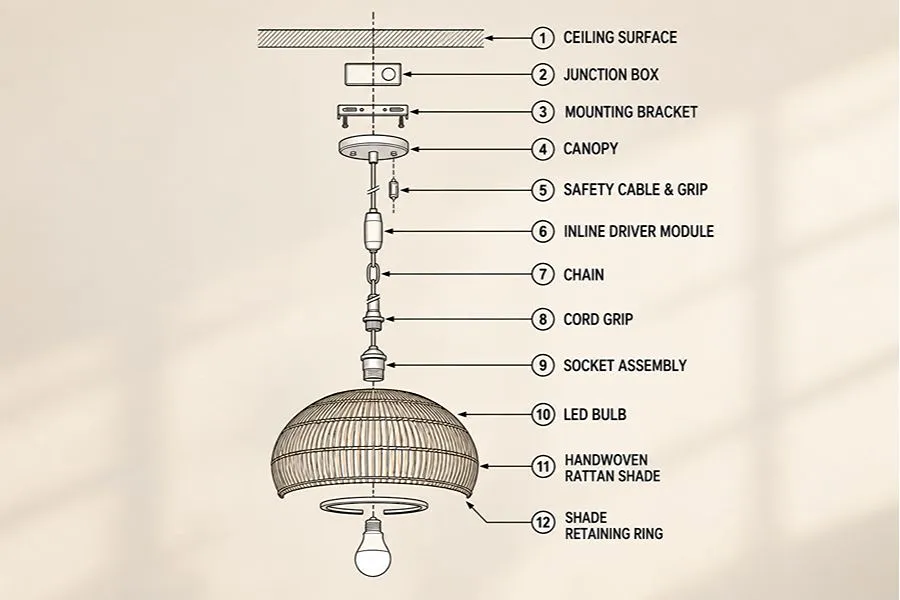
Pendant Light Structure
2.What Are the Main Types of Pendant Lights?
Pendant lights can be broken down into the number of light bodies, the arrangement, the structure to which the pendant is attached and the shape of the shade. Common types include:
1)By Number of Light Bodies: Single and Multi-Light Pendant
One pendant equals one lamp body / shade. Due to its simple structure, it is suitable for dining tables, bedside locations, bar counters, and small tables.
A multi-light pendant is a fixture system that contains two or more light heads. The heads can be one canopy or on the same frame or linear bar. This type of play is suitable for big tables, counters or decorative surfaces.
2)By Fixture Layout: Linear and Cluster Pendant
A linear pendant is a pendant with a series of lights set out horizontally, ideal for long spaces like dining tables, kitchen islands and bar counters.
A cluster pendant is a series of pendants that are placed on the outfit in several locations and at various lengths. In staircases, lobbies, atriums and spaces with tall ceilings.
3)By Suspension: Fixed and Adjustable-Height Pendant
Fixed Pendant – the drop height remains constant after installation. Usually employs a rod, chain, or rigid-length cable and is appropriate for projects with a predetermined height on the inside elevation.
An adjustable height pendant has a cord, cable, telescopic rod or other device for adjusting the length of the suspension. Some products can only be adjusted at the time of installation whereas others can be adjusted multiple times while in use.
4)By Shade Form: Globe, Dome, Cone, Cylinder, and Drum Pendant
Globe pendants are normally made with a spherical glass or acrylic shade that scatters light in various directions. It is popular for use in bedside, dining or decorative lighting.
At the top of the dome pendant, a dome is closed, and at the bottom, a hole is left open that allows most of the light to pass down. It is ideal for dining tables, kitchen islands and bar counters.
The cone pendant features a tapered bottom opening that creates a focused downward light, ideal for table and counter lighting.
A cylinder pendant is a narrow body that throws a narrow beam of light downwards, and is also suitable for multiple fixture sets.
Fabrics, metal or a diffuser are commonly used for a drum pendant, which generally has a fairly large shade diameter. It is appropriate for dining rooms, guest rooms, lounges and other spaces where a larger visual fixture volume is desired.
3.What Materials Are Commonly Used for Pendant Lights?
Common pendant light materials include the following:
1)Glass
Glass is also one of the most popular materials for pendants and can be made in the form of a globe, a dome, a cylinder, and various shapes of glass blown.
Clear glass allows the viewing of the contents and structure of the bulb; frosted glass to soften the light source; opal glass to provide increased protection of LEDs and bulbs and to create a more uniform luminous surface; textured / ribbed glass to create a decorative effect and to modify the refraction of light by the surface.
2)Metal
Steel is strong and is used for frames, canopies and larger metal shades. Brass is used widely for decorative frames, trim and exposed parts of fixtures and can be brushed, polished, antique etc. Aluminum is lightweight and offers excellent heat dissipation and, therefore, is frequently used in integrated LED pendants, cylinder pendants and thin metal shades.
3)Crystal
Crystal pendants are made of cut crystal, glass arms or metal frames to achieve very strong refraction and decorative effects. These are often found in hotel lobbies, restaurants, ballrooms and decorative establishments.
4)Marble and Natural Stone
Natural stone can be used to create pendant shades, decorative rings, or choose natural stone components of fixtures.
Alabaster is in its natural state, it is translucent, which means that the LED light can go through the stone and produce a soft, luminous appearance. Marble highlights the natural veining and presence of the material. Natural stone comes in different colours, different texture and different translucency, therefore the acceptable range of materials should be determined in advance by taking samples of materials.
5)Fabric, Rattan, Wood, and Other Materials
Fabric is lightweight and offers soft light transmission, hence it is widely used for drum pendants and hospitality decorative pendants. The holes in woven rattan provide natural light-and-shadow patterns to walls and tabletops and are frequently employed in resorts, restaurants and natural look interior designs. Wood can be used for frames, shades or decorative elements and is suitable for residential and hospitality applications.
Acrylic and resin types and others are comparatively light and can be made in a curved, irregular or continuous diffusers. They are used now in the majority of contemporary decorative and integrated LED pendants.
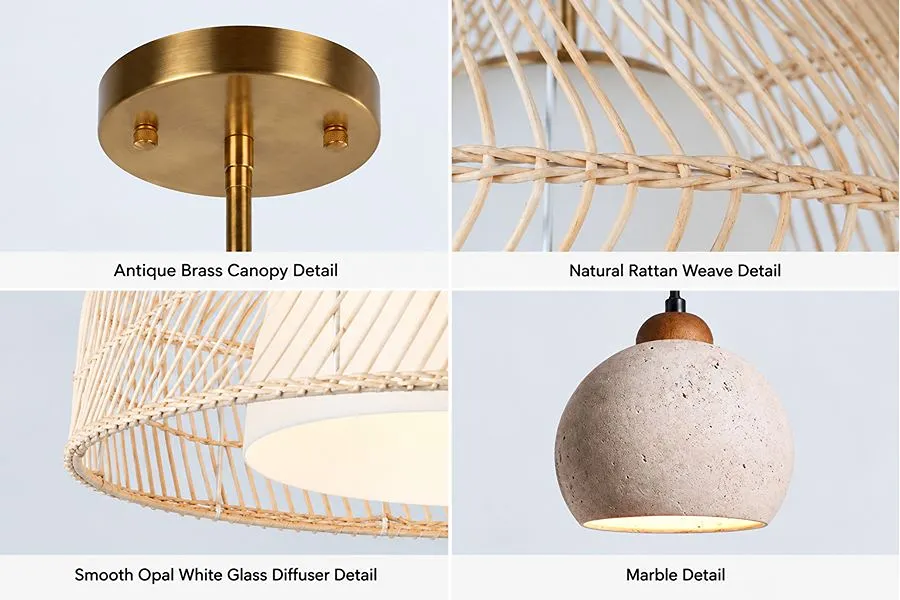
Material Collection
4.Common Application Areas for Pendant Lights
Pendant light applications are normally scaled to the furniture layout below and to the size of the space. A single, linear, multiple or cluster pendant can lend local illumination, while setting the scene for a focal point over a table, bar counter, bedside area or high ceiling space.
1)Dining Table
One of the most popular pendant light fixtures is the dining table. A circular or small dining table may have a pendants that hangs in a round shape or is a linear pendant, but a rectangular table could have multiple small pendants hanging in line with the table. Light can be directed onto the tabletop using pendants with a dome, cone or metal shade that dangle down. Finally, there are options that offer diffused light from the table, like pendants with opal glass or fabric shades, that offer a softer ambient light.
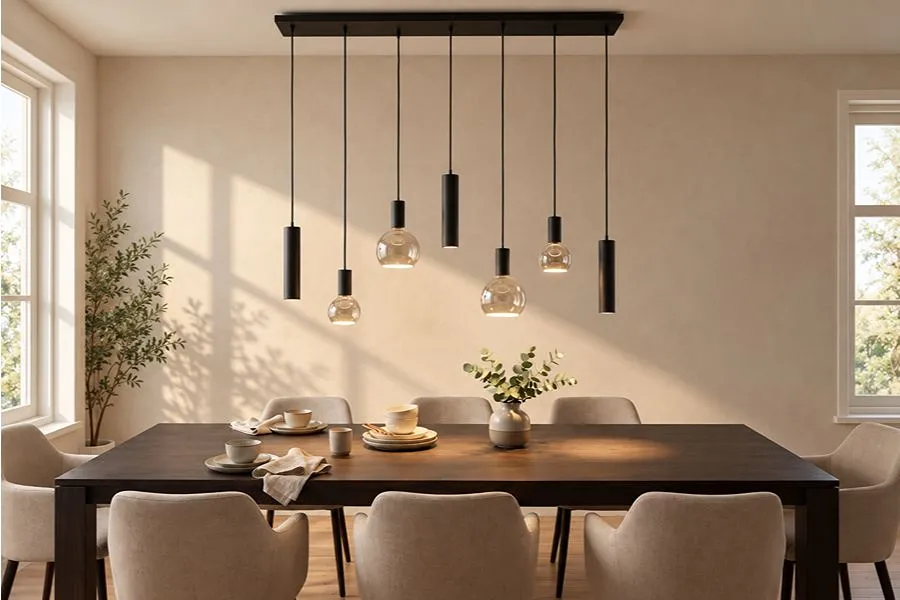
Dining Table
2)Kitchen Island and Bar Counter
Linear pendant or repeated rows of single pendants are generally used on kitchen islands or bar top counters to give task lighting within a limited area of the counter or to help reinforce the sense of direction of the long counter. Kitchen islands emphasize work surface lighting and can incorporate pendants that have a clear downward light beam. The glass, metal or decorative pendants are used by bar counters to light up the counter and thus achieve a continuous decorative rhythm.
3)Hotel Guestroom and Bedside
Pendant lights may be installed in the hotel guest rooms either above the bedside area, a small table, or a seating area within the room. The bedside pendant light can substitute for some table lamps and will provide more space for the nightstand surface. The bedside pendants may be positioned on both sides of the bed in symmetrical fashion, or various forms of pendants may be used as well.
4)Booth Seating and Small Tables
Compact single pendants are commonly used for relatively independent table lighting for restaurant booths and small tables. Pendants can repeat with booth seating along a continuous row to match table seating. Common pendants include glass, metal, dome, or cone, and either soft light that diffuses or more light directed down towards the table are used depending on the restaurant design.
5)Lobby, Reception, and Public Area
The pendant light is more focused on the decorative aspect in the lobbies, receptions and other public areas. The pendant light fixture may be used in the lighting up of the reception desk. A large decorative pendant light can be used as a focal point above the seating area in the lobby. Repetitive pendants may be used in order to define separate seating areas within public areas.
6)Staircase, Atrium, and High-Ceiling Space
Usually, large pendants or cluster pendants are used in the vertical height spaces such as staircases, atriums and spaces with high ceilings. Several pendants of varying lengths can create a cascading effect, making the pendants more than just lighting fixtures, but vertical architectural accents. For the taller spaces such as a staircase arrangement can be used along the stair run, and a multi-level cluster or large custom pendant can be used in an atrium or high ceiling lobby to fill the higher space.
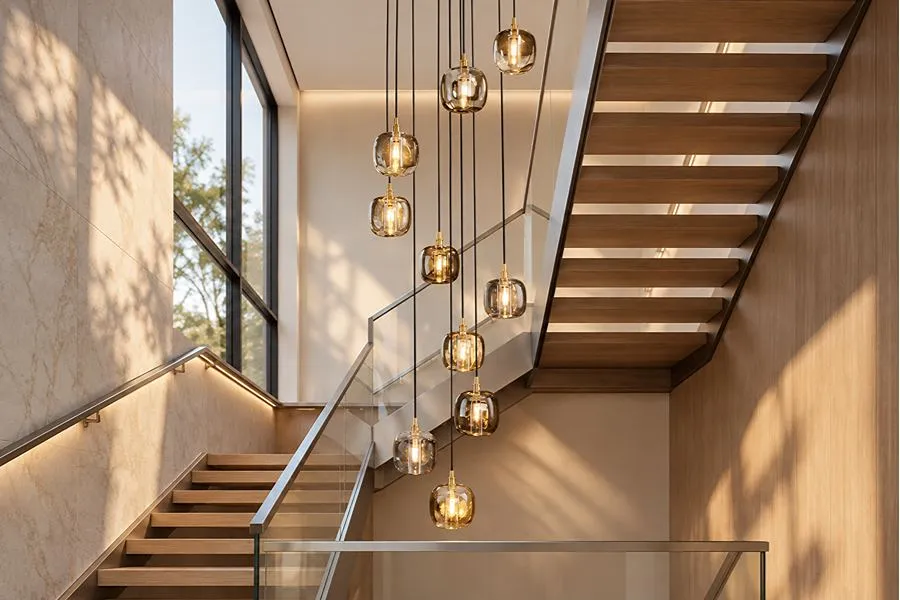
Staircase Pendant
5.What Factors Should Be Confirmed When Selecting Pendant Lights for a Project?
Pendant lights are hanging lights. Selection should verify the proportion between fixture and furniture underneath, actual drop height, multi-light arrangement, suspension, canopy, ceiling support and conditions after installation.
1)Fixture Size and Proportion to Furniture Below
- Basic dimensions: Fixture Diameter / Width, Fixture Height, and Overall Size; If it is a linear pendant, add the Fixture length.
- The width of the one large pendant may be roughly 1/2-2/3 of the width of the tabletop as a first approximation, as an example.
- Kitchen Island / Bar Counter: measure the length of the fixture, length of the counter, and the total width of the complete pendant assembly.
- Large Decorative Pendant: In a high-ceilinged area, consider the proportion of the fixture using the ratio of fixture size to ceiling height.
2)Drop Height, Sightline, and Clearance
- Drop Height: The vertical distance from the ceiling to the fixture bottom.
- Dining Table: A distance of approximately 750-900 mm from the pendant bottom to the tabletop can be used as a common reference.
- Bedside / Booth: Coordinate with seated eye level to prevent the fixture from blocking sightlines or allowing the light source to enter the direct line of sight.
- Open Area: Head Clearance is the clear passage height maintained below the pendant bottom.
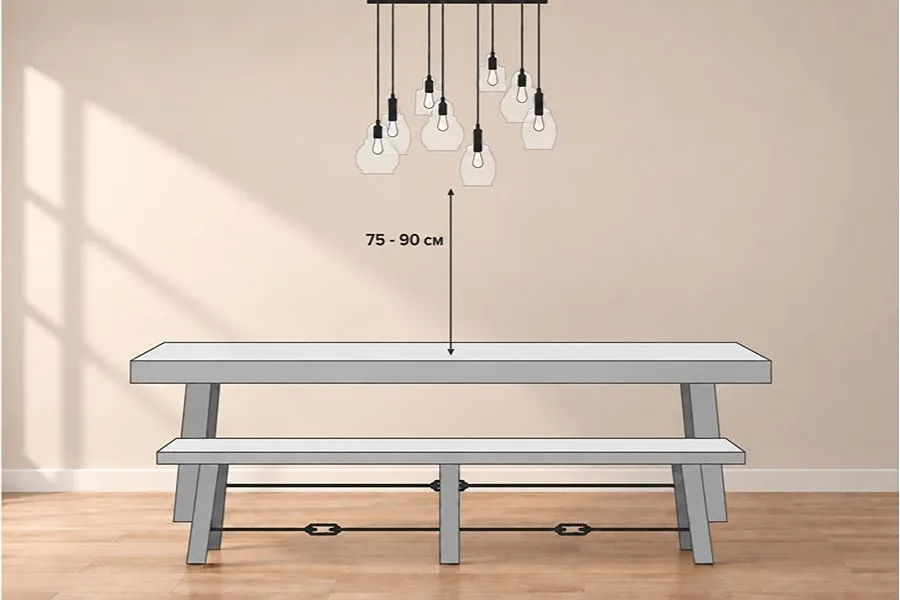
Drop Height / Clearance
3)Multi-Light Spacing, Arrangement Extent, and Height Differences
- Multiple Pendant: Key parameters include Fixture Quantity, Center-to-Center Spacing, and Overall Arrangement Width / Length.
- Linear Arrangement: Determine the spacing between adjacent fixtures and the overall arrangement length.
- Cluster Pendant: Determine the horizontal position and Individual Drop Height of each fixture.
- Custom Cluster: Shop Drawings can identify the Ceiling Point and Drop Length for each pendant individually.
4)Suspension, Canopy, and Ceiling Point
- Suspension: Common types include Cord, Steel Cable, Chain, and Rod. Key parameters are type, quantity, and length.
- Canopy: Key parameters include Size, Height, Finish, Mounting Hole, and Cable Outlet Position.
- Multi-Light Pendant: The system can use one Multi-Port Canopy or multiple Independent Ceiling Points.
- Rod Pendant: Confirm the Rod Length. A sloped ceiling also requires a compatible sloped-ceiling mounting structure.
5)Fixture Weight, Ceiling Support, and Maintenance
- Fixture Weight: The total weight of the fully assembled fixture, including the Lamp Body, Glass, Crystal, Stone, and other components.
- Ceiling Support: Includes the Mounting Bracket, Anchor, and Structural Support used to carry the pendant.
- Driver Position: The Driver for an integrated LED pendant is commonly located in the Canopy, Fixture Body, or an accessible Remote Location.
- Maintenance Access: High-mounted pendants require provisions for later removal and replacement of the Bulb, LED Module, Driver, and Shade.
6.Summary
Pendant lights may be installed above dining tables, kitchen islands, bar counters, bed tables, booths, lobbies, stairs, and atriums. If you are looking to buy pendant lights for your hotel, restaurant, or apartments, then Postmodern Lighting can offer you existing fixtures as well as pendant lighting design services. You just need to send us images of your existing fixtures and their specifications and we will be able to quote and recommend our products accordingly.