
A decorative lighting RFQ does not have to start with a complete drawing package. During the early project stage, you can obtain a budget quotation by providing reference images, basic dimensions, and estimated quantities. As material specifications, electrical requirements, installation details, and quantities become clearer, the quotation can progress from a preliminary estimate to a formal project proposal.
This article explains what information and documents you should prepare for a decorative lighting RFQ at different project stages, which requirements have a direct impact on pricing, and how to organize your documents so every manufacturer evaluates and quotes under the same conditions.
1. What Information Should You Prepare Before Submitting a Decorative Lighting RFQ?
The purpose of an RFQ (Request for Quotation) is not to provide every design document at once. Instead, it enables the manufacturer to understand your project requirements and evaluate the manufacturing process, production complexity, and pricing accordingly.
1) Basic Product Information
First, identify the type of lighting product you intend to purchase whenever possible, such as a Pendant Light, Wall Light, Table Lamp, Floor Lamp, or a Custom Decorative Chandelier for hotels and large commercial projects. If you already have a reference product, provide product photos, model numbers, website links, or sample images. For custom projects, even without complete drawings, a clear reference image showing the overall design is usually sufficient for the manufacturer to make an initial assessment of the product structure, material direction, and manufacturing process.
If your project includes multiple lighting fixtures, assign a unique product code to each item and use the same code consistently across images, drawings, and the BOQ.

Product Intent Image
2) Confirmed Specifications and Items Requiring Recommendations
An RFQ does not require every specification to be finalized. In many cases, designers have already confirmed the product appearance during the inquiry stage but still expect manufacturers to recommend technical details such as metal thickness, LED drivers, surface finishes, or dimming systems. For this reason, separate your requirements into two categories: “Confirmed” and “To Be Recommended.”
For example, you may have confirmed a diameter of 1200 mm, a matte brass finish, and a suspended mounting method, while leaving the driver brand, metal thickness, and packaging solution for the supplier to recommend. This approach keeps the quotation basis consistent while allowing manufacturers to propose more practical production solutions based on their experience. It also produces more accurate quotations than simply sending a request that says, “Need quotation.”
3) Purchase Quantity and Delivery Requirements
Purchase quantity directly affects manufacturing cost, production methods, and pricing. Clearly specify the sample quantity, the first order quantity, and the estimated production quantity in your RFQ. Even if the quantities may change later, this information helps the manufacturer determine whether tooling is required, select the appropriate production process, and offer volume-based pricing.
You should also specify your delivery requirements during the inquiry stage, including the target lead time, whether partial shipments are acceptable, the preferred shipping method (air or sea freight), and the destination country. For hotel, commercial complex, and other construction projects, provide the planned installation schedule whenever available. This allows the manufacturer to evaluate production planning instead of handling urgent delivery requests after issuing the quotation.
4) Project Application and Installation Environment
The project application directly affects material selection, electrical configuration, surface treatment, and certification requirements, so it should be included in the RFQ. In addition to stating whether the product will be used in a hotel, residence, restaurant, commercial space, or outdoor landscape area, you should also provide the installation location, operating environment, and target market.
For example, the same brass pendant light may require completely different surface treatment and corrosion resistance depending on whether it is installed in a hotel lobby or a coastal resort. Products supplied to North America and Europe may also require different certifications, voltages, and lamp holder specifications. The clearer this information is, the easier it is for the manufacturer to prepare a quotation that matches the actual project conditions.
2. What Drawings and Documents Should Be Provided for an RFQ?
The level of documentation varies from project to project. For a standard product, a reference image is often enough to start an inquiry. For custom lighting or engineering projects, more complete drawings and technical documents allow the manufacturer to quote more accurately and identify potential manufacturing or installation issues at an earlier stage. You do not need to provide all of these documents at once. At the concept stage, images or sketches may be sufficient. Custom quotation work normally requires dimensional drawings, while engineering projects more commonly use CAD drawings, 3D models, a Lighting Schedule, and a BOQ.
1) Product Images or Reference Photos
Product images are among the most common RFQ documents and provide an important basis for the manufacturer to assess the product type and manufacturing complexity. The images may come from design renderings, completed projects, samples, brand websites, or social media, provided they clearly show the overall form and key product details.

Product Reference Image
If possible, provide images from several angles, such as the front, side, top, and close-up details. This normally allows the manufacturer to assess the structure, material composition, and likely manufacturing process more accurately. For custom hotel projects, it is also advisable to provide renderings showing the fixture within the space so the manufacturer can evaluate the overall scale and proportions.
2) CAD Drawings
CAD drawings define the product dimensions, installation structure, and relationships between major components. They are one of the most commonly used technical documents for custom projects. Compared with product images alone, CAD drawings reduce uncertainty in dimensional and structural interpretation and generally improve quotation accuracy.
CAD drawings issued for RFQ purposes do not need to be complete production drawings. However, they should include at least the main product dimensions, mounting method, critical structural dimensions, and key connection details. If the architectural, MEP, or ceiling design has already been completed, providing the relevant installation-location drawings will also help the manufacturer assess installation feasibility.
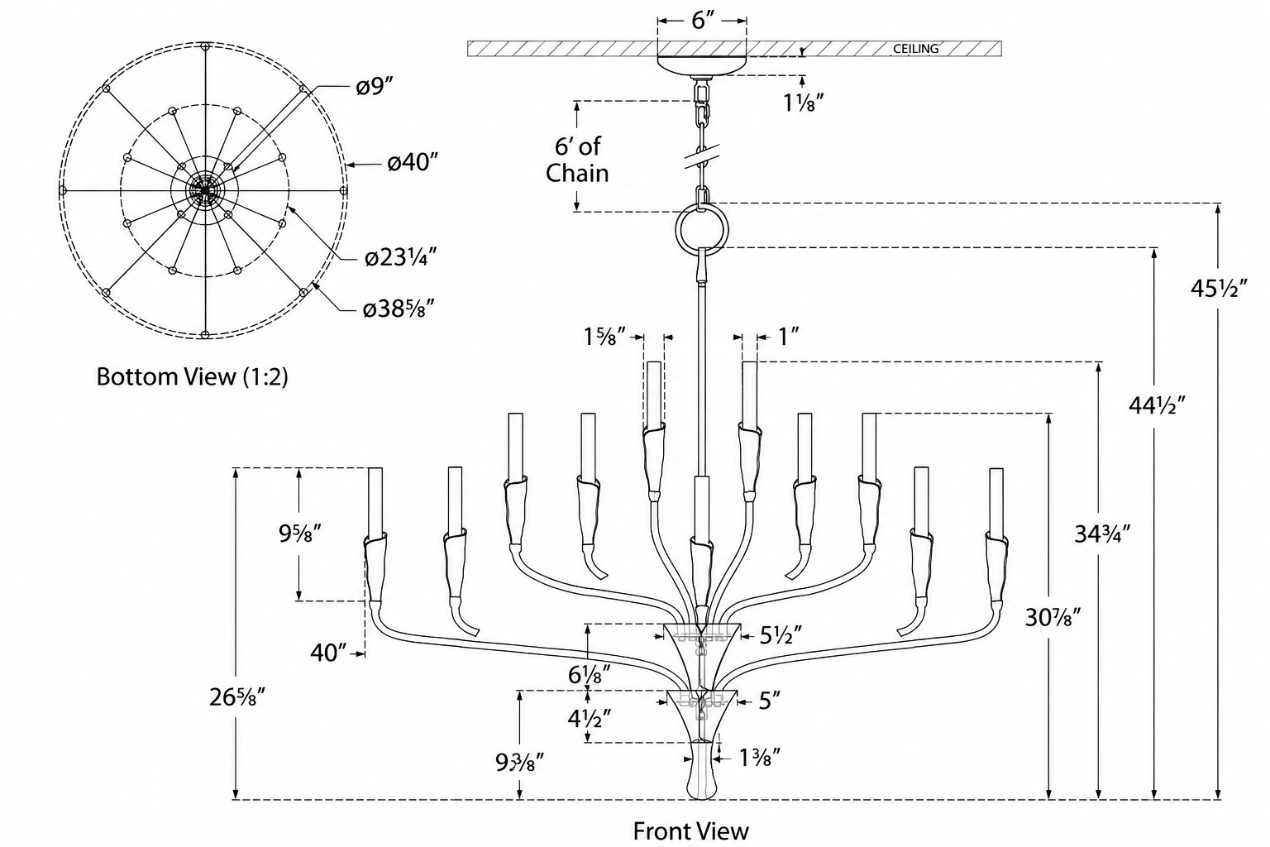
Product CAD Drawing
3) 3D Models
For decorative lighting with complex forms or irregular structures, a 3D model provides a clearer view of the product geometry and is also an important reference for quotation and technical evaluation on many engineering projects. Common file formats include STEP, IGES, SolidWorks, Rhino, and 3DM.
A 3D model mainly describes the product geometry and cannot fully replace 2D engineering drawings. Material specifications, surface finishes, electrical configurations, and assembly requirements still need to be supplemented through drawings or technical notes.
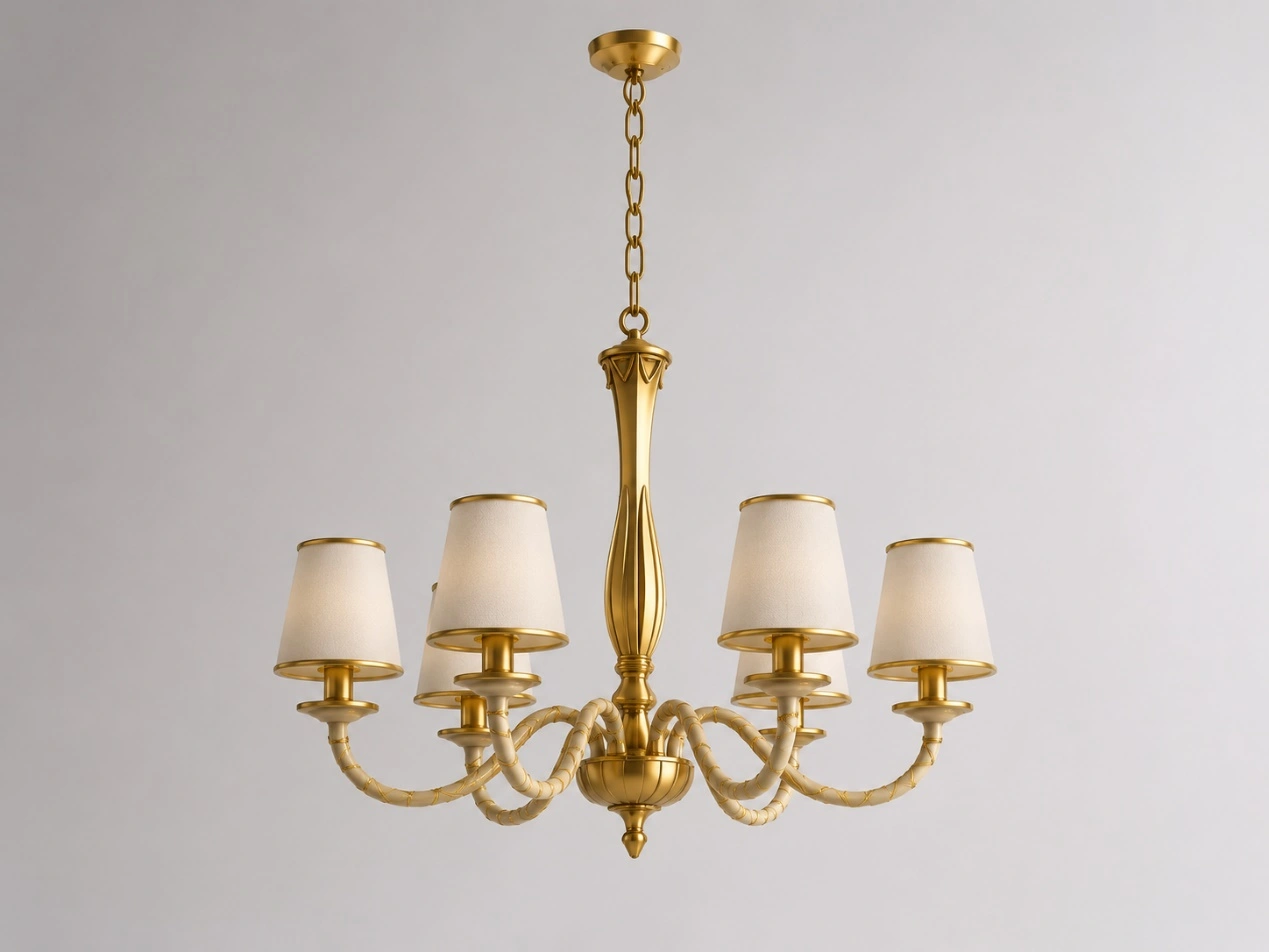
Product 3D Model
4) Hand Sketches or Design Concept Drawings
At the early project stage, many designers only have concept sketches or a general design direction and have not yet completed formal drawings. These materials can still be used for an RFQ. Manufacturers can normally combine the sketch with experience from similar projects to propose a preliminary manufacturing solution and provide a budget quotation.
To reduce interpretation errors, mark the main dimensions, intended materials, color requirements, and mounting method on the sketch wherever possible. For example, adding information such as “Approx. Ø1200 mm,” “Brushed Brass,” “Opal Glass,” and “Suspended Mounting” can significantly improve the value and accuracy of the quotation.
5) Lighting Schedule or BOQ
For hotels, commercial complexes, and large engineering projects, the Lighting Schedule or BOQ (Bill of Quantities) is usually one of the most important RFQ documents. It allows the manufacturer to quickly understand the fixture types, specifications, quantities, and installation areas across the entire project without having to calculate quantities drawing by drawing.
A complete Lighting Schedule normally includes the fixture code, product name, installation location, quantity, key specifications, and remarks. A BOQ focuses more on quantity take-off and procurement information. For large projects involving dozens or even hundreds of fixture types, these documents not only improve quotation efficiency but also support subsequent production scheduling and project management.
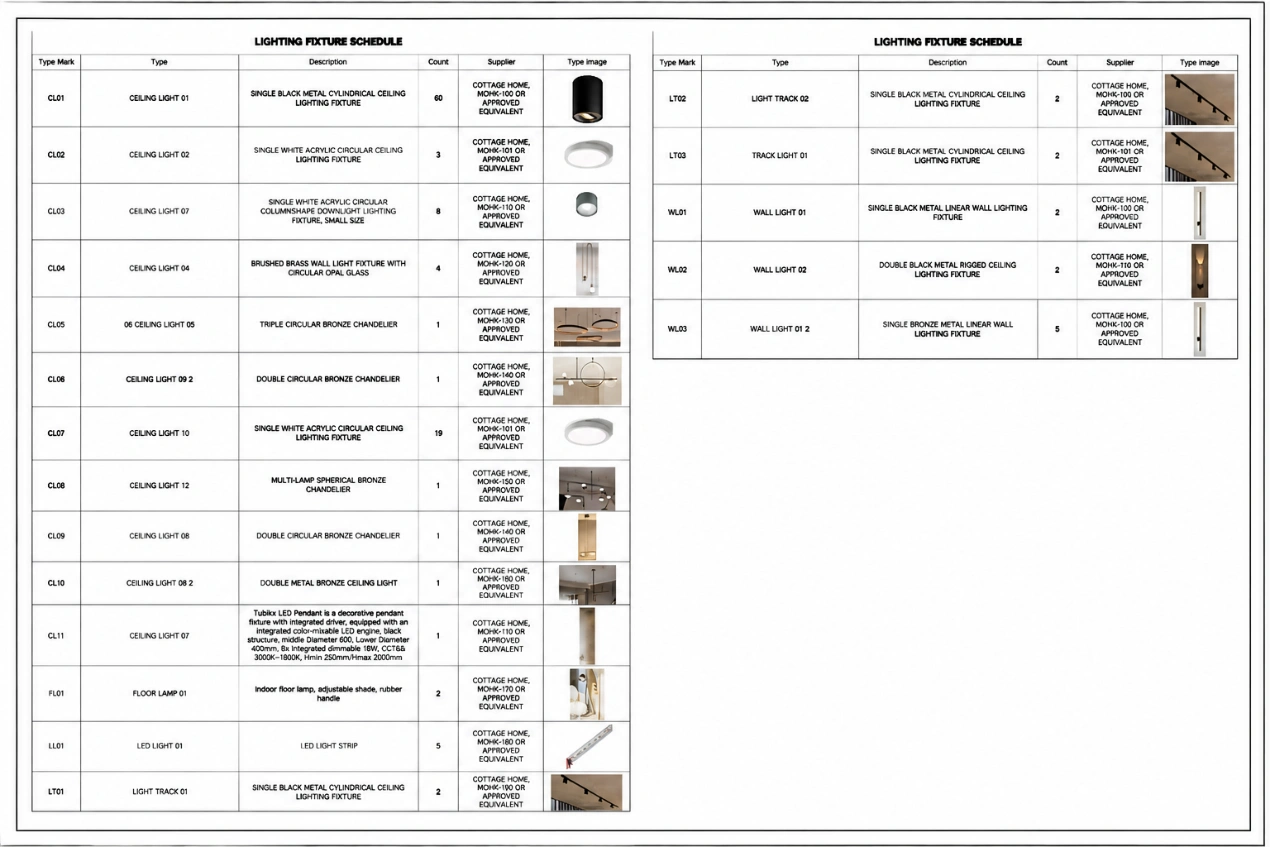
Lighting Schedule
3. What Factors Affect the Final Quotation?
The price of decorative lighting depends on more than product dimensions. Manufacturing processes, material selection, order quantity, certification requirements, and delivery methods all influence the final cost. For custom projects, products with a similar appearance may still have significantly different manufacturing costs because of different technical requirements. Clearly defining these requirements in the RFQ helps you obtain a more accurate and meaningful quotation.
1) Degree of Customization and Structural Complexity
The level of customization is usually the primary factor affecting the quotation. Standard products typically use proven manufacturing processes and existing tooling, while custom products may require structural redesign, new tooling, prototype fabrication, or production process adjustments. These additional requirements increase both development and manufacturing costs.
For example, if a Ø1200 mm chandelier only requires a different suspension rod length or a new surface finish, the impact on pricing is usually limited. However, redesigning the fixture structure, changing the glass shape, or adding cast decorative components may require new tooling, process validation, and prototype development, resulting in a higher quotation.
2) Materials and Surface Finishes
Materials and surface finishes affect not only the appearance of the product but also its manufacturing cost. Fixtures with similar specifications may have very different material costs, fabrication methods, and production efficiency depending on whether the main structure is made of brass, stainless steel, or aluminum alloy. Decorative materials such as hand-blown glass, natural marble, and K9 crystal also have a direct impact on production costs.
Surface finishes also influence pricing. Standard powder coating, PVD vacuum coating, hand-applied antique finishes, and high-quality electroplating differ in processing methods, labor requirements, and production lead times. Therefore, specify the material type, finish color, and surface treatment requirements in the RFQ instead of using general descriptions such as “Gold Finish” or “Black Finish.”
For material and surface finish specifications, refer to Decorative Lighting Specification Guide: Dimensions, Surface Finishes, Voltage, and Installation Requirements.

Surface Finish Samples
3) Order Quantity and Sample Quantity
Purchase quantity directly affects the unit cost and is one of the key factors used by manufacturers to prepare quotations. Sample orders, small trial orders, and mass production usually follow different pricing structures. Therefore, specify the sample quantity and the estimated production quantity separately.
For products requiring new tooling or custom components, tooling costs are typically allocated across the production order. As the order quantity increases, the tooling cost allocated to each unit decreases. Many manufacturers also offer tiered pricing based on purchase volume. Providing the expected order quantity in advance helps you obtain a quotation that more closely reflects the actual procurement cost.
4) Certification, Electrical Configuration, and Dimming Requirements
Certification requirements, electrical configurations, and control systems vary by country and region, and each affects product cost. For example, the same lighting fixture exported to North America and Europe may require different drivers, lamp holders, or certification programs.
If the project already requires certifications such as UL, ETL, or CE, or specifies dimming systems such as DALI, 0–10V, or Casambi, include these requirements in the RFQ from the beginning. Confirming them early usually reduces design revisions and eliminates repeated quotation updates later.
For UL, ETL, CE, RoHS, and other market compliance requirements, refer to Decorative Lighting Certification Guide: UL, ETL, CE, RoHS, and Compliance Requirements.
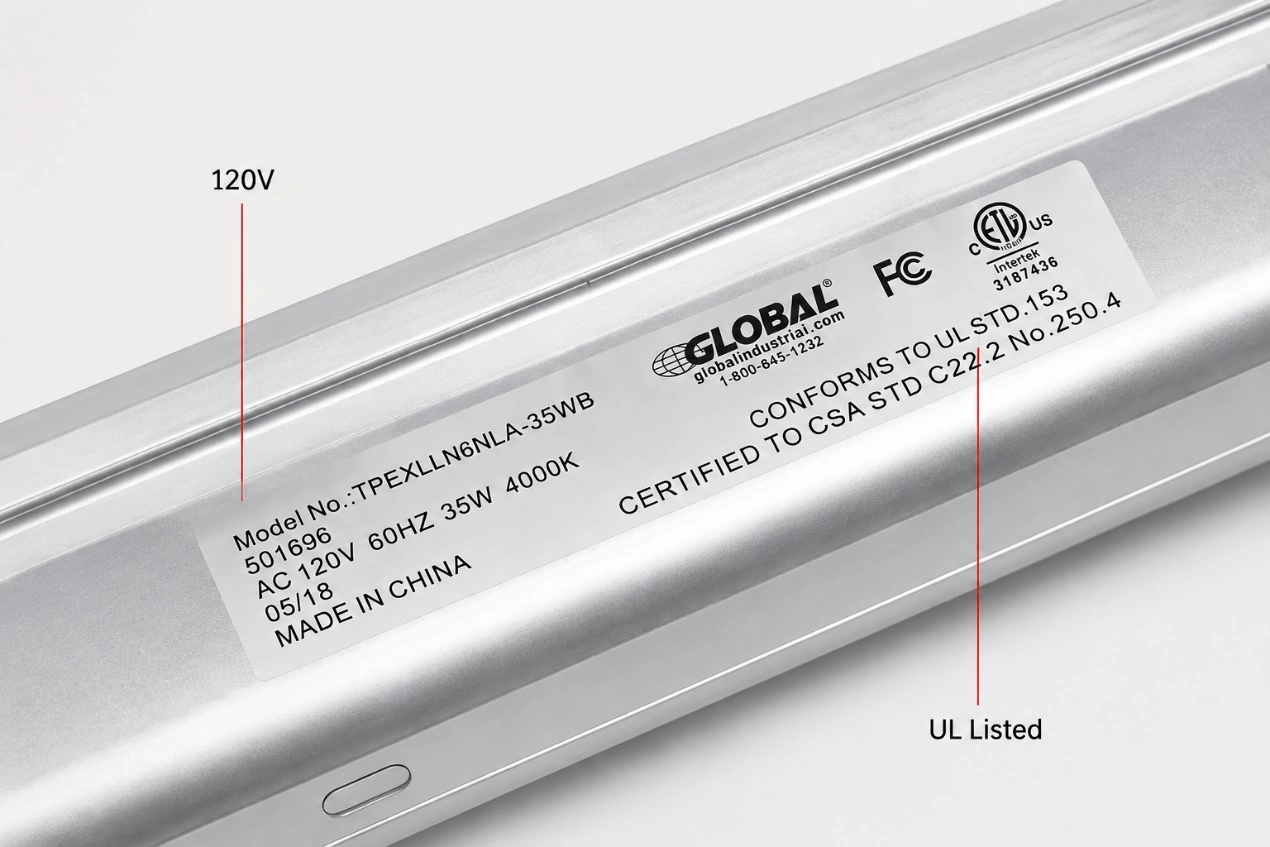
UL Certification for Lighting Fixtures
5) Packaging, Transportation, and Delivery Requirements
Packaging methods and transportation plans also affect the final quotation. Large chandeliers are typically packed in modular sections, while glass, crystal, and natural stone components may require custom wooden crates, protective cushioning, or individually numbered packaging to reduce the risk of shipping damage.
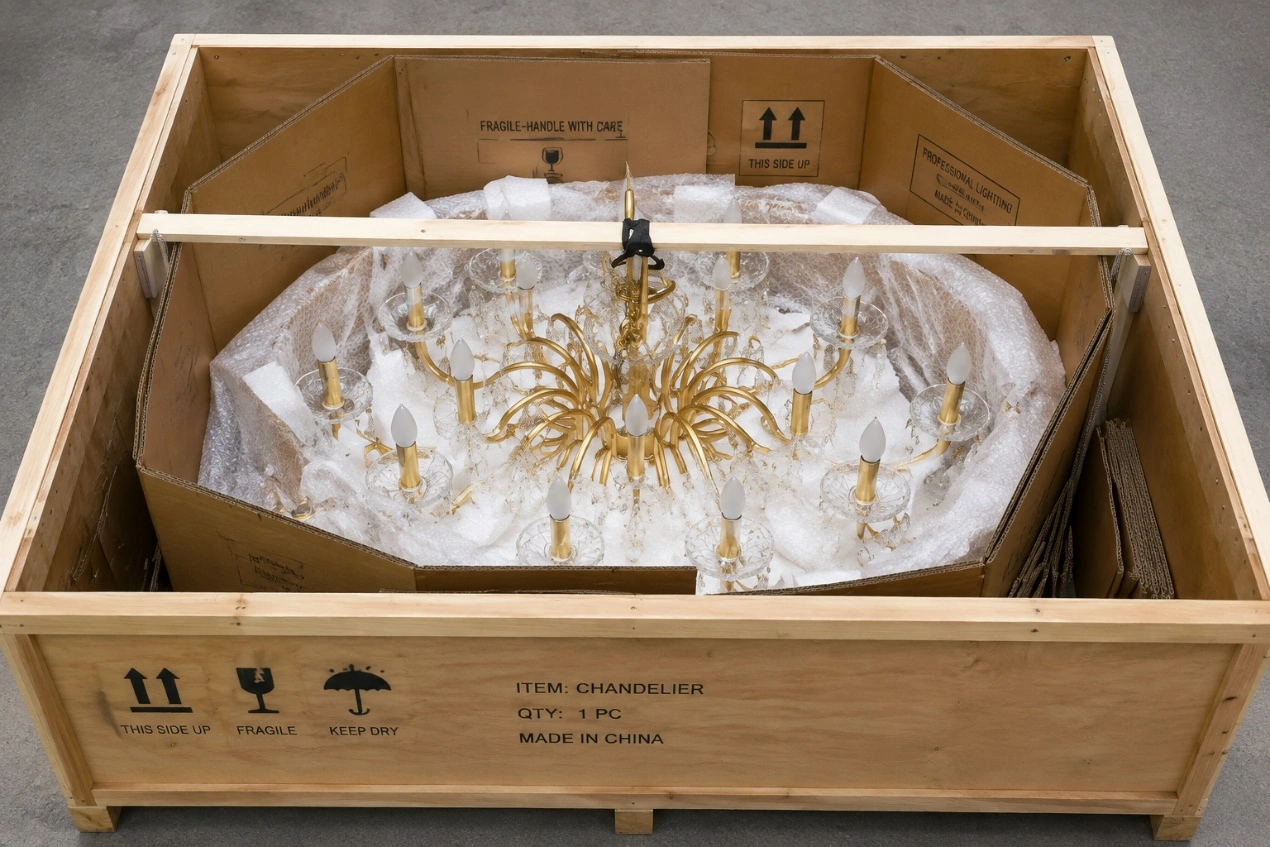
Lighting Fixture Packaging
Delivery schedule is another cost factor. Rush orders may increase production scheduling costs, overtime labor, material procurement expenses, and air freight charges. Therefore, confirm the required delivery date separately from the standard production lead time.
If the project has specific shipping requirements, such as air freight, full-container sea freight, partial shipments, or delivery to a designated warehouse in a particular country, include these requirements in the RFQ. For engineering projects, these logistics requirements should be evaluated during the quotation stage rather than after the order has been confirmed.
4. How to Prepare a High-Quality Decorative Lighting RFQ?
A high-quality RFQ is not about providing as many documents as possible. It should enable the manufacturer to quickly identify what has already been confirmed and where recommendations are still needed. This minimizes back-and-forth communication and improves quotation efficiency. Compared with sending scattered images, dimensions, and notes separately, organizing all information in a consistent format makes it much easier to obtain complete and comparable quotations.
1) Separate Confirmed Requirements from Items Requiring Supplier Recommendations
You do not need to wait until every specification is finalized before issuing an RFQ. At the quotation stage, it is common for items such as driver brands, metal thickness, structural connection methods, and packaging solutions to remain undecided. It is therefore recommended to divide the information into two sections: “Confirmed” and “To Be Recommended.”
For example, the confirmed requirements may include:Product Size: Ø1200 × H1800 mm, Finish: Brushed Brass, Mounting Method: Suspended, Quantity: 50 Sets; Items requiring supplier recommendations may include metal thickness, LED driver brand, packaging method, and specific surface treatment. This approach clearly defines which requirements are fixed and which can be optimized based on the manufacturer’s production experience. It also ensures that different suppliers prepare quotations on the same basis.
2) Organize All Documents Using a Consistent Product Coding System
If the project includes multiple lighting fixtures, assign a unique product code to each item and use the same code consistently across images, drawings, the BOQ, specification sheets, and email correspondence. For example: L-01 – Lobby Chandelier, L-02 – Wall Light, L-03 – Pendant Light.
When a project includes dozens of fixture types, naming files simply as “Image1” or “Image2” can easily cause confusion during quotation, sampling, and production. A consistent coding system allows suppliers to quote item by item while simplifying sample approval, production tracking, and after-sales support.
3) Specify Quantities, Target Price, and Required Delivery Date
An RFQ should clearly state the sample quantity, estimated production quantity, target delivery date, and project location. For example: Sample Quantity: 2 pcs, Estimated Order Quantity: 100 pcs, Required Delivery Date: 30 September.
If the project has an established budget, you may also provide a target price range, for example:Target Price: USD 280–320 / Set. The manufacturer may not be able to meet the target price exactly, but this information allows them to optimize materials, manufacturing processes, or structural design accordingly instead of quoting a premium configuration first and revising it repeatedly afterward.
4) Clearly Identify Non-Negotiable Project Requirements
Some specifications can be optimized by the manufacturer, while others are mandatory and should be listed separately. Examples include:The overall dimensions and appearance must not be changed. The color temperature must be 3000K. The fixture must be compatible with the DALI control system. Natural marble must be used. UL certification is mandatory.
These requirements directly affect materials, structural design, electrical configuration, and certification costs. If different suppliers make different assumptions about these conditions, their quotations cannot be compared fairly. Therefore, clearly label these items as “Mandatory Requirements” or “Non-Negotiable Requirements” in the RFQ.
5) List All Questions That Require Manufacturer Feedback
In addition to providing project information, use the RFQ to list the questions you expect the manufacturer to answer, such as:Is the current structure suitable for mass production?
Is there a lighter structural solution? Do you recommend alternative materials? Is new tooling required? What are the lead times for samples and mass production? Can you provide finish samples?
Listing these questions in the RFQ is much more efficient than sending multiple follow-up emails after receiving the quotation. It also helps buyers compare the technical capabilities and engineering recommendations provided by different manufacturers.
5. Case Study: How Different RFQ Documents Affect the Quotation
The completeness of an RFQ directly affects quotation accuracy and communication efficiency. More complete documentation does not necessarily produce a lower price, but it reduces assumptions made by the manufacturer, allows all suppliers to quote on the same basis, and makes quotation comparisons much more meaningful.
1) RFQ with Only a Reference Image
This is the most common type of RFQ, especially during the early design stage. For example, a purchasing email may contain only a Pinterest image, the sentence “Please quote this chandelier,” and the purchase quantity (Quantity: 20 pcs).
Under these conditions, the manufacturer can only estimate the product dimensions, primary materials, manufacturing process, and light source configuration based on experience. As a result, the quotation is generally provided as a budgetary quote. Based on our experience with early-stage concept inquiries, the price may vary by 20% or even more. For complex artistic lighting fixtures, different manufacturers may adopt completely different structural solutions, resulting in even greater pricing differences.
If you provide only a reference image, it is highly recommended to include the estimated dimensions, purchase quantity, installation location, and destination country. This additional information significantly improves the accuracy and value of the quotation.
2) RFQ with Dimensions, Materials, and Quantities
This is the most common RFQ format for hotels and commercial projects. A typical submission includes a product reference image together with the overall dimensions, Brass + Blown Glass, Quantity (80 Sets), 3000K, and DALI Dimming.
With this information, the manufacturer can determine whether new tooling is required, select the appropriate metal and glass manufacturing processes, configure the light source, estimate packaging dimensions, and calculate container loading capacity. As a result, the quotation is usually much closer to the final contract price and provides a more meaningful basis for comparing costs among different suppliers.
If some technical specifications have not yet been finalized, the manufacturer will normally state the quotation assumptions, such as using 304 stainless steel, standard polyester powder coating, or a non-dimmable LED driver by default. The quotation can then be updated after the final specifications are confirmed.
3) Engineering RFQ with Complete Drawings and BOQ
For engineering projects such as hotels, apartments, and commercial complexes, the RFQ typically includes product images, CAD drawings, 3D models (if available), a Lighting Schedule, BOQ, Finish Schedule, and technical specifications.
With these documents, the manufacturer can complete the material take-off, evaluate manufacturing processes, estimate production hours, develop packaging solutions, and plan container loading. The manufacturer can also determine whether new tooling or production fixtures are required, assess the suitability for mass production, and compare the cost implications of different material options.
For this type of engineering RFQ, quotations are usually itemized by product code and include the unit price, tooling cost (if applicable), sample cost, production lead time, minimum order quantity (MOQ), and quotation validity period. Compared with a budgetary quotation, this type of RFQ is typically ready to move into the formal quotation, sample approval, or technical clarification stage, with relatively few price revisions afterward.
6. Seven Common Issues That Lead to Quotation Disputes in an RFQ
Even when an RFQ contains enough information to prepare a quotation, unclear definitions of accessory scope, installation environment, surface finish requirements, or delivery conditions can still result in additional costs, structural modifications, or acceptance disputes later. The following issues are among the most common in engineering projects.
1) Installation Accessories Not Clearly Defined, Leading to Disputes over Suspension and Wiring Components
Case: For a large multi-tier artistic chandelier in the lobby of a commercial complex, the buyer requested a quotation based only on the appearance drawings without specifying whether the suspension rods, safety cables, wiring terminals, or mounting base were included. The factory quoted only the illuminated fixture body. When the products arrived on site, the contractor found that the required installation hardware was missing, making installation impossible.
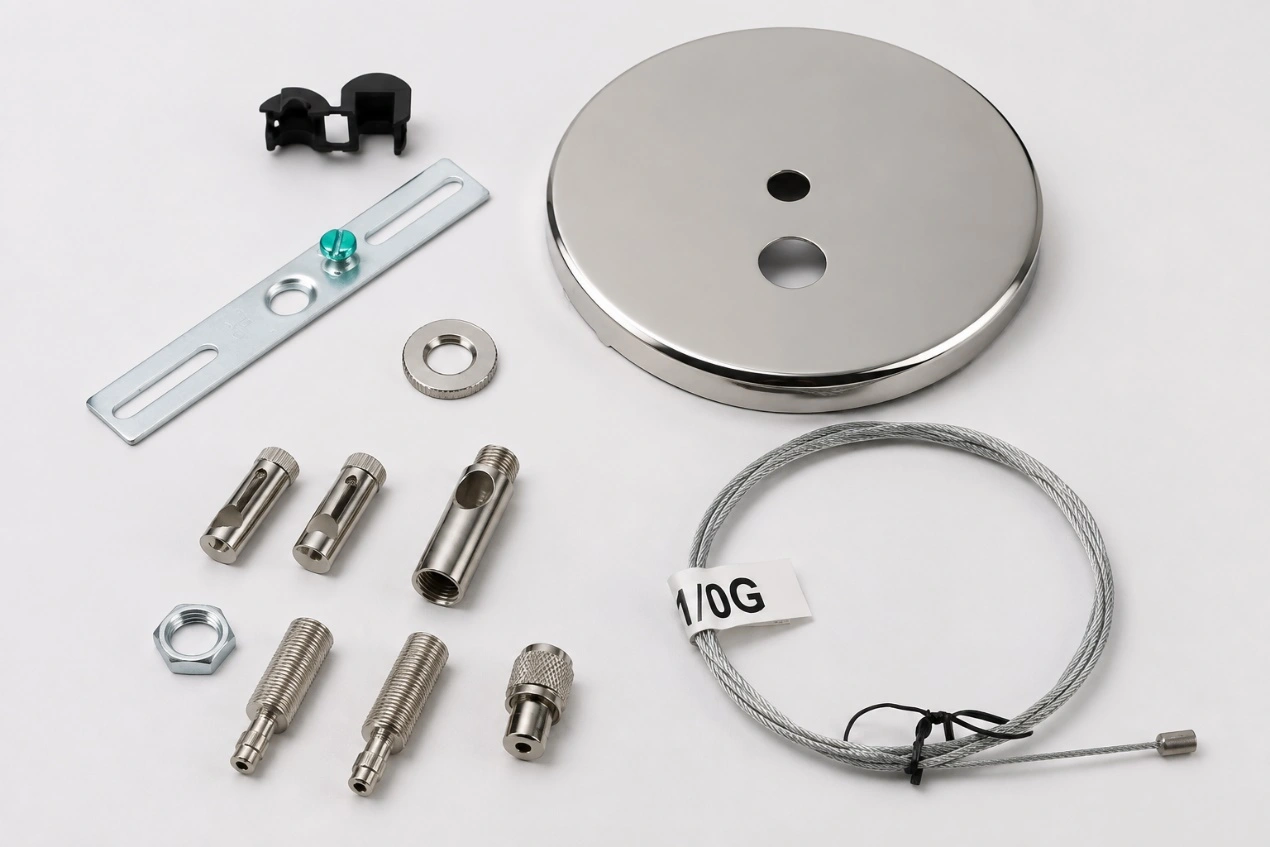
Lighting Fixture Accessories
Issue: The buyer assumed the quotation covered a complete lighting fixture with all installation accessories, while the manufacturer understood that the quotation covered only the fixture body and that all external accessories would be quoted separately.
Solution: List every included and excluded component in both the RFQ and the quotation item by item. For large suspended fixtures, clearly define responsibility for the safety suspension system.
2) Vague Description of the Installation Environment, Resulting in Inadequate Corrosion Protection or Waterproof Rating
Case: An outdoor wall light for a coastal cultural tourism project was specified in the RFQ simply as “Outdoor Use,” without indicating that it would be installed near the coastline in a high-salt environment. The manufacturer selected 304 stainless steel with a standard outdoor coating. After the fixtures had been in service for some time, corrosion developed.
Issue: The buyer assumed all outdoor fixtures should provide salt spray resistance, while the manufacturer argued that no coastal environmental conditions had been specified and therefore no material upgrade was required.
Solution: The RFQ should indicate whether the installation is in a coastal area, the approximate distance from the shoreline, humidity, and sunlight exposure. The quotation should also specify the material, coating system, and salt spray test requirements.
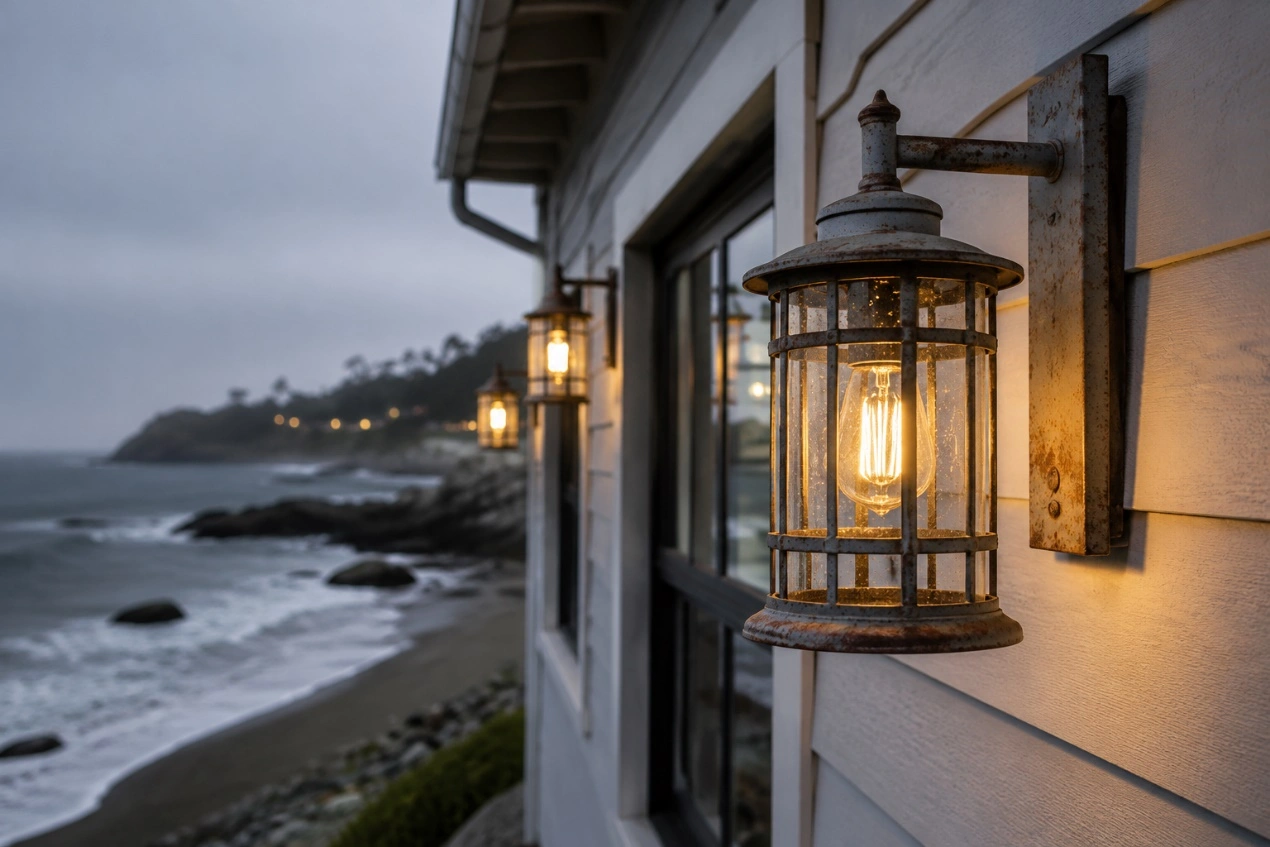
Lamp fixture rusting
3) Surface Finish Specified Only by Description Without Samples or Measurable Acceptance Criteria
Case: A custom hotel wall light required an “Antique Bronze” finish, but no physical sample, color tolerance standard, or salt spray requirement was provided. The manufacturer produced the finish using conventional electroplating. After delivery, the buyer considered the appearance unacceptable because it lacked the hand-rubbed texture and aged effect they expected, and requested a PVD base finish combined with hand-applied antique treatment. The two finishing methods involved substantially different production costs.
Issue: The two parties interpreted the term “Antique Bronze” differently because no common acceptance standard had been established.
Solution: Clearly specify the surface finishing process and approve a signed physical finish sample before production. Production acceptance should be based on finish color, patina coverage, surface texture, and protective coating requirements. For outdoor projects, include salt spray and weather resistance requirements instead of relying solely on written descriptions.
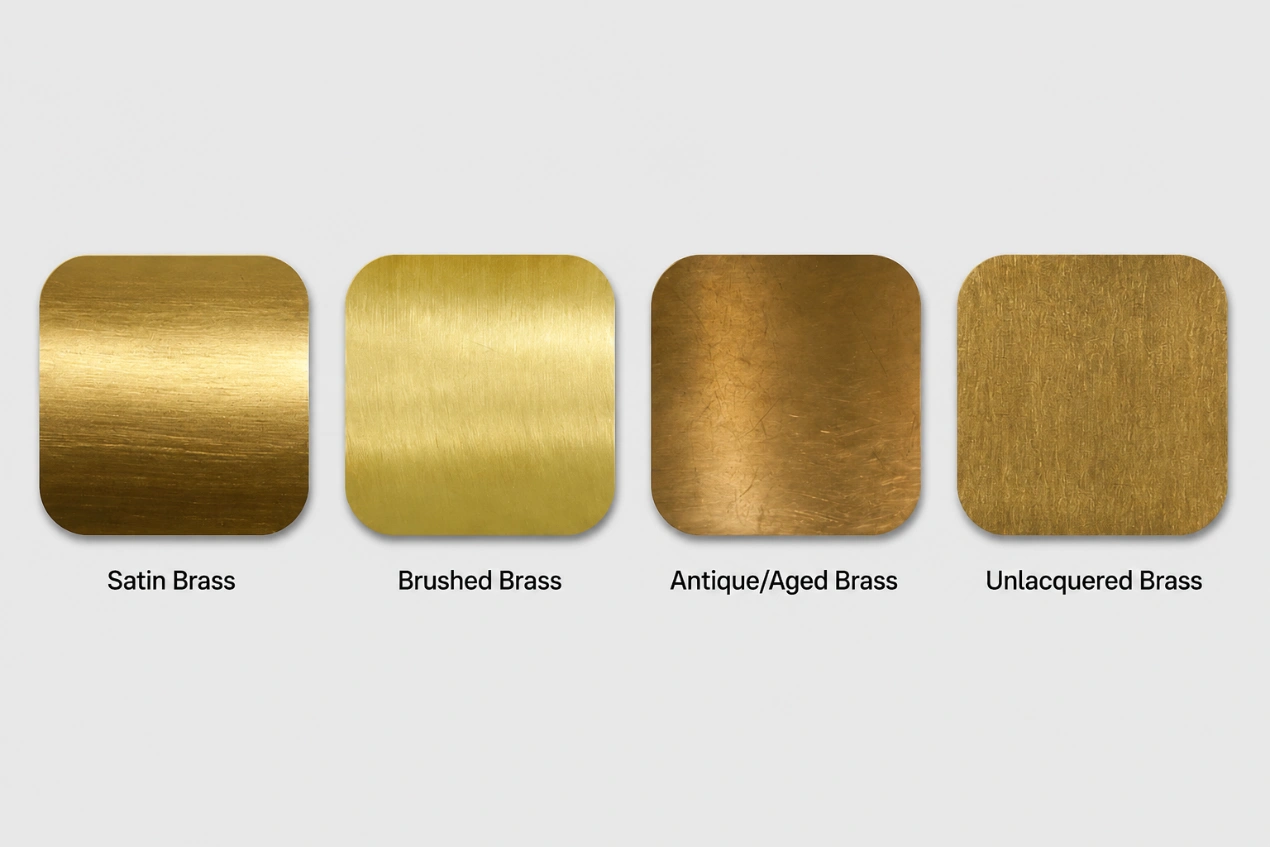
Surface Craft Effect
4) Dimming Driver and Control System Compatibility Not Specified
Case: The initial RFQ for a hotel lobby chandelier specified only “Warm White LED.” The manufacturer quoted the fixture with a standard non-dimmable driver and a Ø120 mm ceiling canopy. After DALI dimming was added later, the new driver no longer fit inside the original canopy. The canopy had to be enlarged or the driver relocated remotely, requiring structural modifications, quotation revisions, and an extended lead time.
Issue: The buyer assumed that only the driver needed to be replaced, while the manufacturer also had to redesign the installation space, wiring layout, and maintenance access.
Solution: Specify the dimming protocol, driver installation location, and available canopy space during the RFQ stage. If the dimming system changes after sample approval, the quotation should be reviewed and updated accordingly.
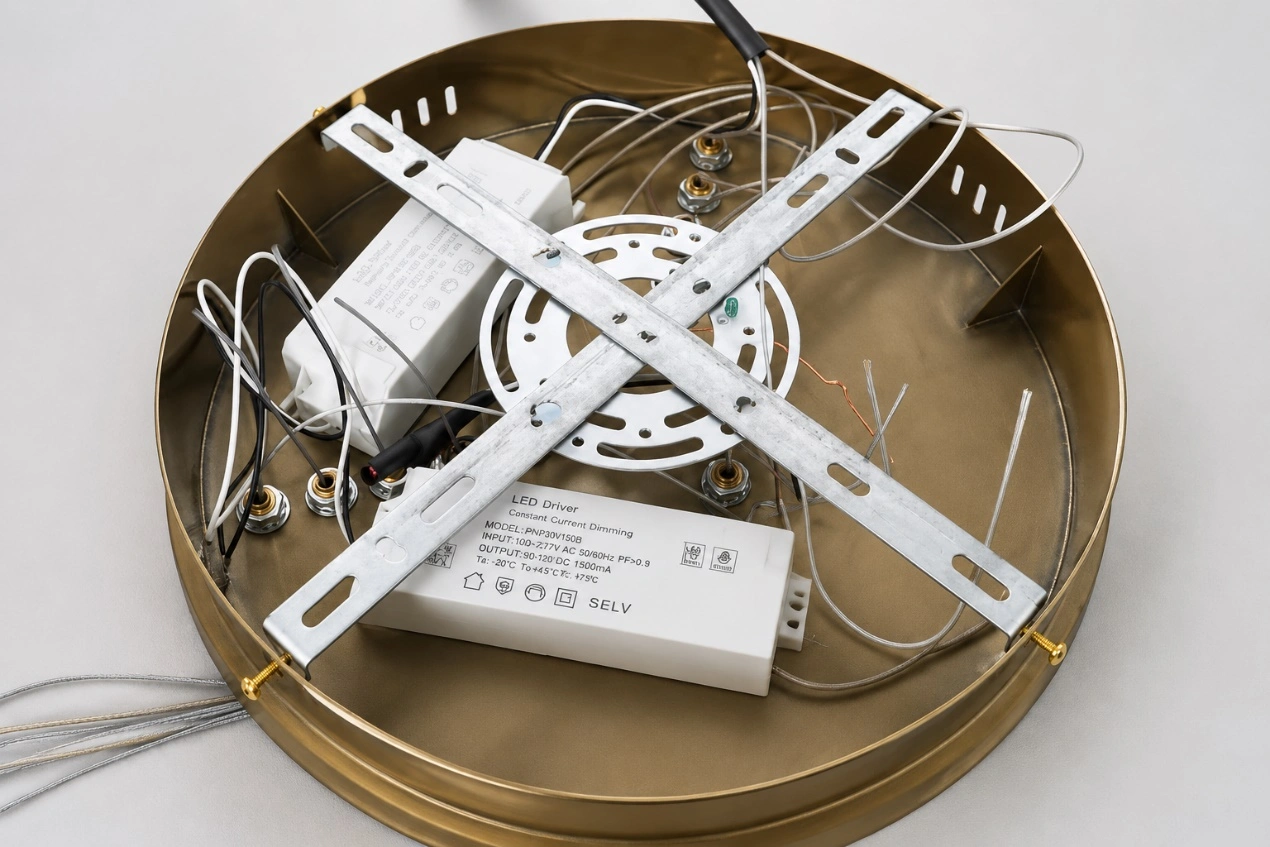
Light Fixture With Driver
5) Frequent Structural Changes After Sample Approval Without Agreed Revision Charges
Case: After the sample of an artistic chandelier had been approved, the buyer repeatedly requested changes to the fixture height and glass style. The production quotation did not define charges for design revisions. The manufacturer requested additional tooling modification fees, while the buyer believed these changes should be treated as free design optimization.
Solution:
Define the revision policy during the quotation stage. After sample approval, major changes to the structure or materials that require additional tooling or labor should be charged separately. At the same time, specify the acceptable range of minor dimensional adjustments that will be provided at no additional cost.
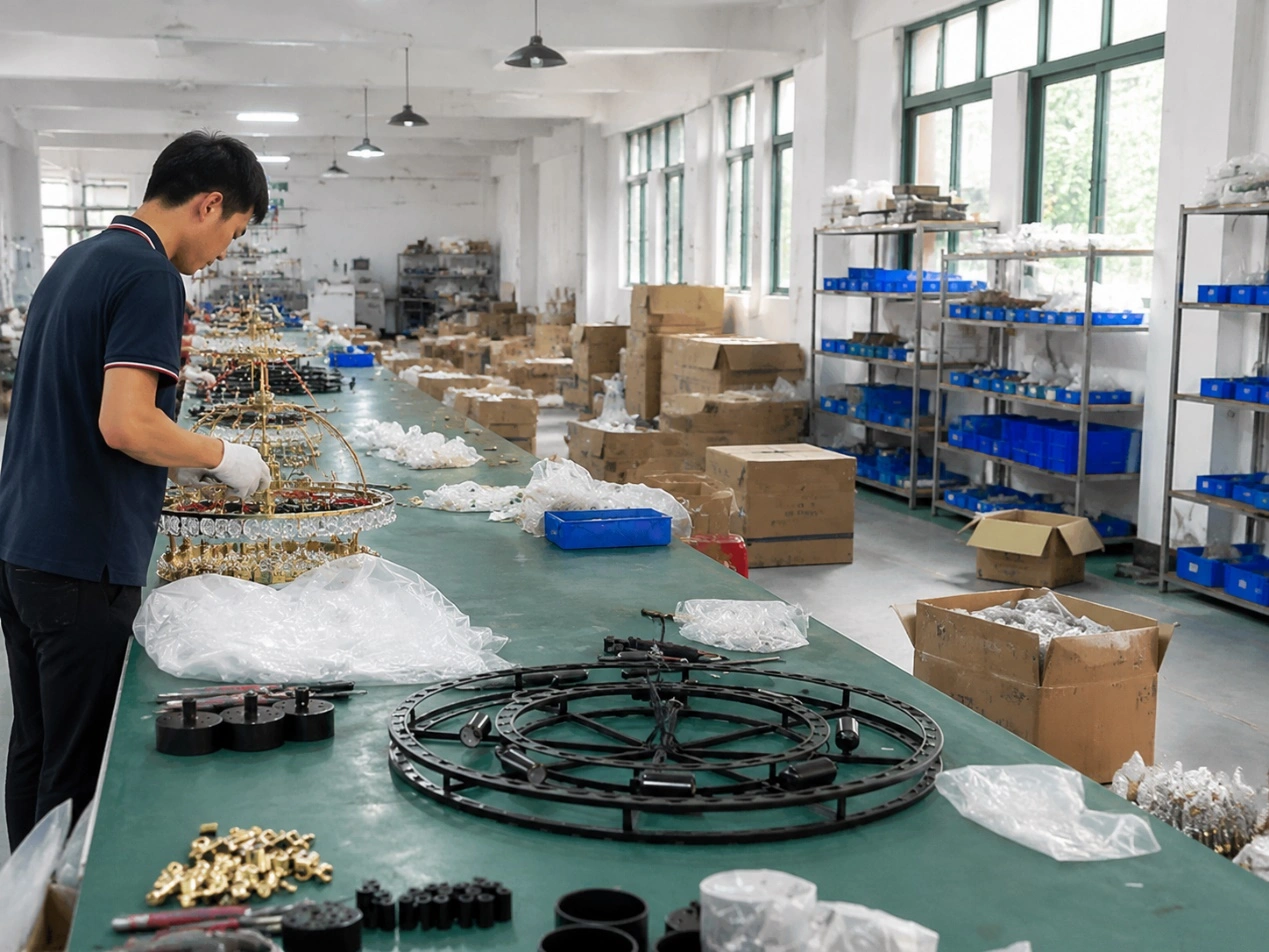
Revised Light–Fixture Sample
6) Export Projects Missing Certification, Labeling, and Documentation Requirements, Resulting in Customs Clearance Delays
Case: A shipment of custom decorative lighting was exported to the United States. The RFQ requested only finished lighting fixtures and did not specify ETL certification, English installation manuals, or compliance labels. The manufacturer produced the products according to its standard practice. After the container arrived at the destination port, customs clearance was delayed because the required certification was missing, resulting in demurrage and storage charges.
Solution: The RFQ should clearly specify the certifications required for the target market, label format, and the complete list of supporting technical documents.
7) Costs for Partial Deliveries and Multiple Inspections Not Included in the Quotation
Case: A project planned to deliver the lighting fixtures in three separate shipments, and the buyer required a third-party factory inspection before each shipment. The original quotation covered only one final inspection and one consolidated shipment. It did not include the cost of three inspection visits, repeated unpacking and repacking, or interim storage. The manufacturer later requested additional charges, leading to a commercial dispute.
Solution: The RFQ should clearly define the number of partial shipments, the quantity in each shipment, the number of inspections, the inspection agency, whether formal inspection reports are required, and the packaging and transportation method for each shipment. The quotation should list the costs for partial deliveries, repeated inspections, and additional storage separately to avoid unexpected charges later.
7. Need a Decorative Lighting Quotation?
A well-prepared RFQ helps manufacturers understand your project requirements more quickly and provide more accurate quotations and technical recommendations. You can send Postmodern Lighting your product images, design sketches, CAD drawings, 3D models, Lighting Schedule, or BOQ. If the materials, surface finishes, electrical configuration, or installation method have not yet been finalized, we can recommend suitable solutions based on your target market, project budget, and manufacturing requirements.
After receiving your documents, we will evaluate the product structure, material configuration, manufacturing process, sample lead time, and mass production schedule, then provide either a budgetary quotation or a formal project quotation based on your current project stage.