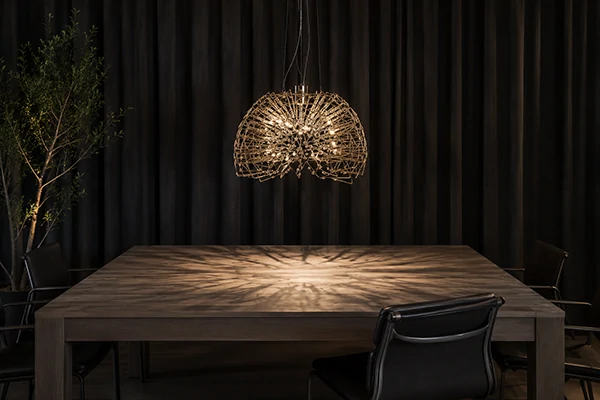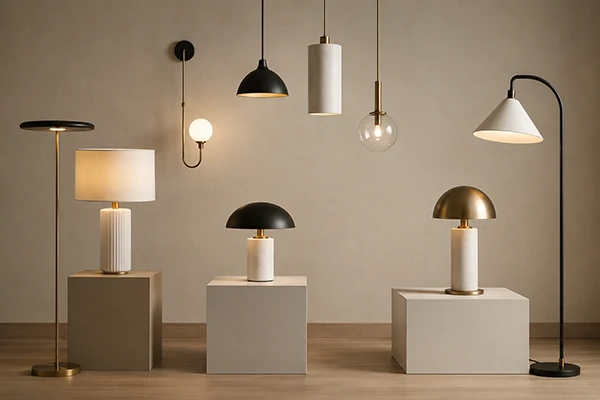
Price differences between suppliers come from variations in materials, structure, manufacturing processes, and electrical configuration, as well as order quantity, customization requirements, certifications, packaging, shipping, and trade terms. To judge whether a decorative light is reasonably priced, review the materials used, configuration standard, and the cost items included in the quotation.
This article starts with decorative lighting prices, then examines cost drivers such as materials, manufacturing, certification, and logistics. It explains why supplier quotations differ, outlines their pricing characteristics, and identifies items that are often overlooked in quotations.
1. How Much Does Decorative Lighting Usually Cost?
Prices vary widely by fixture type. The following basic ranges for common products can support early project budgeting and supplier quotation comparisons.
1) Price Ranges for Different Types of Decorative Lighting
The following ranges are purchasing references for standardized, mass-produced decorative lighting in the supply chain. Actual quotations vary with material, size, MOQ, finish, driver, electrical configuration, certification, packaging, and trade terms. Unless otherwise stated, prices exclude custom development, international logistics, customs duties, and destination taxes. For North American projects involving UL, ETL, or similar certification requirements, the product structure and electrical configuration must be checked separately.
Small decorative ceiling/downlight kits: approximately USD 15–45 per fixture. These products commonly use plastic or thin-gauge steel, have a simple structure, and suit volume apartment projects.
Simple single-light pendant (steel/acrylic): approximately USD 40–120 per fixture. The structure is simple and the process is standardized, making this type common in residential, hospitality, and restaurant spaces.
Single-light brass pendant: approximately USD 120–320 per fixture. Common configurations include K9 crystal with brass or other metal components.
Large custom artistic pendant/chandelier (15+ lights): approximately USD 600–2,000+. Structure, manufacturing method, and customization level vary significantly, so pricing fluctuates more widely.
Outdoor waterproof decorative light (wall/garden light): approximately USD 50–180 per fixture. In addition to visible materials, the quotation must account for the waterproof structure and electrical components.
2. What Makes Up the Basic Cost of Decorative Lighting?
When fixture quotations differ, the cost can usually be broken down first into materials, processing, and factory overhead.
1) Raw Material and Component Costs
The material cost of a decorative light mainly comes from the primary metal structure, decorative parts such as glass, crystal, or stone, and components including LEDs, drivers, lamp holders, wires, suspension cables, and connectors. During procurement, distinguish the material itself from the finish. For example, “Brass Finish” describes the appearance and does not necessarily mean the main body is brass.
| Specification | Actual Structure | Cost Characteristics |
| Solid Brass | Brass body | Higher material and processing cost |
| Steel + Brass Parts | Steel structure + visible brass parts | Reduces brass usage |
| Stainless Steel + Brass PVD | Stainless steel + PVD | Suitable for some modern fixtures |
| Steel + Brass Color Paint | Steel + brass-color paint | Lower cost, but a different look and feel |
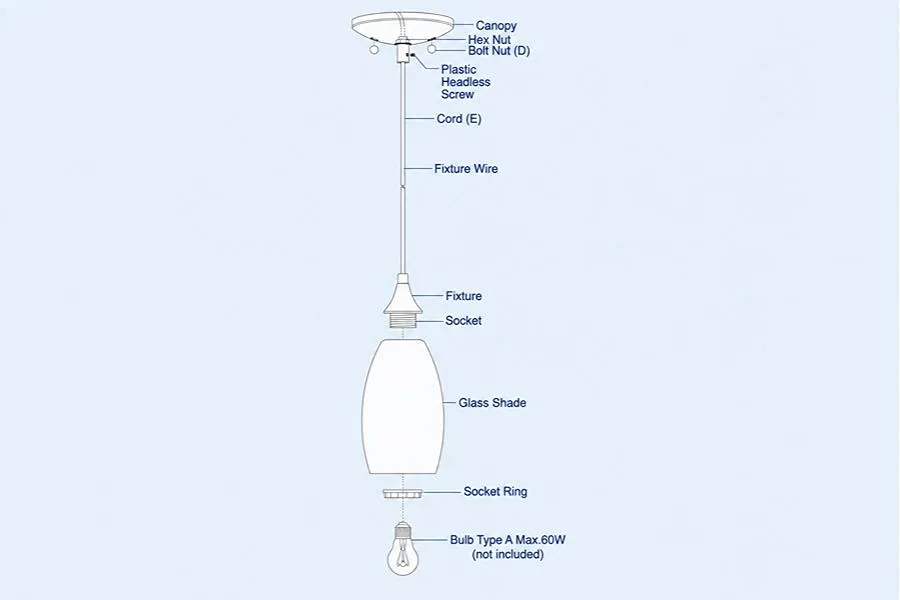
Decorative Lighting BOM Breakdown
2) Manufacturing and Processing Costs
Common decorative-light processes include cutting, CNC machining, bending, tube bending, casting, welding, grinding, polishing, surface finishing, glass processing, assembly, and testing. Labor-intensive operations have a clear cost impact on complex fixtures. For example, an irregular brass arm may require tube bending → welding → straightening/form correction → weld repair → grinding → polishing → finish → assembly. Therefore, even when two products use the same 20 kg of metal, a simple frame and a complex handcrafted structure can have very different manufacturing costs.
3) Manufacturing Losses and Factory Overhead
Factories also absorb costs for metal scrap, glass breakage, finish rework, fixtures and tooling, equipment depreciation, engineering development, QC, and production management. Order quantity determines how these costs are allocated. If a standard light is produced in a batch of 500, engineering and production-preparation costs can be spread across 500 units; if only five large custom chandeliers are produced, the same upfront work must be absorbed by five units.
3. What Factors Affect Decorative Lighting Prices?
Beyond basic cost, project conditions and product requirements can further widen the final quotation. The following factors have the most direct impact on decorative lighting prices.
1) Size, Weight, and Overall Material Usage
Larger dimensions usually require more metal, glass, shades, suspension chain, and other materials. They may also require a stronger suspension structure and larger packaging. For this reason, the cost of a large fixture cannot be estimated from material weight alone.
2) Design and Structural Complexity
Complex structures such as integrated forms, irregular curved surfaces, staggered multi-layer arrangements, and modular assemblies often cannot rely on standard molds for mass production. They may require dedicated tooling, segmented fabrication, and precise alignment. Simpler circular, square, or standard symmetrical structures can more readily use existing molds and standard processes.
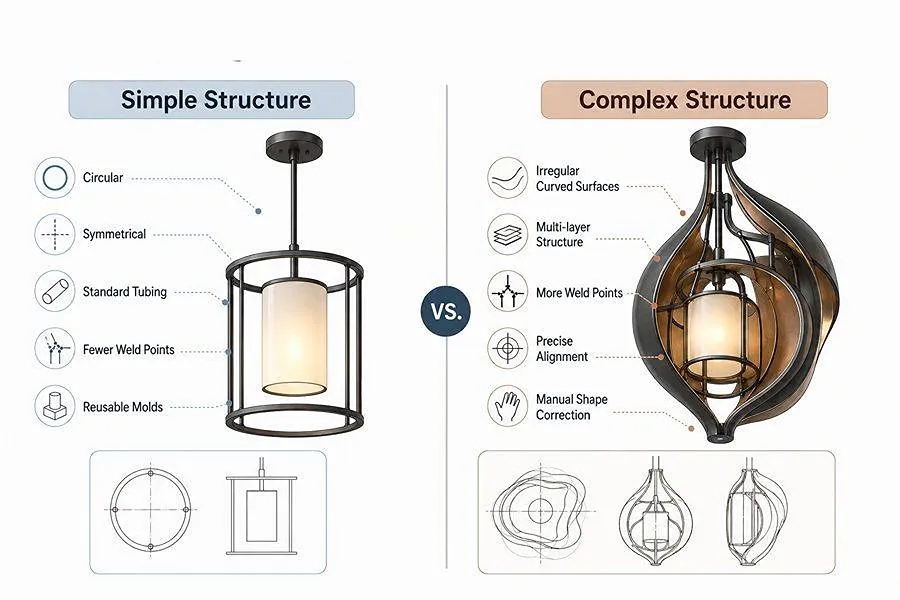
Simple Structure vs. Complex Structure
3) Process Complexity and Level of Handcrafting
High-end processes such as antique aging, vacuum nano plating, seamless welding, hand-arranged crystal, and formed fabric pleating demand advanced equipment and skilled labor. Fully mechanized mass-produced fixtures usually have a lower share of direct labor and special-process cost, while semi-handmade or fully handcrafted artistic fixtures require substantially more labor, precision finishing, and process adjustment. The actual share depends on the material, process difficulty, and labor efficiency.
4) Electrical Configuration and Target-Market Requirements
Safety, EMC, and energy-efficiency requirements vary by target market and directly affect electrical configuration, testing, and certification costs. North American projects normally need the applicable UL/ETL or other safety certification requirements confirmed against the specific product and application.
5) Order Quantity and Production Scale
Production scale spreads fixed costs directly, so volume can create a significant unit-price difference. As a hypothetical example, for a standard 12-light crystal chandelier, an order of 100 units may use an FOB reference price of USD 310 per unit; a small order of 10 units may reach about USD 375 per unit; and a 1–2 unit prototype order may exceed USD 520 per unit.
4. How Do Prices Differ Between Standard and Custom Lighting?
When a project requires special dimensions, forms, or materials, the pricing basis shifts from standard mass production to custom development. In actual procurement, different price levels can be distinguished by the degree of customization.
1) Price Comparison: Standard, Semi-Custom, and Fully Custom Lighting
Based on project procurement data, the three categories show clear price levels and premium logic:
Standard mass-produced lighting: Uses existing structures, molds, and production processes with limited development work, so price and lead time are relatively easy to confirm.
Semi-custom lighting: Usually changes dimensions, color, shade, finish, or selected components while retaining the original main structure as much as possible. If the existing molds and standard parts can still be used, development cost does not increase substantially.
Fully custom lighting: Redesigning the form, structure, and dimensions usually requires detailed drawings, structural confirmation, prototyping, molds, testing, and redevelopment of the production process, so development cost is generally the highest.
2) Where Do Custom Lighting Development Costs Come From?
Typical custom-lighting costs include: first, new mold costs, including dedicated molds for large artistic chandeliers; second, repeated prototype and revision costs, especially for the second and subsequent revisions; third, structural testing and certification-update costs, because structural changes may require renewed safety testing and certification filing; and fourth, non-standard process setup costs, because irregular structures require repeated manual adjustment and lower yield increases scrap and loss costs.
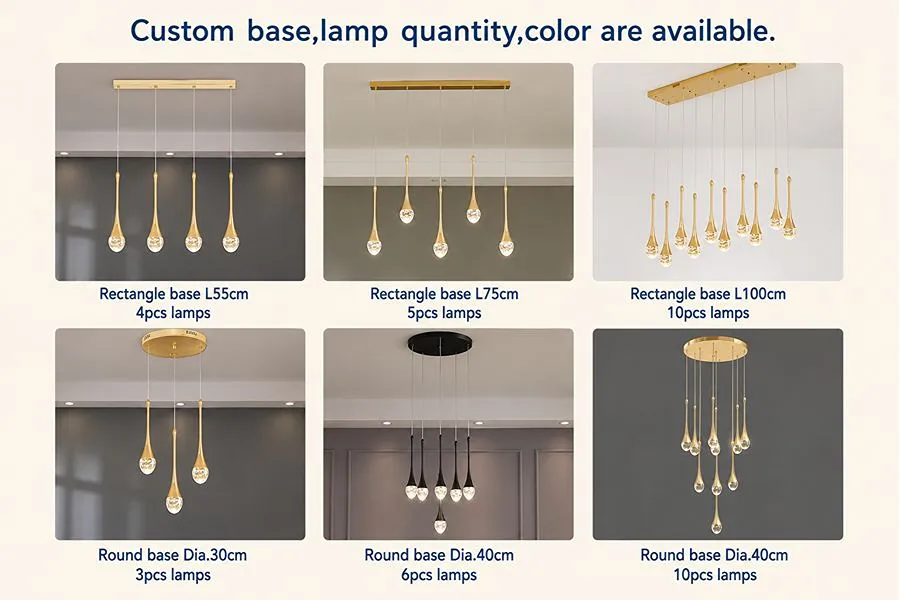
Custom Lighting
3) When Can Custom Lighting Offer a Cost Advantage?
For large projects requiring a high quantity of identical products, development cost can be spread by standardizing dimensions, structure, electrical configuration, and installation method. The product can also be customized to site dimensions, voltage, and installation conditions, avoiding hidden costs from adapting standard fixtures, site rework, and incompatible parts.
5. Why Do Suppliers Quote Such Different Prices for the Same Decorative Lighting Project?
Before comparing suppliers, first confirm that all quotations are based on the same specification.
1) Are the Quotations Based on the Same Specifications and BOM?
Low quotations often hide configuration reductions: brass wall thickness may drop from 2.5 mm to 1.2 mm, high-transparency K9 crystal may be replaced with ordinary glass, a certified branded driver may be replaced with a generic non-certified unit, or multi-layer plating may be replaced with a single paint coat. Comparing unit price alone can lead buyers into a low-price, low-quality purchase.
2) Does the Price Include Engineering Design, Prototyping, and Technical Support?
Some suppliers quote only the mass-production cost of the fixture and exclude detailed engineering, rendering optimization, up to three prototype revisions, remote installation guidance, and technical documentation. On engineering projects, a low-priced fixture without technical support can create site-fit problems, and the resulting additional cost may far exceed the original quotation difference.
3) Are the Quality Control and Acceptance Standards the Same?
Low-end quotations may include only a sampling inspection of appearance before shipment, with no electrical, salt-spray, or aging tests. A formal project quotation may include 100% inspection, a 24-hour powered aging test, salt-spray corrosion testing, and a pre-shipment inspection report. For suppliers with initially weak quality control, full inspection, aging tests, shipment inspection, and improved packaging can significantly reduce a high project defect rate. The actual improvement depends on product complexity, inspection standards, and shipping conditions.
4) Are Packaging, Spare Parts, Warranty, and After-Sales Service Included?
Low-priced standard quotations often cover only the bare fixture and exclude reinforced export packaging, spare parts, and international warranty service. Confirm whether the price includes wooden cases or reinforced packaging, spare crystals, drivers, shades, and other spare parts, as well as the replacement-parts arrangement during the warranty period.
5) Are the EXW, FOB, and CIF Trade Terms the Same?
Trade terms are a major pricing variable. EXW is the lowest factory-delivery price and excludes logistics and export customs-clearance costs; FOB includes domestic logistics and export customs clearance; CIF includes ocean freight and insurance. Supplier quotations must use the same trade term for a valid comparison.
6. What “Hidden Costs” Are Commonly Overlooked When Purchasing Decorative Lighting?
Decorative-lighting budgets often focus only on the unit price, while many indirect expenses are not planned at the early stage and later cause overruns. Common hidden costs include the following:
1) Prototype, Mold, and Development Costs
Many suppliers provide the first sample free of charge, but second and third revisions may incur cumulative fees. During quotation, confirm the sample fee, number of revisions, mold cost, mold ownership, and whether the same mold can be used for future orders. For small quantities, the full mold cost may be allocated to the unit price.
2) Certification and Testing Costs
For North American projects, UL/ETL and other safety certification costs may range from several thousand US dollars to much higher levels, depending on product type, structural complexity, certification scope, and whether similar products are already covered. For LED fixtures, LM-79 applies to electrical and photometric performance testing of the complete luminaire, while LM-80 mainly evaluates lumen and color maintenance of LED light-source components. Testing costs should be confirmed separately against the project specification and target-market requirements.
3) Packaging and International Shipping Costs
For large glass, crystal, and irregular fixtures, ordinary cartons carry a much higher shipping-damage risk than structurally reinforced export packaging. For high-value and fragile fixtures, export wooden cases or reinforced packaging can significantly reduce transportation damage.
4) Import Duties and Taxes
Import duties vary considerably by country and region. The actual rate should be confirmed according to the HS/HTS code, product structure, country of origin, and trade policies in effect at the time of import. In addition to duty, consider import VAT/GST, customs-clearance fees, port charges, and other import-related costs that may apply in markets such as the United States.
5) Spare Parts, Site Installation, and Rework Costs
Standard quotations often exclude spare parts. If components are discontinued after project delivery, replacement parts purchased separately may carry a high unit-price premium. Rework caused by shipping damage, installation incompatibility, or certification noncompliance includes labor, secondary logistics, removal, and reinstallation costs; a single rework event can exceed the price difference of several fixtures.
6) Calculating Total Landed Cost from Unit Price
Project procurement should include development/mold costs, packaging, international shipping, insurance, import duties and taxes, customs clearance, and destination transportation in the Total Landed Cost (TLC). For example, if a fixture is quoted at FOB USD 800 per unit and 20 units are purchased, the product value is USD 16,000. If the project also incurs USD 1,500 for molds and samples, USD 1,000 for packaging, USD 2,500 for international shipping and insurance, and USD 2,000 for destination-port and import-related charges, the total procurement cost is USD 23,000. The actual cost is therefore USD 1,150 per unit, not the USD 800 shown on the quotation.
Project comparisons can use: Total Landed Cost = Product Cost + Development/Mold + Packaging + International Shipping + Insurance + Import Duties and Taxes + Customs Clearance and Destination Transportation. Large engineering projects should also assess installation, spare-parts, and rework risks.
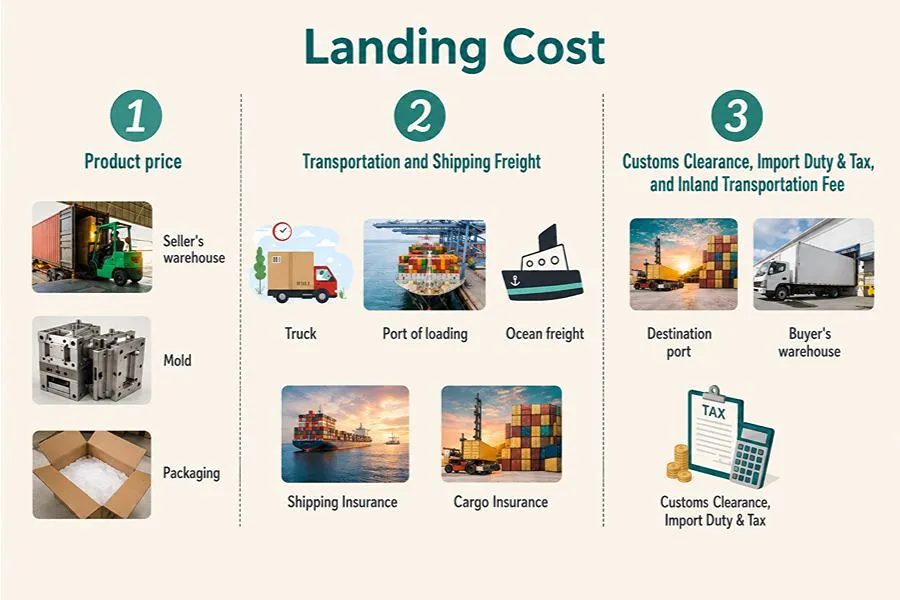
Total Landed Cost Breakdown
7. How Do Decorative Lighting Prices Differ in China, Europe, and the United States?
Regional price differences are difficult to express as a fixed percentage because product specifications often vary substantially. A more practical comparison looks at cost structure and supply model.
| China | Europe | United States | |
| Manufacturing cost | Relatively low | Higher | Higher |
| Metal/glass supply chain | Concentrated and complete | Mature | Mature |
| Complex handcrafted fixtures | Clear cost advantage | Strong traditional craftsmanship | Higher labor cost |
| Large-volume project orders | Clear advantage | Usually higher cost | Usually higher cost |
| Custom development | Flexible | Emphasizes design and craftsmanship | Convenient local project response |
| Logistics for overseas projects | Requires international shipping | Depends on destination market | Local advantage for U.S. projects |
China also benefits from its supply chain. Zhongshan, Foshan, Dongguan, and surrounding areas in Guangdong have developed a relatively complete lighting supply chain covering metalworking, casting, glass, surface finishing, electrical components, and packaging. When a complex project requires a different glass supplier, additional castings, or a finish adjustment, these changes can often be supported within the same industrial cluster. European decorative lighting tends to carry more added value from design, branding, handcrafted glass, and metal craftsmanship. Local manufacturing labor costs are generally higher in the United States, while U.S.-based production for U.S. projects can reduce cross-border shipping, time-zone communication, and some delivery risks.
8. How Can Value Engineering Reduce Decorative Lighting Procurement Costs?
The more effective way to reduce procurement cost is to identify optimization opportunities in the product design and procurement plan itself. The following methods can lower cost while preserving appearance, performance, and project requirements as far as practical.
1) Optimize the Product Structure and Remove Unnecessary Processing
Eliminate irregular or complex features that provide no practical value, simplify joining methods, and reduce manual grinding, alignment, and precision-finishing operations. Removing unnecessary processing also reduces welding, positioning, grinding, and assembly work.
2) Substitute Materials Without Compromising the Required Effect
Where the visual result remains consistent, use more cost-effective materials in place of premium materials: standard K9 crystal instead of full-lead crystal, high-quality thicker cold-rolled steel instead of selected solid-brass components, and flame-retardant polyester instead of premium silk shades. Any material substitution should first be checked against appearance, structure, durability, and project standards.
3) Optimize Surface Finishes and Decorative Processes
For indoor fixtures, overly premium surface processes can be simplified within the project standard. Multi-layer environmentally compliant paint can replace high-cost vacuum plating, and standard polishing can replace intensive hand finishing.
4) Use Existing Molds and Standard Components to Reduce Development Cost
Prioritize the factory’s existing standard molds, commonly certified drivers, and standardized hardware. This can significantly reduce development investment in new tooling, dedicated sourcing, and revalidation. For small-batch projects, it can substantially reduce allocated development cost and shorten the development cycle.
5) Use Modular Design to Reduce Production, Packaging, and Shipping Costs
Use a detachable modular structure to separate the fixture body, suspension chain, shade, and crystal components. This reduces package volume, ocean-freight cost, and breakage rate, while simplifying site installation, maintenance, and replacement and lowering operating and maintenance costs.
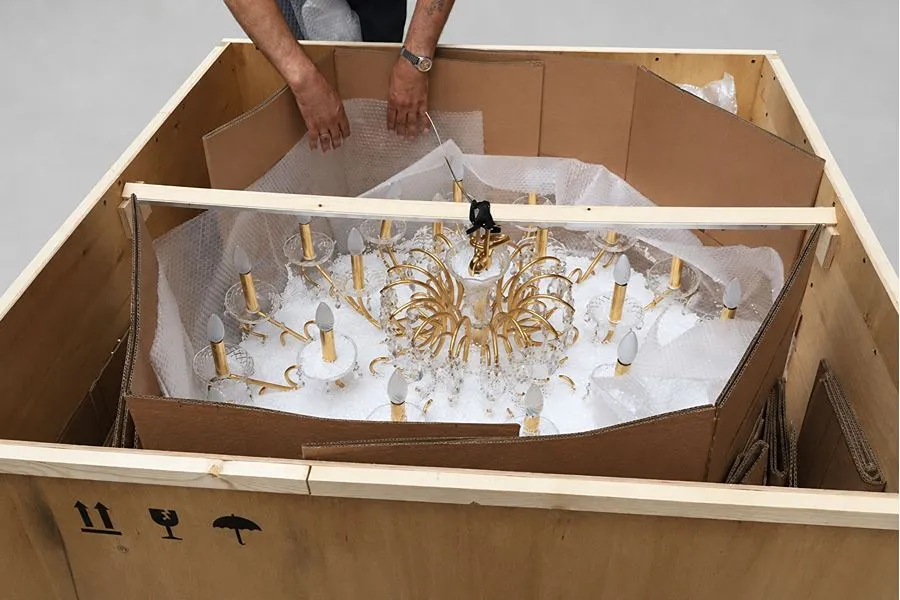
Modular Design, Packaging, and Transportation
6) Standardize Project Specifications to Improve Mass-Production Efficiency
Standardize fixture dimensions, colors, electrical configurations, and process requirements across the project to reduce fragmented production of multiple variants. Standardized volume production spreads mold, machine setup, and process-adjustment costs and is a key cost-reduction method for large engineering projects.
9. What Common Pitfalls Occur in Decorative Lighting Quotations?
In addition to active cost optimization, the quotation stage should identify details that may create later add-on costs and project risks. Based on past experience, the Postmodern Lighting team has summarized the following common issues in decorative-lighting project procurement. Check each item before placing the order.
1) The Appearance Is the Same, but the Actual Configuration Is Different
Renderings from two suppliers may look almost identical, but the lower-priced option may use thinner metal, a different grade of glass or crystal, a generic driver, a simpler finish, or lower-cost packaging.
2) Custom Development Costs Are Not Fully Defined Up Front
Prototype, mold, tooling, finish sample, structural testing, and second-round sample revisions are often excluded from the initial unit price and added only after development starts. The quotation should list these items separately as one-time costs and state how many sample rounds are included, whether revisions are chargeable, who owns the molds, and whether the original molds can be reused for replenishment orders.
3) The Sample Is Approved, but the Mass-Production Standard Is Not Locked
Approval of the sample appearance does not mean the mass-production configuration has been fixed. For example, the sample may use Brand A driver, a specific metal thickness, or a manually adjusted finish, but if the final BOM does not record these details, disputes can arise during mass production. Before production, freeze the Approved Sample + Final Drawing Revision + BOM + Material Specification + Finish Sample + Electrical Specification together, rather than accepting production based only on “close to the sample.”
4) The Quotation States UL, ETL, or CE, but Not the Final Certified Configuration
“Can meet UL/ETL requirements” does not mean the final delivered product is necessarily covered by the applicable certification or test scope. Changes to the driver, LED, wiring, lamp holder, or structure can affect compliance. The quotation should therefore define the target market, final configuration, certification scope, relevant report or certificate information, and who bears the certification cost. Any BOM change that affects compliance must be reconfirmed.
5) MOQ, Quantity Changes, and Spare Parts Are Not Included in the Pricing Rules
A price based on 100 units cannot be applied directly to 20 units because mold, fixture/tooling, machine setup, engineering, and production-preparation costs must be reallocated. In hotel projects, purchasing spare glass, crystal, shades, drivers, and similar parts only after project completion can also increase production and shipping costs. The quotation should clearly define the MOQ, quantity breaks, pricing rules for quantity changes, and the spare-parts list.
6) A “6-Week Lead Time” Does Not Mean the Goods Can Ship in Six Weeks
In many quotations, lead time refers only to production lead time. Custom lighting still needs to pass through Shop Drawing → Approval → Prototype/Finish Sample → Approval → Material Preparation → Production → QC → Packing → Shipping. The quotation should state whether lead time starts from the deposit, drawing approval, or sample approval, and should separate development, production, and shipping periods.
7) A 2–3 Year Warranty Does Not Explain What Is Actually Covered
A “2-Year Warranty” has limited value without specific terms. The fixture body, LED/driver, glass/crystal, and finish may have different warranty coverage, and free replacement parts do not mean the supplier pays for international courier charges, removal and reinstallation, or site labor. The contract should define the warranty scope for each component and state separately who bears the cost of replacement parts, international shipping, and site labor.
10. Conclusion
Decorative-lighting procurement must consider product price, design effect, electrical configuration, quality requirements, packaging and transportation, and future maintenance together. Evaluating the quoted price within the full project cost and actual application helps avoid downstream risks caused by low pricing and makes it easier to identify solutions with a genuine cost advantage.
Postmodern Lighting provides custom development, engineering support, and volume procurement services for decorative lighting used in hotels, commercial spaces, and residential projects. From design development and sample approval through production, quality control, and delivery, we help customers optimize product specifications and procurement costs to suit project requirements. If you are sourcing decorative lighting for a project or need a custom lighting solution, contact us for a product and quotation proposal better suited to your project needs.